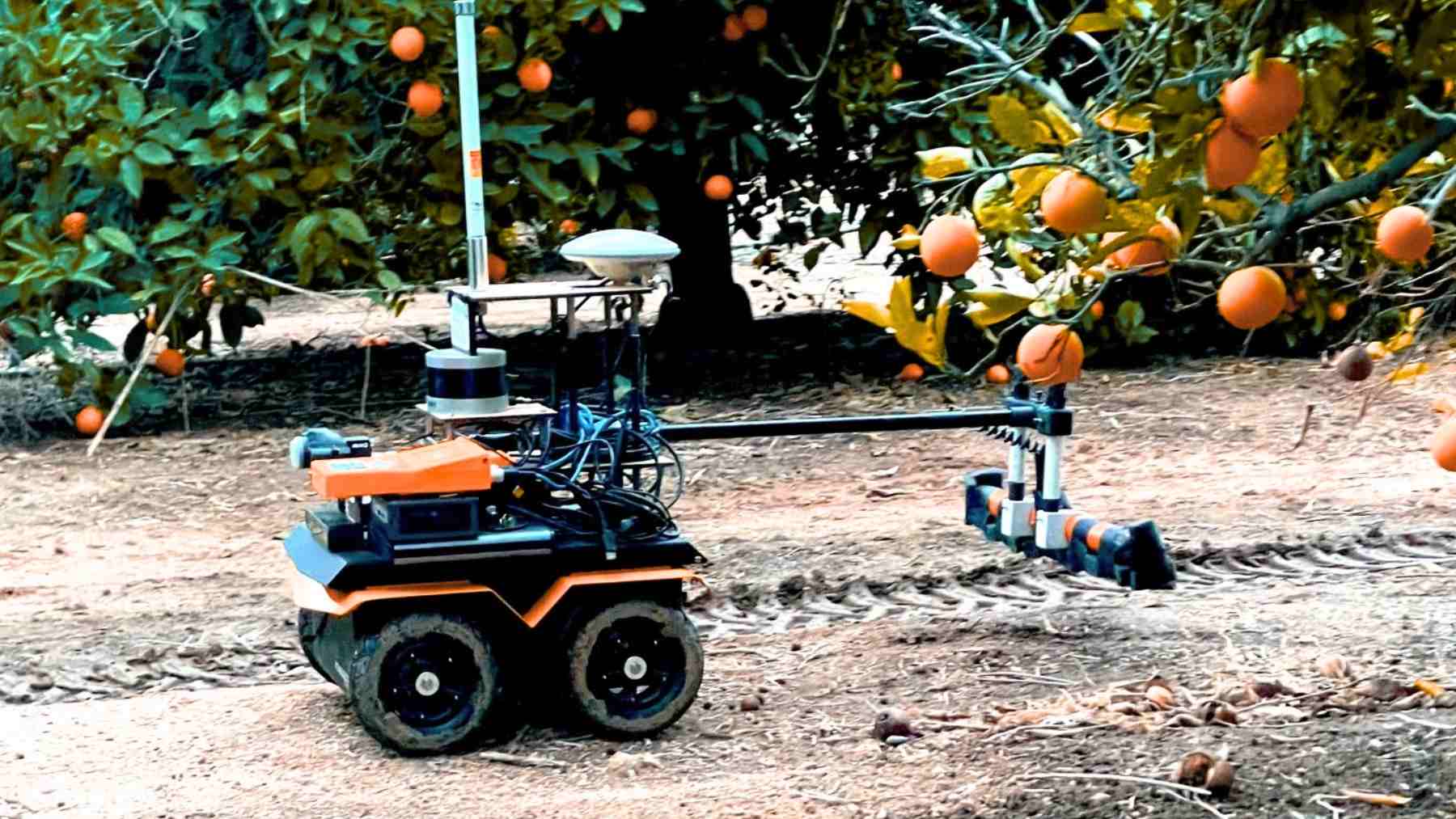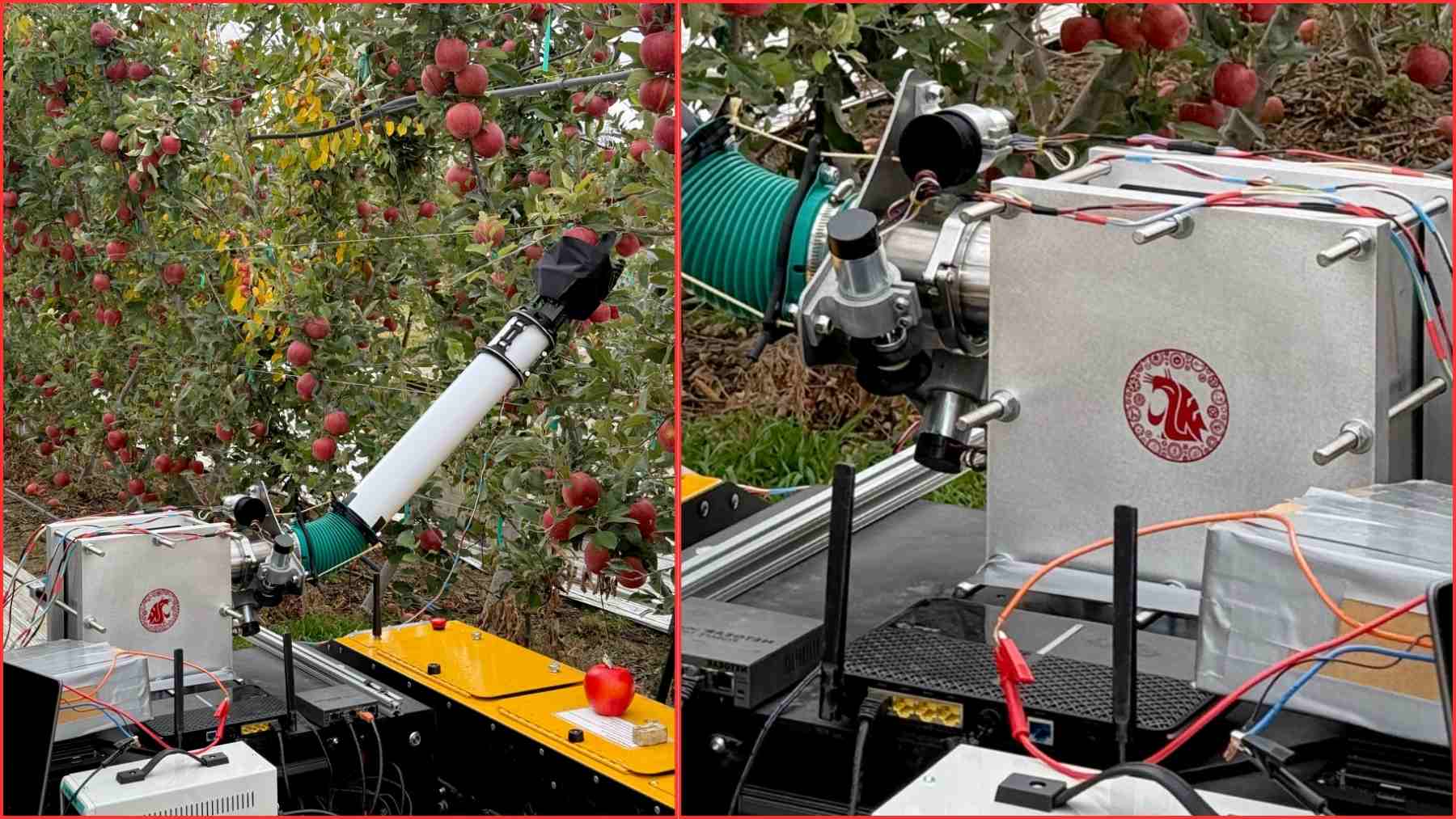
Washington State University researchers are building a new kind of farm helper, one that does not get tired, does not call in sick, and might even help save water. Their latest prototypes range from a soft, inflatable robotic arm that can pick apples to an AI vision system that “finds” strawberries hiding under leaves and clears a path using gentle puffs of air.
The big idea is simple. If farms cannot reliably hire enough people for pruning, thinning, and harvest, automation has to pick up some of the slack. In Washington, where agriculture is a multibillion dollar industry, the worker pipeline has been tightening for years, and researchers say that is pushing growers toward a future where humans and machines share the workload.
Soft robots for apples
Designing a robot that can harvest fruit sounds straightforward until you picture a rigid metal arm bumping into tree limbs all day. That is why WSU engineers built an inflatable apple picking arm that is soft by design, aiming to reduce damage to both trees and fruit.
According to the university’s reporting, the arm weighs under 50 pounds and costs about $5,500, and it can identify and pick an apple in roughly 25 seconds. Do the quick math and that is about 140 apples an hour if it could work nonstop, but real orchards are messy, and speed is still the big hurdle.
What makes this approach stand out is the focus on “gentle” engineering rather than brute force. In practical terms, careful handling can mean fewer bruised apples that never make it from the bin to the produce aisle. That is a sustainability win that rarely gets headlines, but it adds up.
Finding strawberries under the canopy
Strawberries bring a different kind of headache because the fruit is often tucked under leaves and low to the ground. WSU’s solution uses AI vision that combines multiple images to locate berries, then a small blower sends light bursts of air to move leaves out of the way before soft silicone “fingers” pluck the fruit.
That detail matters because earlier strawberry robots often worked in controlled setups where berries hang down neatly. Out in the field, everything is partially hidden, uneven, and changing by the hour as plants grow and sunlight shifts.
It is also a reminder of how much “invisible skill” human pickers bring to the job. Spotting ripeness, reaching into a canopy without snapping stems, and moving quickly without crushing fruit is hard to replicate, which is why WSU researchers keep describing this as automation that works alongside people, not a full replacement.
Water saved without yield loss
One of the most striking results in WSU’s work is not a robot arm at all, but irrigation software. At the WSU Smart Apple Orchard, researchers tested automated irrigation that uses weather and water data to adjust how much and when to irrigate, including decisions about cooling fruit and canopies during hot summer periods. In some trials, they cut water use by up to about 50% without hurting yields.
In related WSU tree fruit reporting, a precision irrigation setup saved 52.4% of water compared with soil moisture scheduling, while also reporting higher estimated effective yield and much higher water use efficiency. Results like that help explain why growers are paying attention, especially in regions where every irrigation decision can feel like a stress test.
This is not a niche issue. The U.S. Geological Survey reports that, in 2015, irrigation withdrawals accounted for 42% of total U.S. freshwater withdrawals, making it one of the biggest pieces of the national water puzzle. When irrigation tech can cut water use dramatically in some settings, that is a big deal for rivers, aquifers, and long term farm resilience.
Why farms are running short of hands
Automation is already common in broad acre crops like wheat, where GPS guided tractors can do much of the work with limited human input. Orchards are different because apples, cherries, grapes, and other perennial fruits can require labor across the seasons, not just at harvest time.
WSU points to a sharp contraction in Washington’s farm workforce, citing Census based figures that show hired farm labor declining 23% from 2017 to 2022, while the migrant labor force dropped 37% over the same period. The same report notes that 3,700 farms went out of business in Washington between 2017 and 2022, with some owners citing labor shortages as a factor.
Nationally, the pressure is also financial. USDA data shows that for fruit and tree nut operations, wages, salaries, and contract labor costs represent about 40% of production expenses, far higher than the average across all farms. When labor is that big a slice of the budget, disruptions do not stay on the farm, they show up in supply and, eventually, in what shoppers pay.
Rebuilding orchards for machines
One quiet theme running through WSU’s work is that robots may require farms to change shape. Researchers have pruned demonstration orchards so trees grow more like “walls,” creating corridors where robotic systems can move and work more predictably.
They are also using drones to gather data on crop stress, water use, and plant needs, feeding that information into machine learning tools. Think of it as turning the orchard into a living dataset, where the goal is earlier warning signs and more precise decisions.
Lav Khot, a WSU professor focused on agricultural automation, has described a future where systems blend weather, soil, and plant performance data into automated decision making operated by growers. “The stress we used to have to grow things, I think AI can help to mitigate that stress on humans,” he said.
The road from demo to daily use
For all the promise, WSU is clear that harvesting robots are not yet ready to become routine equipment. The machines can perform tasks effectively, but not quickly enough, and scaling from a lab or demo orchard to thousands of real world acres is where technology tends to get tested the hardest.
There is also a bigger sustainability question hiding in plain sight. If farms adopt more sensors, robotics, and AI tools, the benefits can include water savings and better targeting of farm operations, but the footprint of manufacturing, powering, and maintaining all that hardware has to be part of the conversation too. That is why the most realistic near term path looks like “human plus machine,” not farms run entirely by robots.
At the end of the day, this is about keeping food production stable while labor markets and water constraints tighten at the same time.