A miracle material appears that transforms light into energy. It is 60 times more powerful than traditional solar panels. After the advent of photonic spheres, which could spell the death knell for solar panels, this ‘miracle’ product is gaining notoriety. It should be noted that solar panels are individual photovoltaic modules that capture the sun’s energy and convert it into electricity.
They consist of solar cells containing individual solar cells made of semiconductor materials such as silicon (crystalline and amorphous) that convert light (photons) into electrical energy (electrons). When sunlight is present, a solar cell acts almost like a battery. The light from the sunlight separates the electrons so that they form a positively charged and a negatively charged layer in the solar cell. The potential difference produces an electric current.
At the same time, these panels are connected to a battery which stores the electricity produced. It is this charge that is used. The panels are composed of photovoltaic (PV) cells, which convert sunlight into direct current (DC) electricity during daylight hours.
This miracle material converts light into energy: it takes solar panels to another level.
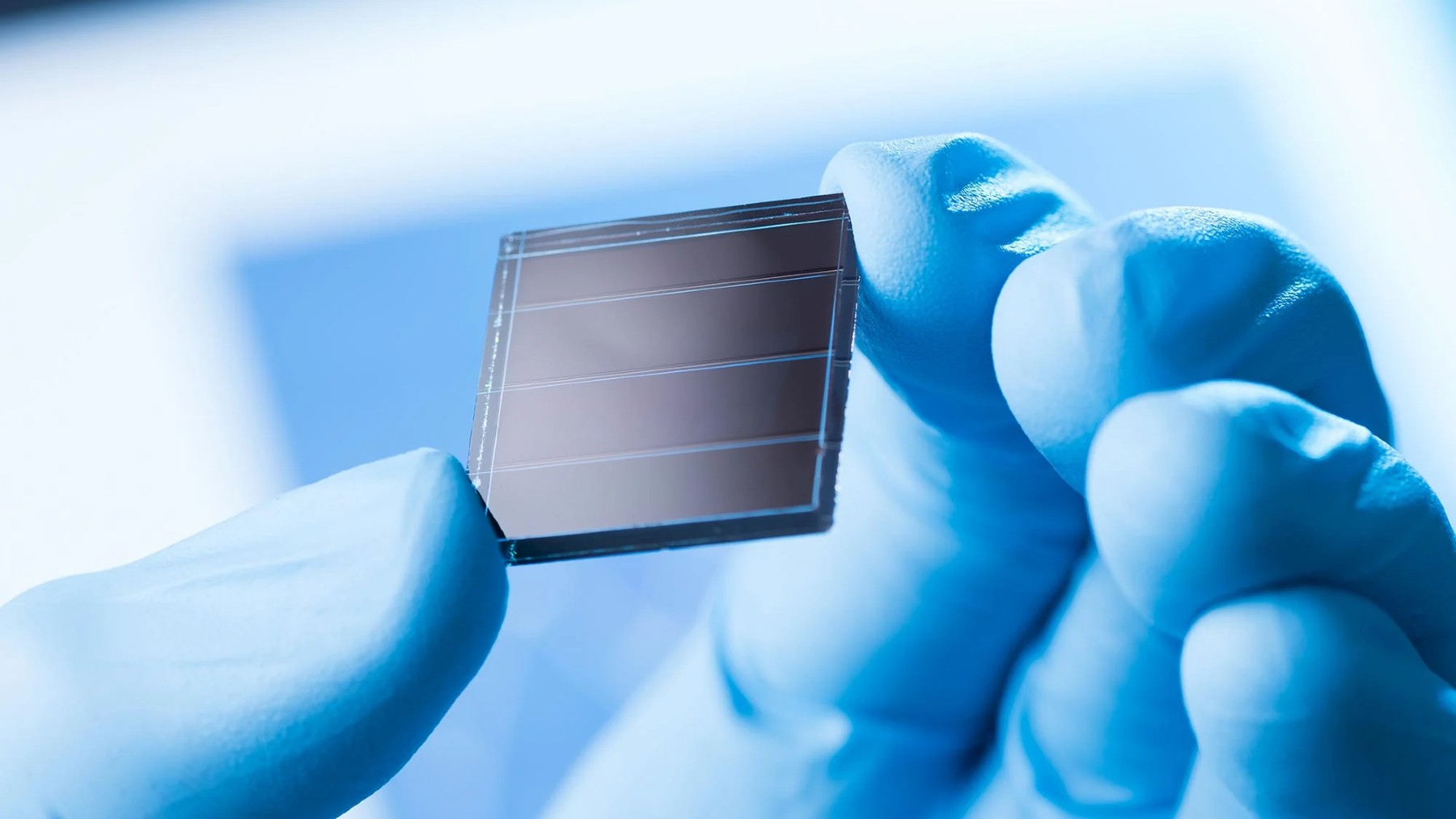
There is a ‘miracle material’ that, when applied to solar panels, is once again breaking all records thanks to a new chemical treatment. New perovskite photovoltaic cells increase the material’s ability to convert light into energy by a factor of 60.
Researchers in Hong Kong have achieved a conversion efficiency of 20.1% after more than 1,500 hours of use. This new molecular treatment created in Hong Kong could be the key to the widespread adoption of perovskite panels.
It is worth noting that perovskite cells have gained popularity in recent years because of their low cost, flexibility and potentially superior performance to conventional silicon cells. However, the technology remains commercially unavailable due to its instability and short lifetime. Perovskite cells are physically limited by charge recombination through defects in the material.
Solar panels get a new lease of life with perovskite
According to Xataka, to overcome this challenge, a team of researchers in Hong Kong has created a system that chemically alters the surface of perovskite cells in order to eliminate their defects and increase both their efficiency and durability. The scientists found that treating the surface of perovskite photovoltaic cells with specific combinations of aminosilanes significantly improves the cells’ performance and long-term operational stability.
Aminosilanes are chemical compounds where silicon atoms are bonded to organic amino groups. This process is called ‘passivation’ and is achieved by depositing the aminosilanes into the perovskite cells by means of steam. Passivation has been the attack vector of choice for scientists trying to improve the efficiency of perovskites. However, the new method detailed by its authors in the journal Science lowers the voltage deficit to almost the theoretical limit and significantly improves the stability of the product.
The cells were tested at 85°C and 60% relative humidity, simulating extreme conditions that would be feasible in a real-world context. With a design that maximizes the use of solar spectrum by absorbing various wavelengths in each layer, the passivated cells increased the material’s ability to convert light into energy by a factor of 60.
The researchers achieved an energy conversion efficiency of 20.1% (95% of the original vapour). This result was obtained after more than 1,500 hours of use, the best figures ever recorded for this material.
This opens the door to the large-scale use of perovskite photovoltaic cells, a miracle material that changes the way energy is produced with solar panels. The news is as surprising as the first transparent photovoltaic ceramic.