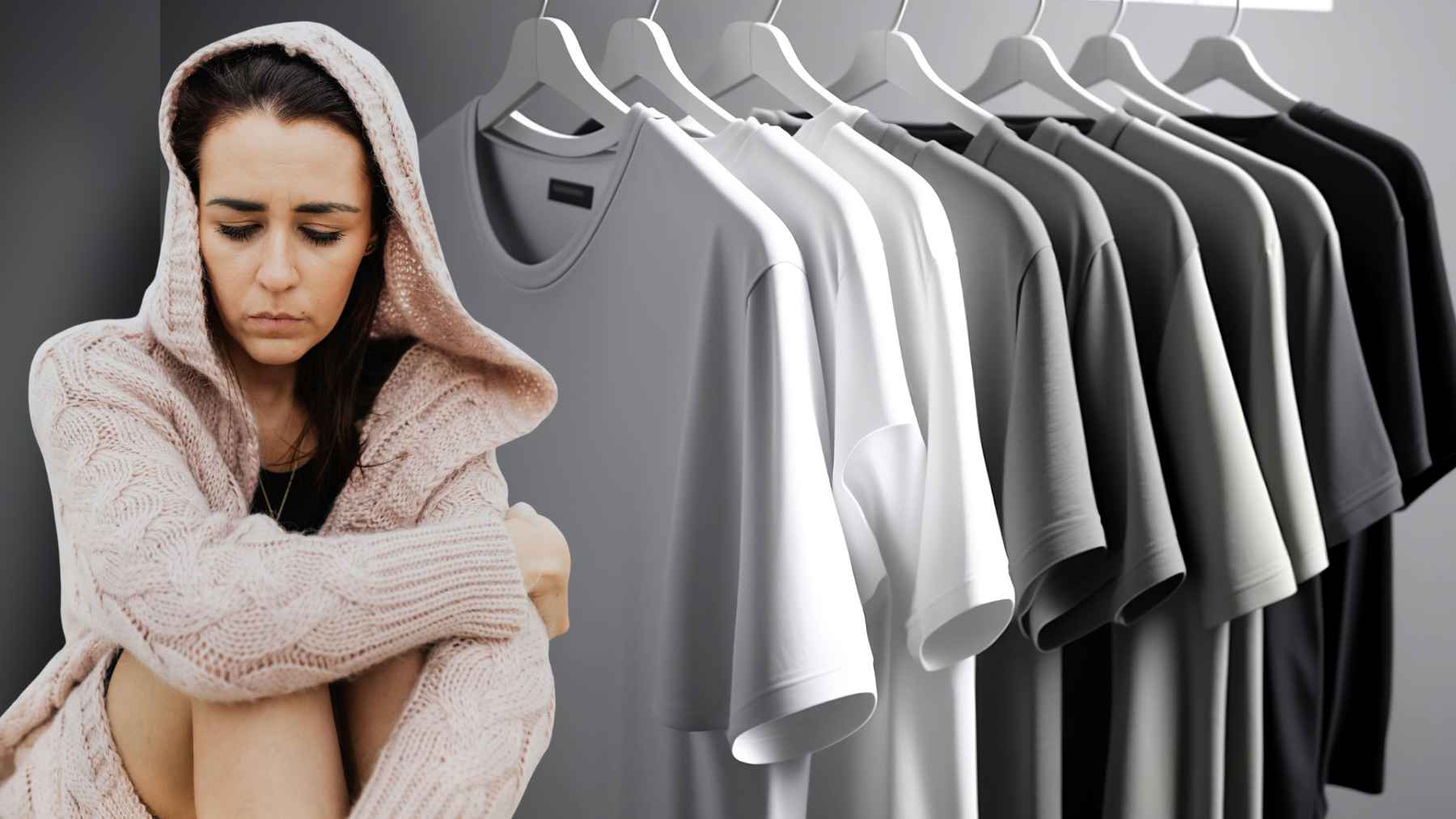
Color psychology has observed that, in people with low self-esteem, certain color preferences are often associated with insecurity, a need for control, and emotional protection.
These patterns show up in studies about how clothing colors and environments influence mood, self-perception, and how others see us. Still, they are never rigid labels, just tendencies that can offer clues about what someone may be feeling inside.
Pale gray: protection and fear of standing out
Pale gray is often linked to emotional inhibition and fear of drawing attention. It tends to show up in people who prefer to stay in the background, avoiding the spotlight because they are afraid of criticism or being judged.
Neutrals like light gray can provide a feeling of safety and control, even if that means sacrificing personal expression and visibility.
Muted brown: insecurity and search for stability
Soft, muted browns reflect self-preservation, caution, and a strong need for emotional stability.
From a color psychology perspective, they are associated with people who feel vulnerable or who are going through intense periods of self-criticism.
Brown is tied to earth and security, so people who choose it over and over again often seek grounding and emotional containment, sometimes without fully realizing it.
All black: self-protection and emotional walls
Black is also a color of power and elegance, but when it is worn almost all the time and in a very rigid way, it can function as a kind of emotional armor. In contexts of low self-esteem, it often appears as a way to hide vulnerabilities and create distance from others.
All black outfits can become a strategy to avoid emotional exposure and to tightly control the image that is presented to the outside world.
Key idea
Color does not define anyone, but repeated choices can reveal temporary emotional states and certain unconscious habits of self-protection.
Noticing these patterns can help us better understand what we are feeling, start working on self-perception, and open the door to emotional support when we need it. Improving self-esteem is not about throwing out your black, gray, or brown clothes, but about slowly strengthening the relationship you have with yourself.
The study was published in the Sapienza International Journal of Interdisciplinary Studies.