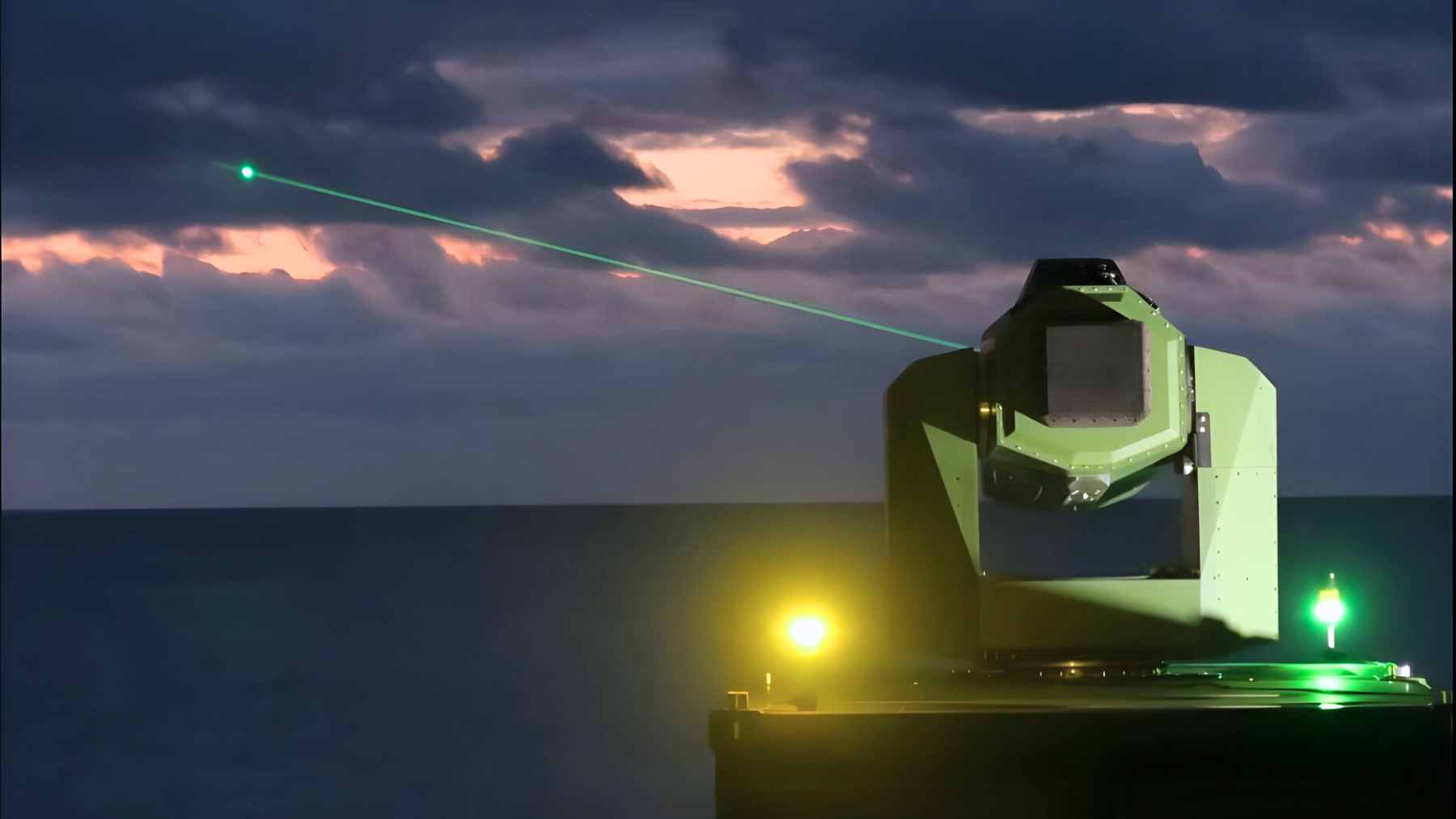
Germany is moving ahead with a weapon that sounds like science fiction yet is already working at sea. Rheinmetall and MBDA Deutschland plan to create a joint venture in early 2026 to turn their high-energy naval laser demonstrator into an operational system for the German Navy, mainly to defend ships from drones and other fast, close-range threats.
The prototype has already spent about a year on board the frigate Sachsen, where it completed more than one hundred firing and tracking tests in real operating conditions. Company data say the system can hold its beam on a target roughly the size of a one euro coin at long distance, even when it is seen only against open sky.
On paper, that is about precision and crew safety. In the background sits a quieter question. If navies start using light instead of shells for some tasks, could the ocean eventually feel the difference.
Old shells, new pollution worries
Europe’s coasts are already living with the legacy of earlier weapons. After the world wars, huge quantities of conventional and chemical munitions were dumped at sea. Many of those shells are now corroding on the seafloor, releasing explosive residues and metals into nearby sediments and bottom water.
Researchers have shown that these ageing munitions can leak toxic breakdown products from explosives such as TNT, creating long-term point sources of pollution in the marine environment.
Germany knows this problem up close. An estimated 1.6 million tons of old ammunition lie in the North and Baltic Seas, and authorities have launched a major recovery program with dedicated vessels and specialized platforms. The decaying explosives are already releasing carcinogenic compounds, and traces of TNT related chemicals have been detected near some of the dump sites.
So when a navy talks about new ways to intercept drones or missiles, it is not only a tactical story. Every traditional shell that ends up in the water can become part of this slow-moving, toxic inheritance for future generations and for the seafood on our dinner plates.
What a naval laser actually changes
The German laser project is designed to sit alongside, not replace, existing guns and guided missiles on warships. The companies describe a system that can engage small, agile threats at short and very-short range with high precision and what they call minimal collateral damage.
Directed-energy weapons work in a different way from classic gunfire. Instead of launching a metal round filled with explosive, they deliver energy to a target using a concentrated beam.
Public reports from defense research organizations note that such systems draw on an electrical power source and can reduce the need to move and store large quantities of physical ammunition, which also shrinks the logistics chain that sits behind every interception shot.
In environmental terms, that difference matters. Fewer explosive rounds fired over the ocean can mean fewer shells on the seabed decades later and fewer hotspots where TNT residues and heavy metals slowly leak into surrounding waters. Studies of old dumped munitions have linked those leaks to contamination of sediments and to measurable levels of explosive chemicals in marine organisms.
That does not magically turn a warship into a green technology. At the end of the day, most naval and merchant vessels still burn fossil fuels for propulsion and onboard power, making shipping a notable contributor to global greenhouse gas emissions and coastal air pollution.
A high-energy laser simply shifts part of the environmental footprint from steel and explosives toward electricity generation on board. If that electricity comes from conventional marine fuels, the climate impact remains significant, even if the weapon leaves no shrapnel in the sea.
A glimpse of cleaner defense, if policy follows
From a sustainability point of view, the German laser is best seen as a fork in the road rather than an instant solution. On one path, lasers are added on top of existing guns and missiles, which means more capability but little change in the overall pollution coming from munitions.
On the other, governments deliberately use these systems to replace a portion of explosive interceptors, while also greening the energy that drives their fleets.
In practical terms, that could mean pairing future naval lasers with cleaner ship propulsion, such as low-carbon fuels or hybrid systems, so that every shot truly depends less on fossil fuel and leaves fewer toxic traces in the water. Some navies are already experimenting with alternative fuels for broader climate reasons, which shows that military energy systems can change when leaders decide they must.
For now, Germany’s new joint venture tells us two things. High-precision laser weapons are moving from the lab toward real service, with an operational system for the German Navy projected from around 2029.
And as countries spend hundreds of millions of euros cleaning up old ammunition from the seafloor, every choice about future weapons will quietly shape how much new contamination we leave behind.
The press release was published by “Rheinmetall”.
Image credit: MBDA Deutschland