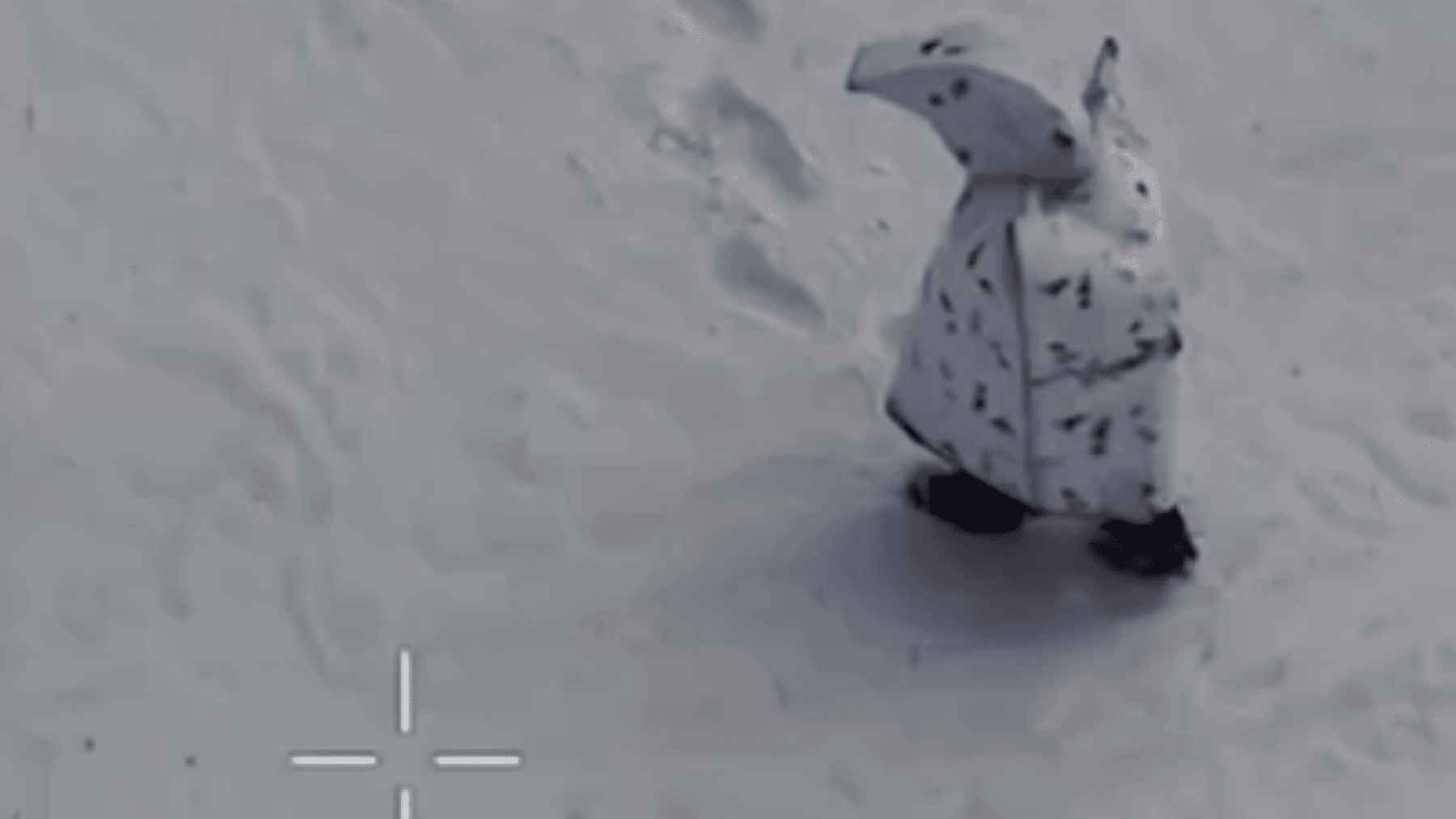
On a frozen field in Ukraine, a Russian soldier in a bulky white outfit waddles across the snow, looking uncannily like a human-sized penguin. Moments later a small FPV drone finds him in the open and the video feed cuts to black.
Ukrainian units have shared several clips like this in recent weeks, all showing the same experimental winter suit nicknamed “Penguin” by frontline troops. Behind the viral images sits a serious lesson about drones, sensors and the way humans try to copy nature.
Snow camouflage that backfires
Battlefield footage verified by Ukrainian Territorial Defense units and outlets such as UNITED24 Media shows Russian soldiers wrapped in a voluminous white coverall with dark spots and a pointed hood that stretches the human silhouette.
The suit appears designed to break up a soldier’s outline against snow, similar in spirit to ghillie suits used by snipers, but tuned to open winter landscapes.
In combat, the effect has often been the opposite. The 120th Territorial Defense Brigade of the Armed Forces of Ukraine says its operators have eliminated at least two and possibly several more Russian soldiers wearing the new gear during recent engagements on snow covered ground.
In the videos, the “penguins” move slowly, leave a clear trail of footprints and stand out as a single bright figure in otherwise empty fields, which makes targeting from above almost trivial. Ukrainian reporting stresses that the outfit is still experimental and that front line soldiers are effectively serving as live test subjects.
Drones see more than color
The failure of “Penguin” points to a deeper shift on the modern battlefield. Small reconnaissance and strike drones watch from above almost constantly, turning open ground into what Ukrainian officers describe as a kill zone.
A recent field report by The Hague Centre for Strategic Studies concludes that FPV drones and other unmanned systems now account for roughly 60 to 70 percent of all combat losses in Ukraine, acting as both eyes and weapons for units on the ground.
Many of these drones carry thermal cameras that pick up heat differences, along with regular optics and sometimes AI-assisted recognition. Thermal ponchos and capes, with reported prices between $75 and $200, try to hide soldiers by trapping body heat so that infrared images show only a faint blur.
Tests shared by Ukrainian drone operators suggest that this can work to a large extent against heat sensors, yet the same cloaks often make troops more visible in normal video because of their size and awkward movement across clean snow.
Anyone who has watched a home energy inspection on a thermal camera knows how stubborn warm leaks can be; on the battlefield the leak is a human who still has to walk, breathe and disturb the landscape.
Nature’s camouflage still wins
In the natural world, winter camouflage is about far more than a white coat. Arctic hares, ptarmigans and real penguins survive by timing their movements, staying in groups, using broken terrain and saving energy when predators are near. Color, behavior and habitat work together as one system rather than a single clever garment.
The “Penguin” suit copies the color palette but ignores much of the rest. ArmyInform, a news service of Ukraine’s Ministry of Defense, notes that infantry wrapped in these cloaks remain clearly visible to drones by day and night, including on thermal cameras, while the extra bulk restricts basic actions such as running or diving into cover.
For experienced drone pilots, the waddling outline becomes a recognizable signature instead of protection.
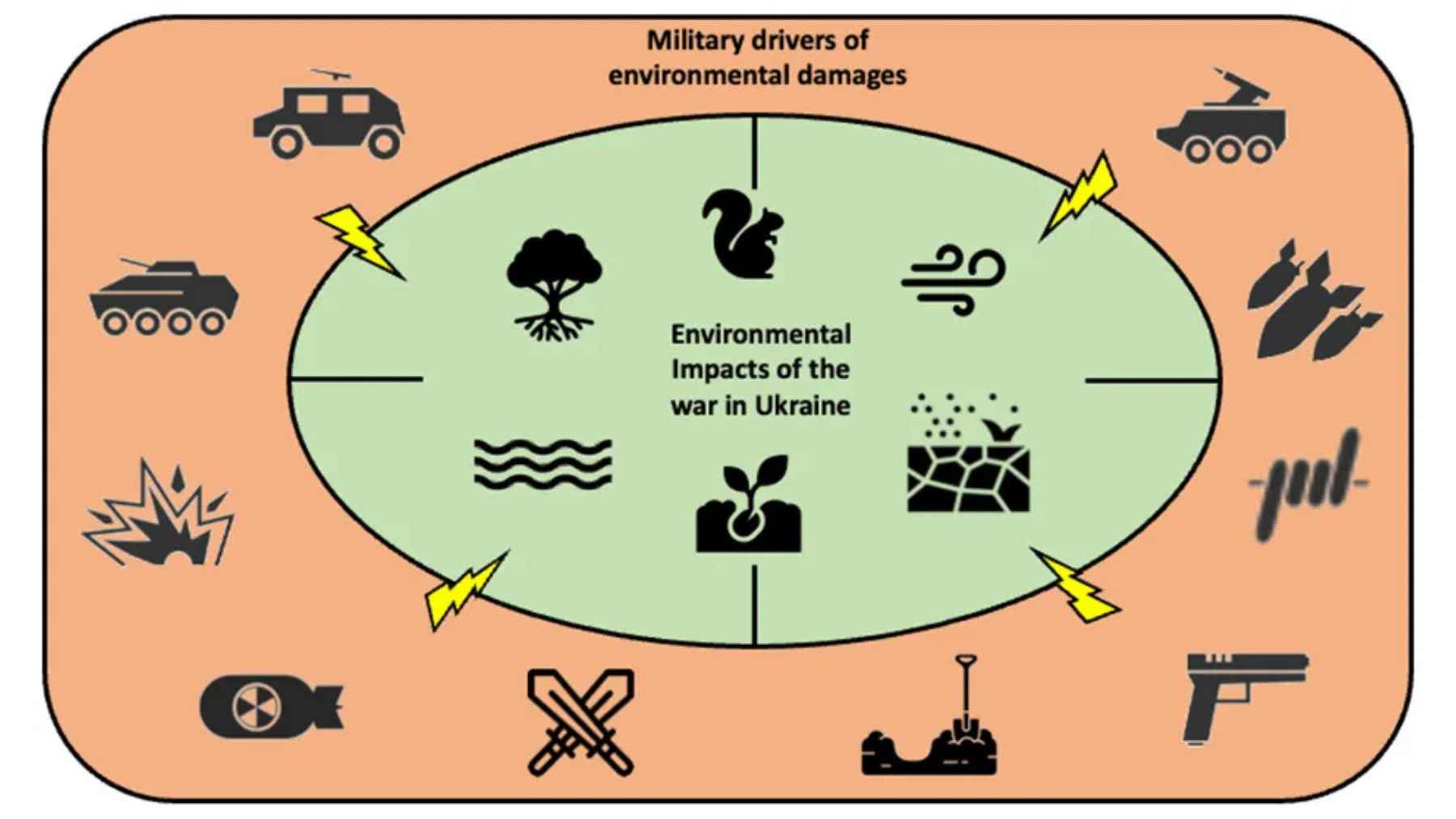
For Ukraine’s fields and forests there is also a quieter cost. Every shattered drone, broken cape and discarded cable adds to the growing layer of military waste on soils already stressed by explosives, metals and fires, a pattern described in recents cientific reviews of the war’s environmental footprint.
That means each failed experiment in camouflage is not only a tactical mistake but also another small burden on ecosystems that will need decades of recovery.
The official statement was published on ArmyInform.