In a move that could reshape the skies over northern Ukraine, new satellite images show Belarus hosting a modern Russian air defense system at a key oil refinery close to the border. The Tor M2 launchers have reportedly appeared at the Mozyr Oil Refinery, a facility that sits within quick striking distance of Ukrainian territory.
The deployment, revealed by investigative journalists using commercial satellite data, points to a long-planned effort to shield the site from drones and other low-flying threats. It also raises fresh questions about how Belarus is deepening its military role in a war that is about to enter its fourth year.
What satellite images reveal near the border
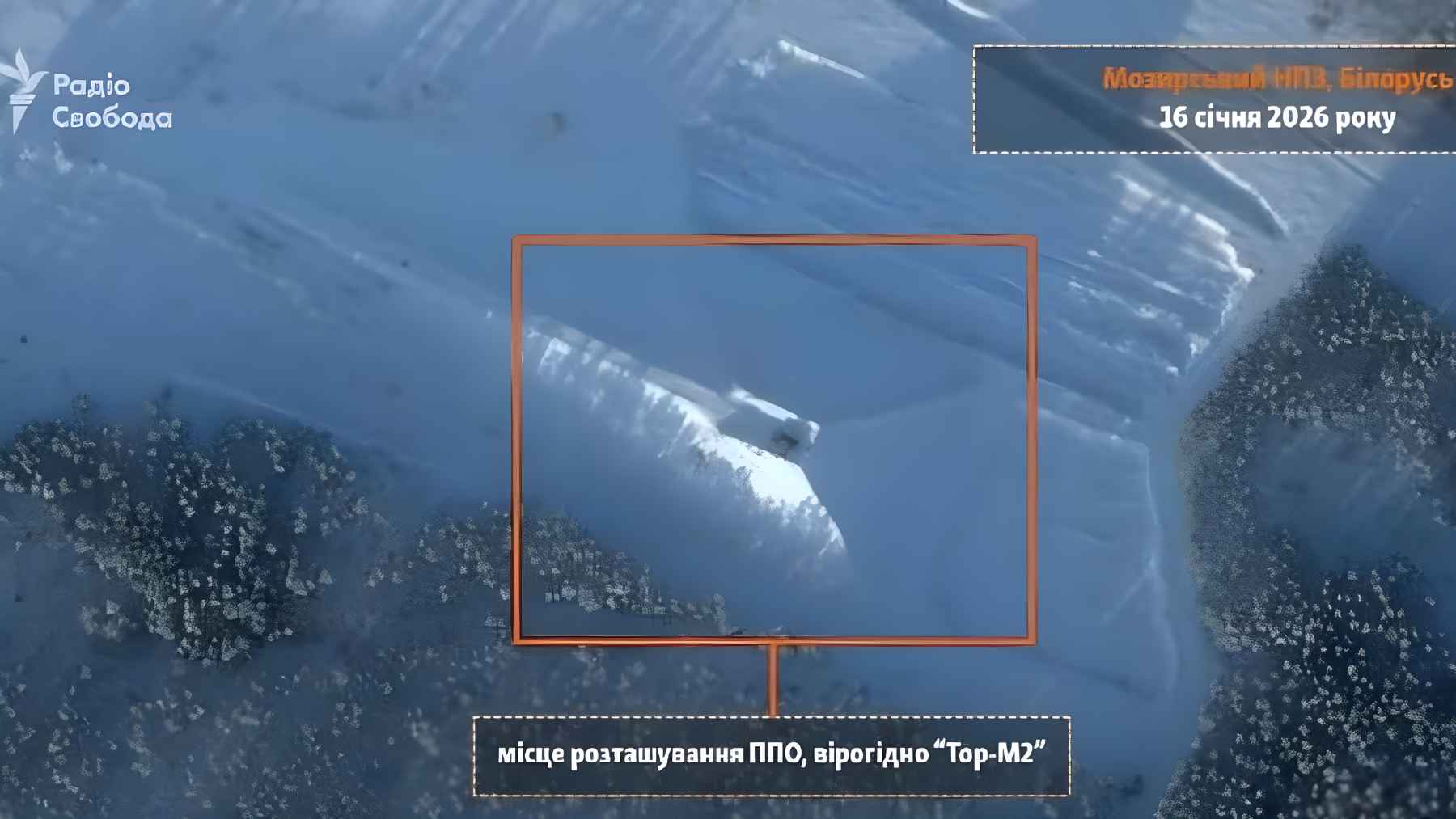
According to the Ukrainian branch of Radio Svoboda, Belarus has not only reinforced troop positions along its southern frontier but has also built an air defense site inside the Mozyr Oil Refinery complex.
The plant lies a few dozen kilometers from the northern Ukrainian border, close enough that any new missiles there can affect nearby airspace.
Journalists in the Schemes investigative project used Planet Labs commercial imagery to track construction of a fortified position at the refinery starting in January 2025.
Their analysis suggests that the launcher appeared in early August after months of earthworks and that later photos showed a turreted vehicle on a heavy chassis made by Minsk Wheel Tractor Plant MZKT that experts identify as a Tor M2 system.
How the Tor M2 system works
The Tor M2 is a short-range air defense system designed to guard a relatively small area from threats such as drones, cruise missiles, guided bombs, and low-flying aircraft. Instead of covering an entire country, it focuses on shielding specific units or critical sites like refineries, depots, or power plants.
Military data indicate that a single Tor M2 vehicle carries 16 missiles and can engage several targets at once, often four and in some versions up to eight.
The interceptors can reach speeds near one thousand meters per second and hit objects up to about 16 kilometers away and 10 kilometers high, even in bad weather or under electronic jamming.
Why the refinery is a strategic target
The Mozyr Oil Refinery produces gasoline, diesel, and other fuels that feed both the Belarusian economy and Russian logistics, so keeping it running is a priority. The plant sits in the south of the country near major road and rail routes that lead straight into northern Ukraine.
Monitoring projects such as Belarusian Hajun have reported that, alongside the air defense position, new firing points, trenches, and checkpoints appeared around the refinery during 2025. Analysts quoted by Ukrainian media say this pattern fits an effort to reduce the risk of sabotage or drone strikes against the facility and nearby Russian assets.
Rising drone traffic and what it means for the region
Belarusian data cited in the reporting suggest that more than 105 drones crossed the country’s airspace in 2025 and that around 82% were not shot down or stopped.
Observers believe those flights likely included both Russian and Ukrainian drones as well as other intelligence gathering platforms, which underlines how crowded the sky has become.
That level of unchallenged drone activity puts pressure on authorities in Minsk to show they can control the air above sensitive sites.
What does that mean for people in nearby Ukrainian towns who already live with frequent air raid sirens and nights broken by alerts on their phones? Any additional missile batteries near the border can complicate Ukrainian air operations and influence how and where drone strikes are planned, according to assessments from the Institute for the Study of War, and the Mozyr deployment is one more sign that the conflict is pulling Belarus closer to the front line.
At the end of the day, the new system in Mozyr is meant to keep a vital energy hub safe in a region where infrastructure has become a primary target.
The main investigation has been published by the Schemes investigative project of Radio Svoboda.