Can a small solar kit on an apartment balcony be treated like a personal upgrade, the way you might add a satellite dish or a window air conditioner? A first instance court ruling in Gdańsk, Poland suggests it can be much more complicated.
The case revolves around a balcony solar setup meant to cut one household’s electricity costs, but it ended with an order to take the panels down. The decision is not final, yet it puts a spotlight on a legal gray area that could affect other apartment residents who want “balcony solar” to help with the monthly bill.
The ruling
In late February 2026, a district court in Gdańsk ordered a resident to remove photovoltaic panels installed on his balcony, even though he said he had collected support from a majority of eligible neighbors.
The court backed the housing cooperative after finding there was no dependable way to verify who had signed in favor of the installation, and the resident has said he plans to appeal in a space where rules for balcony solar in multifamily buildings remain unclear. The case was first reported by Wyborcza.biz.
The resident, identified in reports as Mr. Krzysztof, began in March 2023 with two 400-watt panels and later expanded the setup to about 1.2 kilowatts, roughly 1,200 watts. Reports say the first kit cost about 3,500 Polish zloty, roughly $980, and a later purchase pushed the total investment to around 5,000 zloty, about $1,400, using recent average exchange rates from Poland’s central bank.
After he upgraded the system, he notified the local grid operator, Energa-Operator, and the reports say his electricity bills dropped by more than one third.
A tiny power plant on a railing
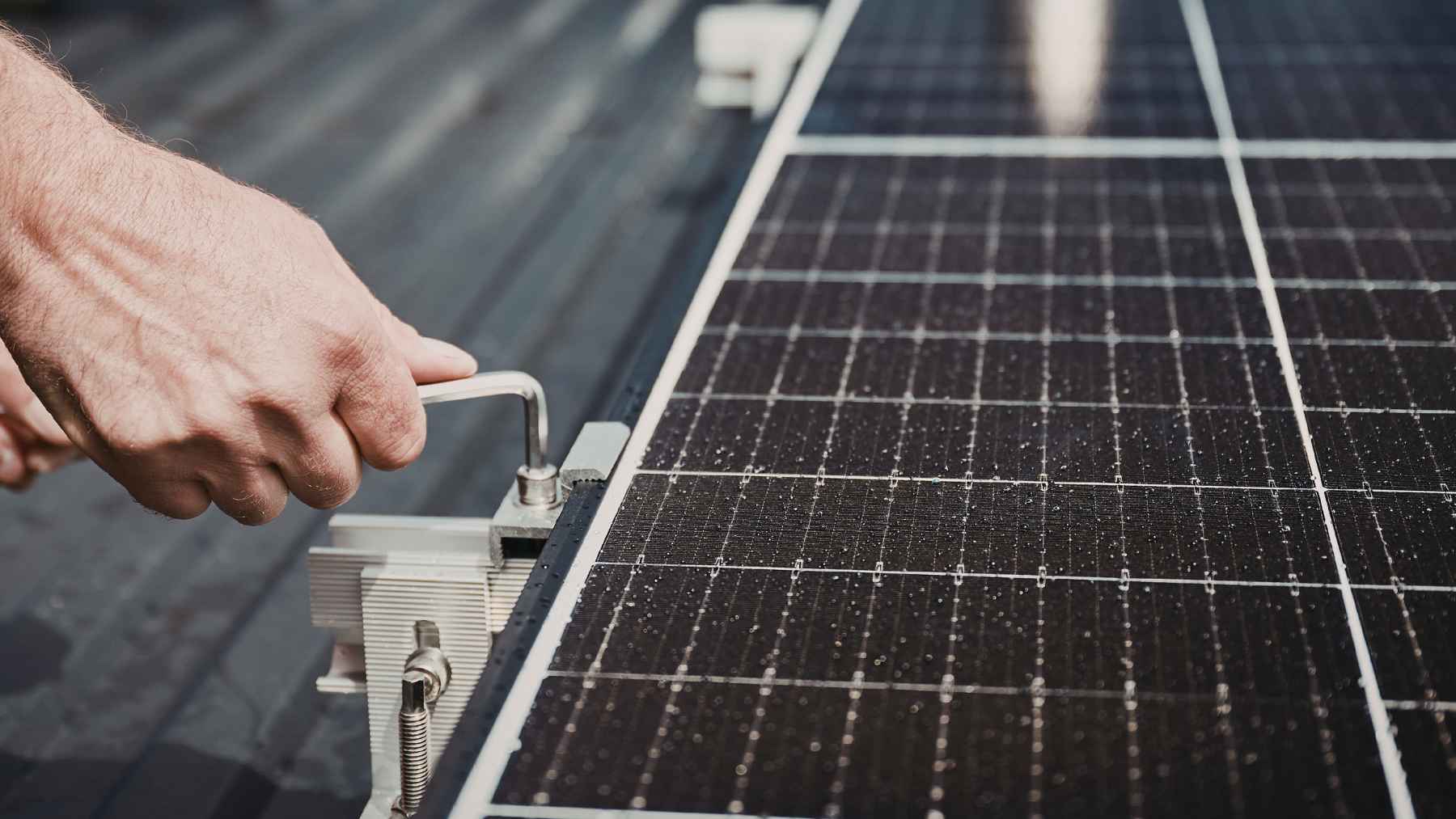
Balcony solar is a small-scale version of rooftop solar, usually one or two panels attached to a railing or wall. It can look almost like a piece of balcony furniture, but electrically it is still a power system connected to the home.
Most kits include a microinverter, a small box that converts the panels’ electricity into the kind used by household outlets. When a home can export power back to the grid, it also needs a bidirectional meter, which is what makes someone a “prosumer,” a customer who both uses electricity and produces some.
When paperwork beats hardware
The signatures were the turning point. The resident says he was told he needed approval from more than half of the cooperative’s members, and he collected signatures from about 60% of eligible people before installing the panels.
The cooperative later argued it could not confirm whether each signer was a member with voting rights, as opposed to a tenant or a temporary occupant. That may sound like bureaucracy for its own sake, but it is also how shared property rules are enforced in many apartment buildings.
What balcony solar can save
Balcony systems are popular for a simple reason. They promise savings without needing access to the roof, and that matters in cities where most people live in multifamily buildings.
A recent analysis led by Kajetan Nowak at Poland’s Instrat Foundation estimated that balcony solar owners can save around 700 zloty a year on average, about $200, with payback in under four years in many cases. The same analysis warned that balcony direction is key, so two neighbors can buy the same kit and see different results on their electric bills.
The safety questions building managers focus on
Even small systems raise safety and responsibility questions. Panels have to be secured against strong winds, wiring needs to be protected from rain, and building managers worry about who is liable if something fails.
That is why boards often treat balcony solar as more than a consumer gadget. If a panel comes loose during a storm, it is not just the owner’s problem, and that tension shows up quickly in building meetings.
Germany’s smoother path
Germany has pushed balcony solar into a clearer category, with standardized limits and lighter bureaucracy. In April 2024, Germany’s Federal Network Agency simplified the registration process for plug-in balcony solar units, cutting down the number of details people had to enter.
Germany’s solar trade group, the German Solar Association, estimated the country would reach about one million registered plug-in devices in June 2025, after roughly 135,000 new units were added from January through April 2025.
Germany’s regulator also spells out what qualifies as a plug-in device under special rules, including a cap of 2,000 watts of solar modules and about 800 watts of inverter output.
What this means for apartment residents
If you are considering balcony solar, the lesson is straightforward and a little unglamorous. Get written permission, confirm who is eligible to approve it, and keep records that can be checked later if someone challenges the process.
The Gdańsk appeal could still change the final outcome, but the broader message is already clear. Balcony solar can be a practical tool for lower bills and cleaner power, yet in many apartment buildings the rules and the technology are still learning to live together. The main court decision was issued by the District Court of Gdańsk-Północ in Gdańsk.
The official court information was published on the District Court of Gdańsk-Północ in Gdańsk.