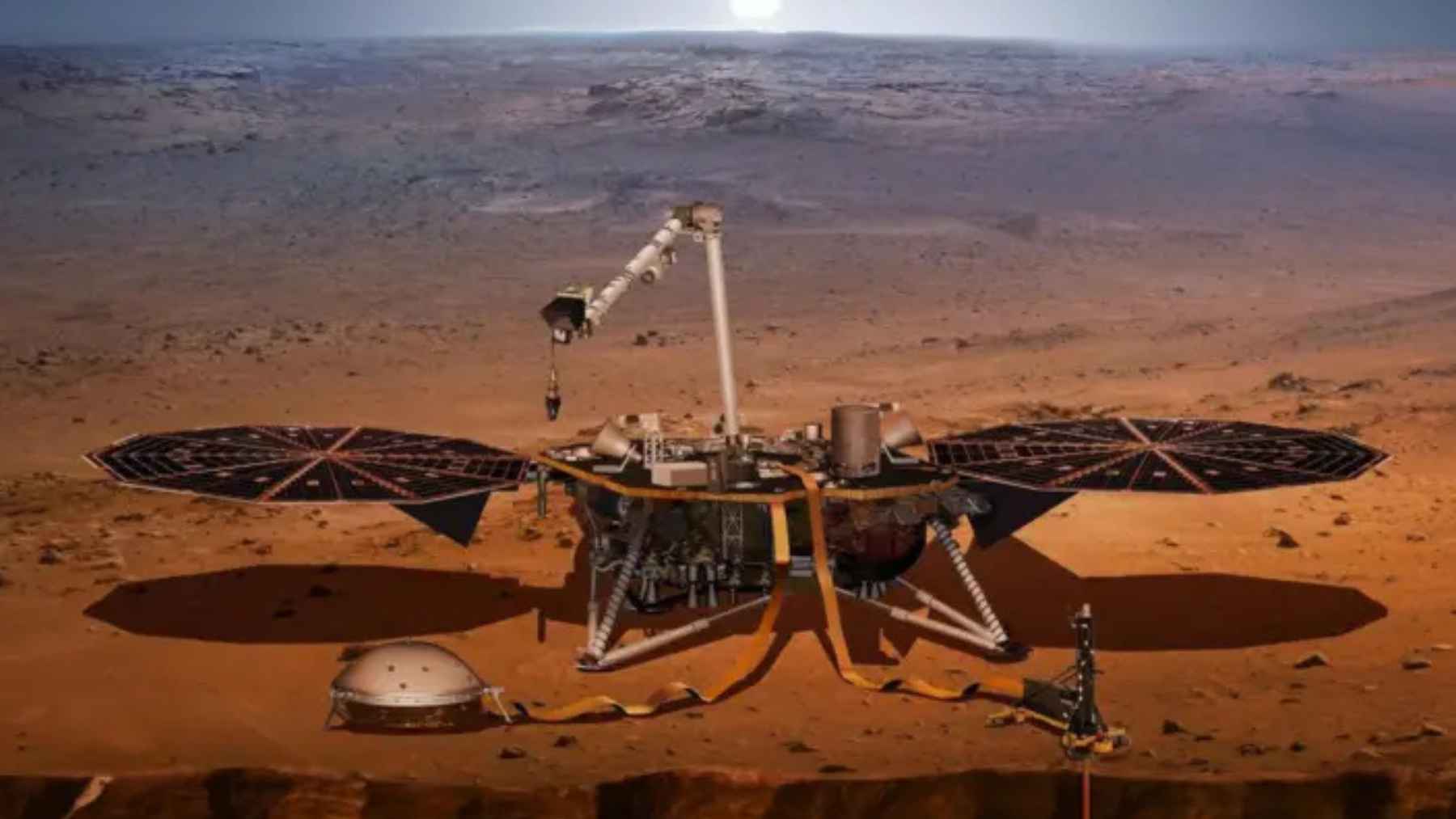
New research led by scientists at the Instituto de Astrofisica de Andalucia (IAA-CSIC) and the University of Tokyo has caught a rare kind of Martian weather in the act.
A short-lived and very dusty storm in Martian Year 37 lofted water vapor far higher than expected and boosted hydrogen escape to space by about two and a half times compared with previous years during the same season. In simple terms, the planet briefly opened a wider drain on its remaining water.
What the spacecraft actually saw
The storm erupted during northern summer on Mars, a time that climate models long treated as relatively calm and “safe” for the planet’s water budget.
Instead, instruments on the ExoMars Trace Gas Orbiter, NASA’s Mars Reconnaissance Orbiter, and the Emirates Mars Mission (EMM) watched as water vapor surged to heights of around 60 to 80 kilometers over high northern latitudes, reaching up to ten times the usual amount at those altitudes. The excess moisture then spread rapidly around the planet.
That alone surprised researchers. In northern summer, the air is typically colder and cleaner, so water tends to freeze into clouds and stay trapped in lower layers.
Most long-term water loss had been linked to the warmer and dustier southern summer, when bigger storms heat the atmosphere and let vapor climb higher before it can freeze. The new event shows that a strong local storm can punch through that rulebook.
Why higher water vapor means more loss to space
Once water is carried high enough, sunlight starts to tear the molecules apart. Hydrogen atoms produced in those reactions are light and can drift away into space.
After the 2023 storm, EMM recorded a sharp jump in hydrogen density at the exobase, where the atmosphere fades into space, and a hydrogen escape rate of about five hundred million atoms per square centimeter each second. That was roughly two and a half times higher than during the previous northern summer.
One storm will not dry out a planet on its own. Yet the team argues that many such out of season events over billions of years could have added up, helping to turn a world of rivers and lakes into the cold desert we see today.
Geological traces of ancient channels and hydrated minerals already tell us that Mars once held enough water to cover it in a global ocean hundreds of meters deep. Now scientists are filling in the details of how that water was lost.
What this changes for climate models and future missions
Why should anyone on Earth care about a dusty storm on a distant planet while trying to keep an eye on the electric bill and local drought warnings? Because this work highlights just how sensitive a planet’s climate and water cycle can be to seemingly small shifts in energy and particles in the air.
On Mars the key factor is dust and solar radiation instead of smokestacks and tailpipes, but the message is similar. Change the rules of the atmosphere and you can change a planet’s habitability for good.
For the researchers, the next step is to watch for more of these “quiet season” storms and refine climate models so they no longer underestimate northern summer water loss.
That means more long-term monitoring from orbit and, eventually, better context for any future missions that search for buried ice or ancient life.
The study was published in Communications Earth & Environment.