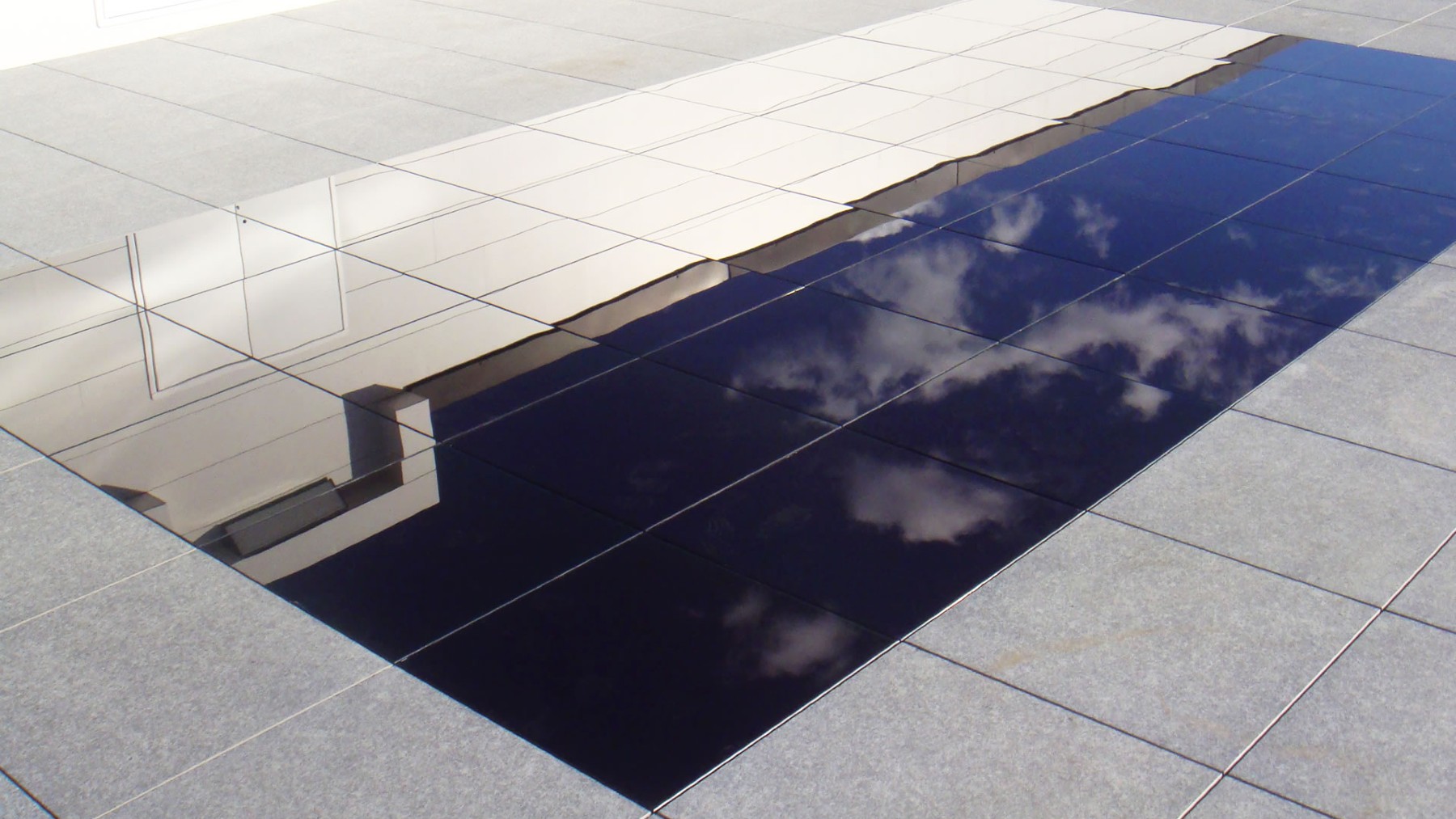
The energy industry has just made a “leap” of a century, and experts are talking about “a new era”. What has happened to make the forecasts so ambitious? Solar panels have just been forgotten with new photovoltaic tiles that produce free electricity at home. How can you do it? It’s as easy as stepping on them and walking on them—something we have never seen with previous inventions, not even with the flexible cells that are placed on windows or walls. You haven’t seen anything yet.
Experts are already talking about the “end of solar panels”: A new invention you can have at home
The combination of PVs into ceramic tiles, thus, is a major innovation in the use of renewable systems for energy, especially the efforts of the Italian ceramics sector. In this article, we want to explain the detailed information about the photovoltaic tiles that are being developed for using free energy at home, which were developed by the CECERBENCH laboratory.
Photovoltaic tiles are designed to serve dual purposes: they are used in the same capacity as the actual roof or wall product, but simultaneously produce electricity. The peninsula’s ceramic tile industry has come a long way in incorporating PV devices into ceramic tiles, their goals being both aesthetic and functional.
More than 80 % efficiency: Solar panels’ record has been broken with this Italian innovation
This innovation is most useful to buildings because up to eighty percent of total heat exchange comprises non-transparent parts such as walls and roofs. The work on these tiles is aimed at the CECERBENCH laboratory at the Centro Ceramico Italiano. Researchers have focused on several key areas:
- Replacing Glazed Layers: Spectacular glazing coatings with ceramic tiles are being replaced with photovoltaic coatings to increase the energy production potential.
- Direct Integration: Currently, attempts are being made to build a technology in which one can go directly onto the ceramic tiles and put the photovoltaic surfaces on.
- Functionalization: The goal is to add new functions to the tiles, including the generation of heat, and the ability to actively clean themselves.
The technological prototypes created are relatively small, with a size of 10 cm in width and length and made up of a string of four integrated photovoltaic cells. Such tiles are screwed on aluminum frames and linked by ordinary electric contacts to one another and other elements of the building.
Experts are developing photovoltaic tiles for homes: Testing has been done, and these are the results
The first pilot experiments with the photovoltaic tiles have proved to be quite effective. From these performance metrics, it can therefore be concluded that these tiles can successfully keep the thermal behavior of the different areas consistent and possibly at an optimum level for efficient energy use. Key performance indicators include:
- Energy Generation: The PV tiles are able to produce the required electricity that is used in the households, hence leading to small electricity bills.
- Thermal Management: They enable controlled circulation of heat between the interior and exterior of structures without the requirement of extra sources of heat or chill.
The photovoltaic tiles developed by CECERBENCH are not only functional but also come with several unique characteristics:
- Aesthetic Versatility: Photovoltaic tiles are different from normal solar panels, they can be incorporated into the architecture of the building so it maintains its aesthetic value.
- Innovation in Design: The incorporation of photovoltaic technology in the manufacture of ceramic tiles is an artwork and a scientific innovation in how, in the construction field, new materials can be made.
- Research and Development: With further research at Chalmers Energy and Building Research Center, CECERBENCH will continue to strive for additional materials and methods to improve the efficiency and functionality of photovoltaic tiles.
The creation of the first photovoltaic tiles is a step towards the “explosion” of energy self-consumption that experts have been predicting for years. It is even expected that conventional solar panels will disappear in the medium term, thanks to this type of innovation. Not only this one, but others that experts around the world are developing. Don’t you remember the photovoltaic ceramics at ETH Zurich? Finally, we see America taking the lead in the global energy industry.