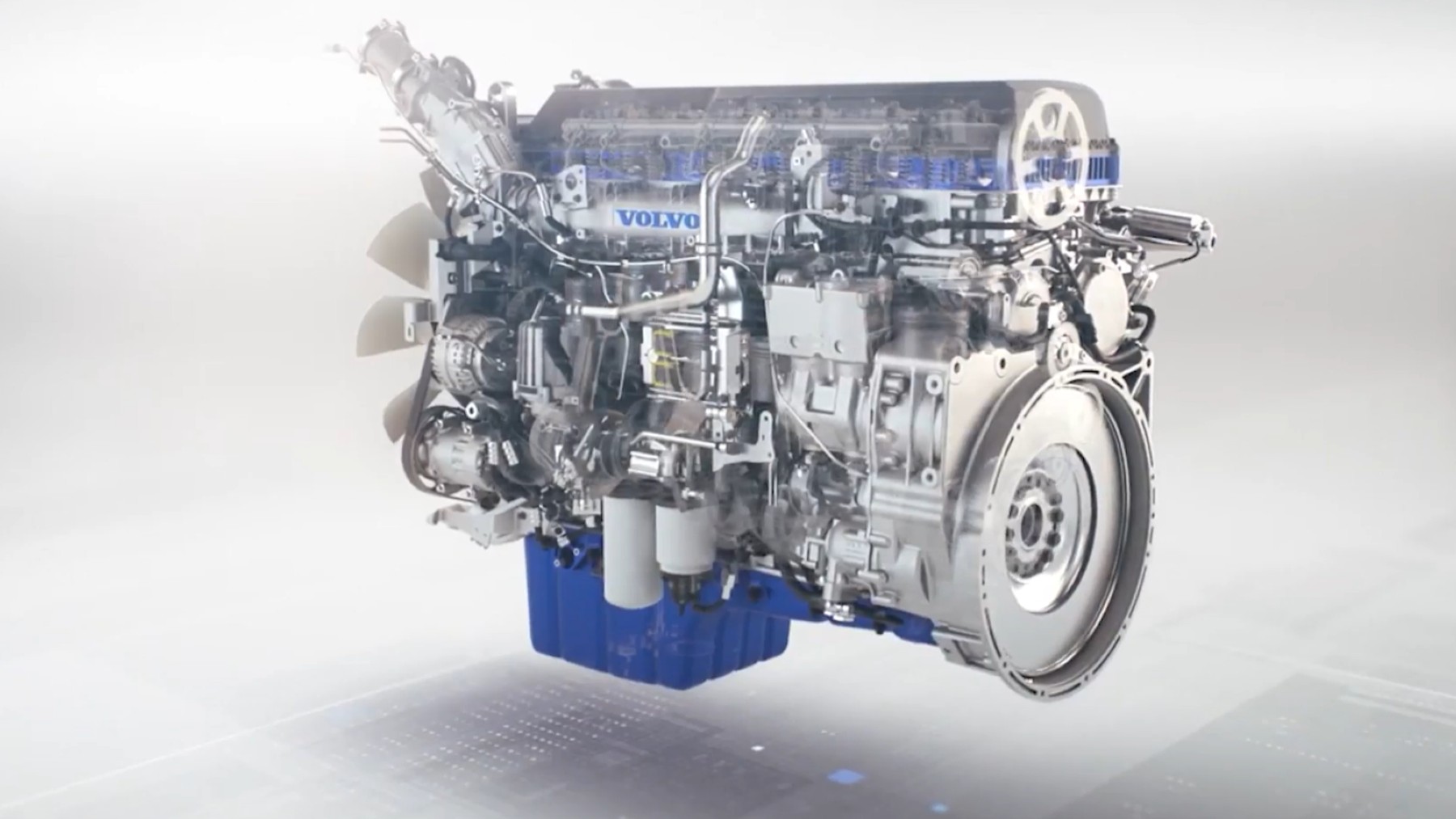
The world has set its sights on hydrogen to find workable and environmentally friendly means of transport. However, Sweden is making significant strides with a remarkable innovation: the first engine fueled by green.
Volvo Trucks, one of the oldest players in the automotive industry, is a shining example of this revolution by demonstrating how renewable fuel can change the future of heavy-duty vehicles. This article explains Volvo’s revolutionary green engine’s characteristics and consequences.
Exploring Volvo’s innovative D17 engine technology: What makes it special?
This paper aims to identify the fundamental changes in the internal combustion engine due to Volvo’s new D17 engine. This is the biggest and most potent diesel engine ever manufactured by the firm and has options that produce 600, 700, and even 780 horsepower.
It features the latest WAVE combustion technology, thus improving throttle sensitivity and fuel economy compared with the previous model. The D17 is rated at between 2,212 and 2,802 lb.-ft. of torque to cater to modern trucking needs but simultaneously offers a considerable reduction in emissions.
The significant difference of the D17 is that it is biodiesel compliant with Biodiesel B100, which makes the engine operable on 100% renewable fuel. Thus, by adopting biodiesel, Volvo plans to bring its business activities in line with its target to reduce the company’s net climate impact to zero by 2050 and to safeguard the environment.
Volvo’s commitment to renewable fuels: Driving change in the transportation industry
The question of environmental conservation has been on the rise, creating a lot of pressure on the transportation industry to minimize its impacts. Volvo’s commitment to renewable fuels, especially biodiesel and HVO (Hydrotreated Vegetable Oil), makes Volvo stand out in the company’s strategy of reducing emissions.
Volvo also says that using biodiesel, CO2 emissions can be reduced by 30 and 70 percent, depending on the feedstock. This reduction is essential for fulfilling the customer’s needs and legal requirements. The D17 engine is part of a battery-electric and fuel cell-electric drive program, which proves that Volvo is not limited to only battery-electric solutions for sustainable transport.
By incorporating renewable fuels into its line of products, Volvo not only solves present problems but also looks to the future, where conventional fuels are likely to be banned.
Legislative changes in Sweden: Supporting innovation for greener transportation solutions
Recently, the regulatory changes in Sweden in the operations of tractor-trailer combinations permit longer and heavier units, implying lower energy use and emissions. New laws allowing 113-foot-long trailers with a maximum weight of 100 tons make for a great deal of improvement in efficiency. By allowing fewer but big trucks to convey the same load, Sweden is laying a good example of environmentally friendly transport.
These new combinations are well suited to the D17 engine from Volvo, which provides the power and fuel economy needed for higher-capacity operations. The legislative support shows that the automotive industry and government must work together to foster innovation.
Lessons learned from Sweden: The future of sustainable transportation
While the world tries to decide if hydrogen is the solution to its energy needs and how to deal with it, the Swedish decision to rely on green-fueled engines is realistic. Volvo’s focus on biodiesel and renewable fuels shows that much can be achieved without waiting for new technologies. By improving the current generation of engines and supporting renewable fuels, Sweden shows the way for other countries to follow.
However, the experience of creating the D17 engine indicates that climate change requires a complex solution. Thus, by integrating a new generation of engines with renewable fuel types, the transportation industry can attain a radical shift toward sustainability.
In conclusion, while the world debates the merits of hydrogen, Sweden is leading the way with practical solutions that prioritize immediate action. Volvo’s green-fueled engine exemplifies technological innovation and represents a sustainable path forward for the automotive industry. As more countries look to reduce their carbon footprints, they can learn valuable lessons from Sweden’s pioneering efforts in developing and implementing green-fueled engines.