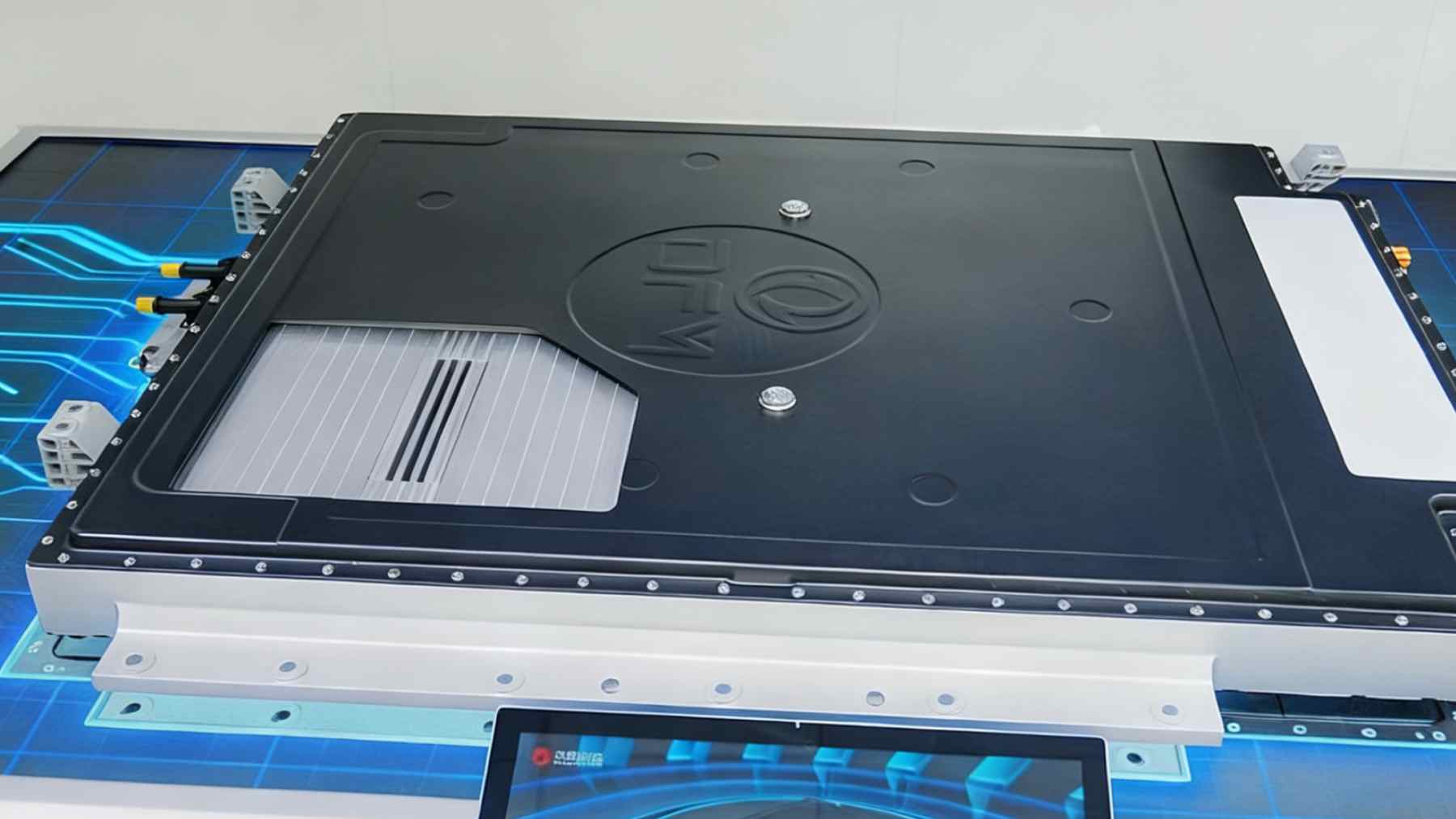
A Chinese automaker is trying to pull the future of electric mobility a few years closer. Dongfeng has announced plans to sell its first electric car with a high-density solid-state battery in 2026, promising more than 1,000 kilometers of range on a single charge and ultra-fast charging that could add hundreds of kilometers in just minutes.
If it delivers anything close to those figures, daily life with an electric car could feel very different for drivers worried about range anxiety and winter performance.
Solid state batteries move toward the road
Across the auto industry, solid-state batteries are often described as the next big leap for electric vehicles. On paper they offer higher safety, better performance, longer driving range and improved durability compared with today’s liquid-electrolyte lithium ion packs.
Many global manufacturers are racing to develop the technology, from in-house programs to joint ventures with battery specialists. At the same time, most carmakers still see mass production as something that will arrive after 2030, not in the middle of this decade.
That is where Dongfeng is trying to stand out. The company says it plans to launch a high-density solid-state battery for electric vehicles in 2026, with series production scheduled to start in September of that year. It is a much more aggressive timeline than the cautious tone heard from many competitors.
What Dongfeng is putting inside the pack
According to the information shared so far, the battery pack would use a high-capacity ternary cathode, a silicon-carbon anode and a solid-polymer electrolyte. Dongfeng reports that the pack can retain more than 72 percent of its energy even at minus 30 degrees Celsius, which would be a notable improvement over many current EV batteries in harsh winter conditions.
The company also cites a specific energy of about 350 watt hours per kilogram. In practical terms, that level of energy density supports the claim of more than 1,000 kilometers of range, at least under favorable test conditions. Fewer charging stops on long highway trips, less stress about detours on a cold night in the suburbs, that is the promise on the table.
Dongfeng has paired the new battery with its Mach Super kV platform, built around a 1,200-volt electrical architecture and a silicon carbide power module. The system is designed for 12C ultra fast charging that could theoretically add about 450 kilometers of range in only five minutes. That kind of speed would change how people plan coffee breaks on a road trip, even if real-world charging conditions rarely match perfect lab scenarios.
Price, labels and a changing Chinese market
Solid-state batteries are usually associated with high costs and limited early production, reserved for premium models. Dongfeng says it wants to break that pattern and pursue accessible pricing in its home market and abroad, in an effort to spread the technology beyond luxury showrooms.
Other brands are taking a more gradual path. MG, for example, has launched its MG4 with a semi-solid battery that blends conventional elements with features inspired by fully solid cells. It is a reminder that the transition will probably include several intermediate steps.
On top of this technical competition sits an unusual factor. Chinese authorities have recently changed the official naming used for these advanced batteries, which has created some confusion in the global industry about what should be considered solid, semi-solid or advanced versions of existing chemistries. As labels shift, it becomes harder for consumers to compare claims on spec sheets and easier for marketing to outrun reality.
Chinese experts urge patience
Despite the excitement around Dongfeng’s announcement, several voices inside China’s own battery sector are calling for patience. At the World Conference on Electric Batteries, Wu Chengxin, vice president of the country’s Collaborative Innovation Platform for solid state batteries, warned that key hurdles still stand in the way of large-scale rollout.
He explained that the industry is working hard for a technological leap but that it still needs significant progress in scientific research, specialized equipment and industrial design before reaching what he called true commercial maturity.
Deng Chenghao, vice president of Changan Automobile and president of Deepal, offered an even more cautious view. In his words, thinking about broad commercialization by 2030 is the best possible case, while a more realistic scenario might see a wider rollout closer to 2035. The message from these insiders is clear enough. The potential is huge, yet the road to mass adoption is longer than headlines suggest.
What it could mean for cleaner mobility
For the environment, the implications are important. Higher-energy density and better cold performance can make electric cars more attractive in regions where long distances and harsh winters still push buyers toward combustion engines. Faster charging could also ease pressure on public infrastructure, since each vehicle would occupy a fast charger for less time.
At the same time, experts remind us that battery innovation is only one piece of the climate puzzle. Solid state cells still rely on mined materials, still require energy-intensive manufacturing and still need robust recycling systems if they are to fit into a truly sustainable mobility model.
So Dongfeng’s 2026 plan sits at an interesting crossroads. It shows how quickly the technology race is moving, especially in China, but it also highlights how far the world still has to go before solid state batteries become an everyday reality, not just a headline about a thousand-kilometer car.
The official announcement about Dongfeng’s solid state battery plan was published on China EV Home.