Some mornings, the sky looks normal until you step outside and notice the haze.
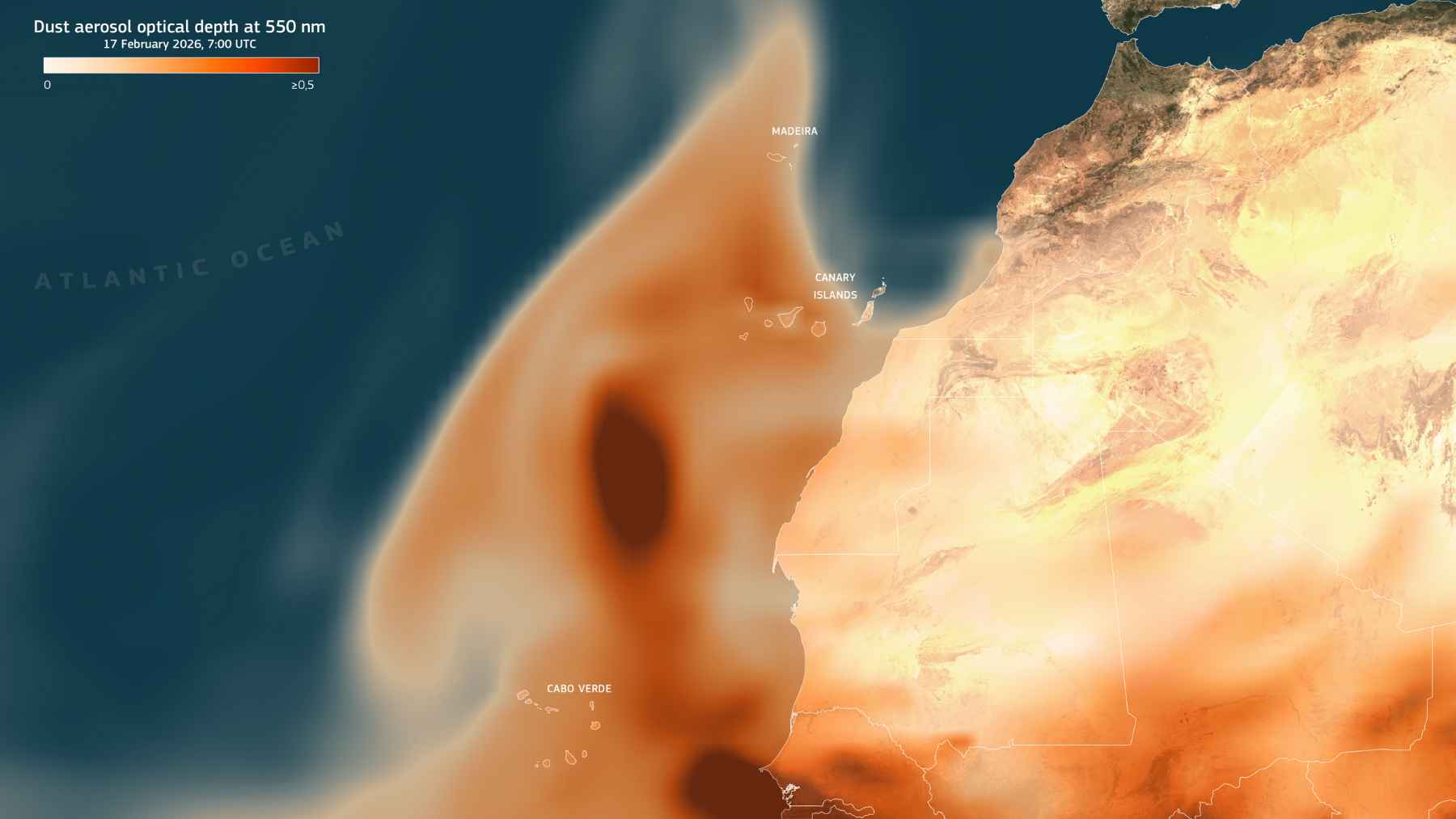
Since mid-February 2026, a broad calima event has pushed Saharan dust across the eastern Atlantic, prompting outdoor-time warnings in the Canary Islands and Cabo Verde and worsening air quality in Madeira, with forecasts showing the plume drifting toward northwestern Europe in the following days.
Something else has been spreading at the same time, but on the ocean’s surface. Satellite images in 2025 showed sargassum, a floating brown seaweed, reaching record levels in parts of the Atlantic and stretching across sections of the Caribbean Sea where it can sometimes wash ashore.
A calima turns clear air into a dusty haze
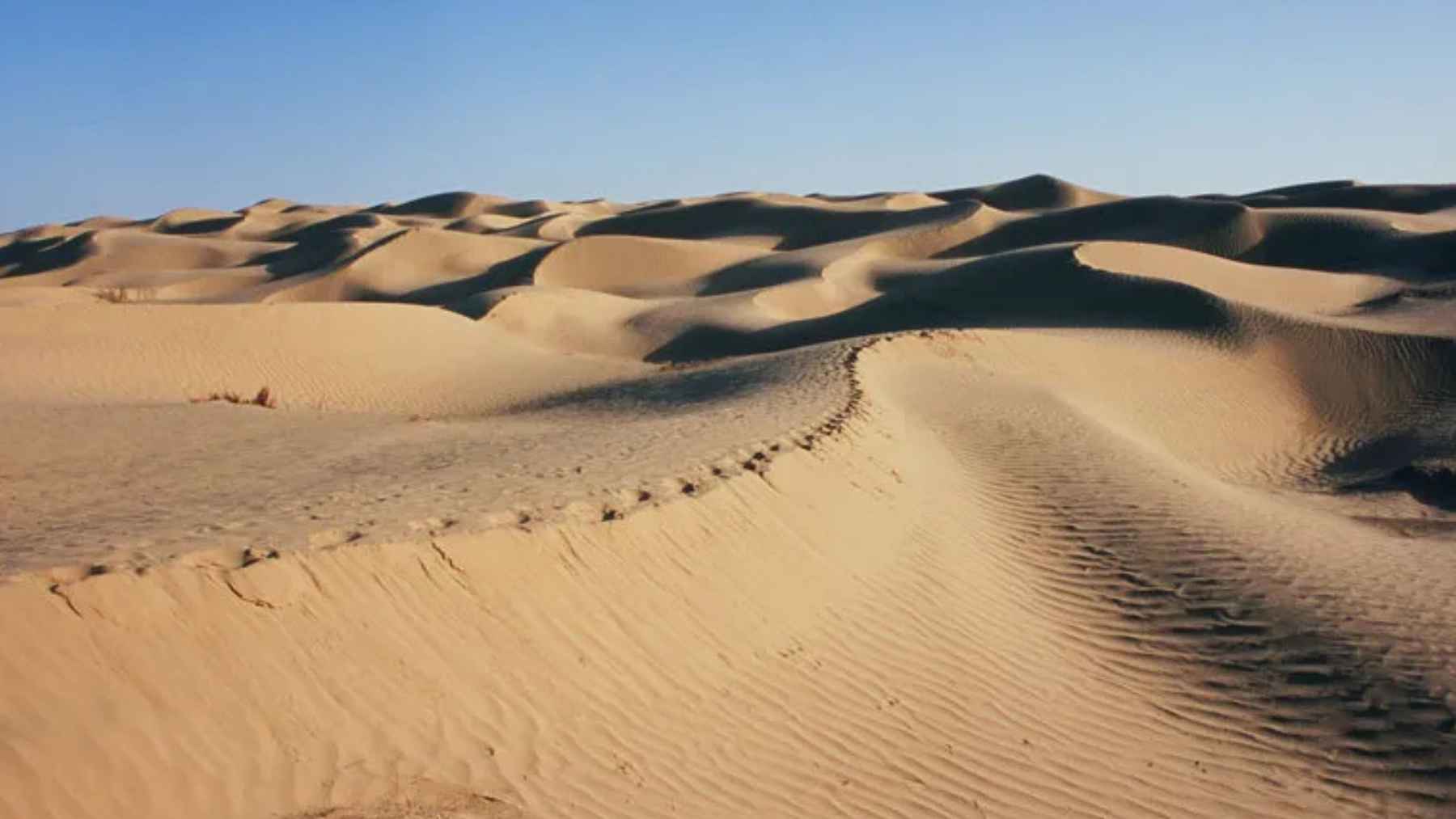
Calima is the name used in the Canary Islands for a dry haze created when winds lift fine desert dust into the atmosphere. It can make the sun look dimmer and the horizon look closer, even when there are no clouds.
The dust does not stay put. Once it rises high enough, winds that steer weather systems can carry it over open water for long distances.
On the ground, the signs can be simple. A thin tan layer settles on cars and patios, and some people notice irritated eyes or a scratchy throat after spending time outside.
Why dust can become a public health issue
The main worry is what the haze contains. Dust clouds include tiny particles, including a category often tracked as PM10, that can irritate the eyes and airways when levels climb.
That is why local guidance often focuses on time outdoors, especially for children, older adults, and people with asthma or other breathing conditions. In practical terms, it can mean moving workouts indoors and keeping windows closed during peak haze.
There are also knock-on effects. When visibility drops, driving gets slower and aviation can face disruptions, even if the weather radar looks clear. It can sneak up on you.
How satellites follow dust across thousands of miles
Tracking a dust plume is not just about images. The Copernicus Atmosphere Monitoring Service produces frequent analyses and short-range forecasts of atmospheric composition, including aerosols, meaning tiny particles floating in the air, like dust, to support decisions tied to health, transport, and weather services.
Weather satellites add another layer of context. Meteosat-12, orbiting about 22,400 miles above Earth, captured the dust streaming west over the Atlantic on February 17, 2026, and notes that these events can worsen air quality, trigger breathing problems, and sometimes delay flights.
There is a twist that matters for the ocean below. The same mineral dust can act like fertilizer for phytoplankton, microscopic plants that help support marine food chains.
A seaweed belt can stretch from Africa toward the Americas
Sargassum is a type of brown seaweed that floats on the ocean surface instead of rooting to the seafloor. In the open ocean, it can provide shelter for fish and other small animals, which is why scientists often describe it as a moving habitat.
But a new pattern has changed the map. In the journal Science, a team led by Mengqiu Wang at the University of South Florida reported that satellite imagery has repeatedly shown a Great Atlantic Sargassum Belt since 2011, often running from West Africa toward the Gulf of Mexico, and holding more than 22 million tons of seaweed in June 2018.
So why does it show up some years more than others? That analysis points to ocean circulation as the main conveyor belt, with nutrient-rich upwelling off West Africa in winter and Amazon River outflow in warmer months helping fuel the bloom.
Nutrients are emerging as a key part of the story
A review in the journal Harmful Algae, led by Brian E. Lapointe with Deanna F. Webber and Rachel A. Brewton at Florida Atlantic University’s Harbor Branch Oceanographic Institute, looked across four decades of data to explain why Sargassum growth has changed.
Lapointe said the work is aimed at understanding “what’s fueling that growth,” and the team reported that the seaweed’s nitrogen content rose by about 55% based on 849 samples collected over time.
Nutrients are not automatically “bad” in the ocean, because plants need them to grow. The trouble starts when too much nitrogen and phosphorus wash off farms, leak from wastewater, or arrive through the air, essentially turning parts of the sea into an easy buffet for fast-growing algae.
Once that floating mass reaches shore, the problem becomes much more personal. The U.S. Environmental Protection Agency says decomposing Sargassum can release hydrogen sulfide and ammonia, gases linked to symptoms such as airway irritation and headaches, and it notes that sensitive groups may face higher risks during heavy beaching events.
What scientists are watching as 2026 unfolds
Better forecasts are becoming a practical tool, not just a research project. A feature from EUMETSAT describes a record May 2025 estimate of 37.5 million metric tons of Sargassum, which is about 41 million tons, and explains how satellite products are being used to detect and forecast floating algae in near-real-time.
There is also evidence that the seaweed’s home base may be shifting, not simply expanding. A 2025 paper in Nature Geoscience reports a steep decline of Sargassum in the north Sargasso Sea since 2015 and suggests warming waters and more frequent marine heatwaves in the Gulf of Mexico could be reshaping where the seaweed ends up each year.
For communities along the Atlantic rim, it can feel like two separate stories – one in the air and one on the water. But both show how fast materials from land can travel, and why monitoring matters.
The official visualization was published in the Copernicus Image of the Day gallery.