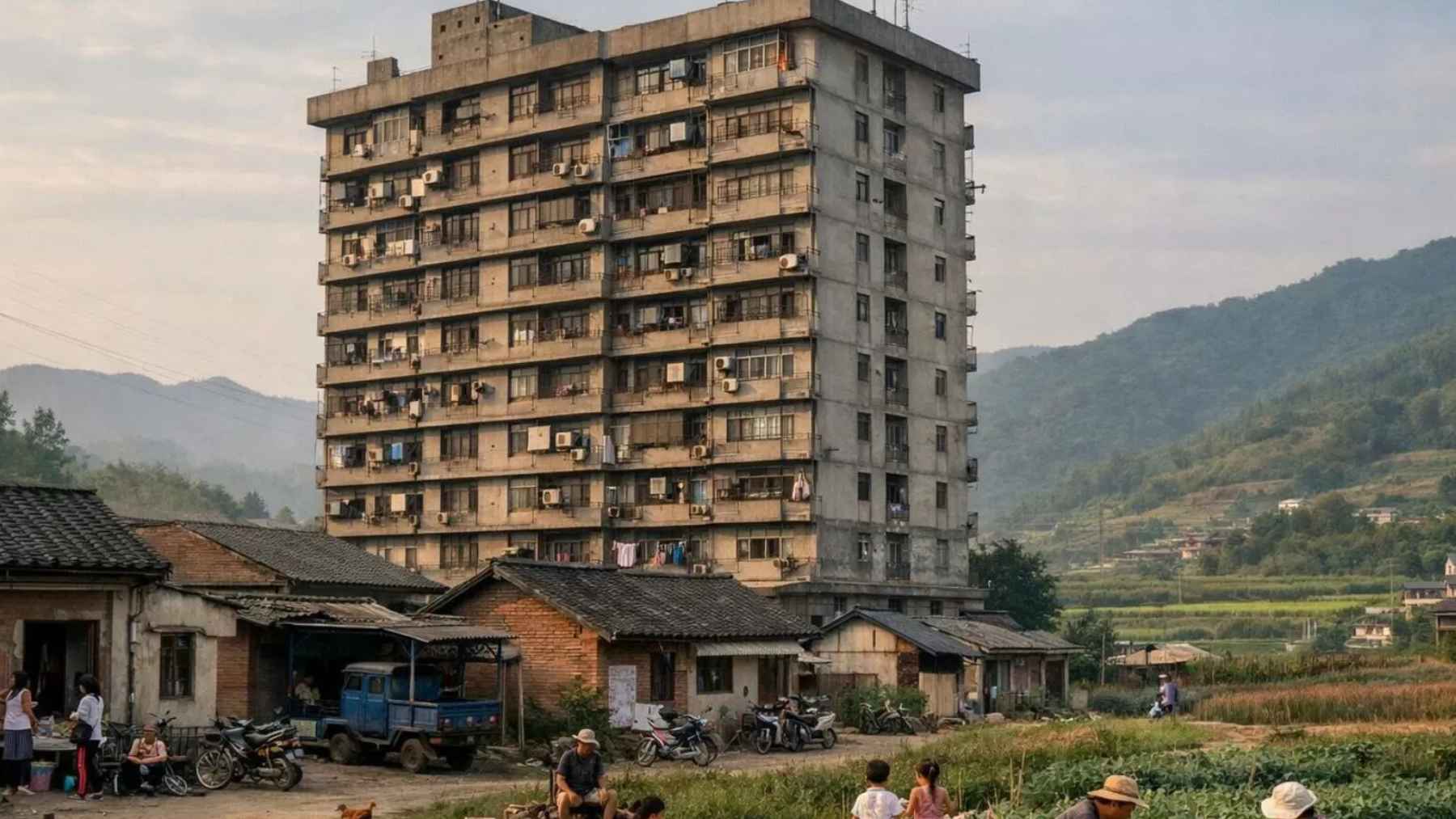
At first glance, the 15-story family tower rising above Zhuyuan village in China looks like the kind of story built for social media. More than 100 relatives from four generations share the building, which includes 22 apartments, elevators, underground parking, and common spaces that make it feel less like a standard apartment block and more like a small vertical neighborhood.
Reports say the project grew out of a practical problem because the family’s old homes were cramped, while many younger relatives were already working in other cities and needed a place to return to.
But there is a bigger story here, and it reaches far beyond one unusual family decision. Housing is now part of the climate equation in a very direct way, with UNEP reporting that buildings and construction consume 32% of global energy and account for 34% of global CO2 emissions.
So when a family chooses one shared structure instead of many separate homes, it raises a serious question. Could living closer together help cut land use, repeated construction, and long-term energy demand?
A vertical village with room to breathe
Reports say around 20 related households pooled resources to create the building in Zhuyuan village, and floors 2 through 12 now contain 22 fully equipped homes. The ground floor was first meant to be a store, but it is now used for food storage and as a play area for children, which gives the place an everyday, lived-in feel instead of the vibe of a commercial development.
That detail matters. This family did not give up privacy to stay together, which is part of what makes the story so striking.
In reports, one older family member explained that relatives had first considered building separate new homes, but the shared tower made more sense for a clan spread across generations and jobs in other cities, especially when holiday reunions bring luggage in the hallways and the smell of home cooking back to the building.
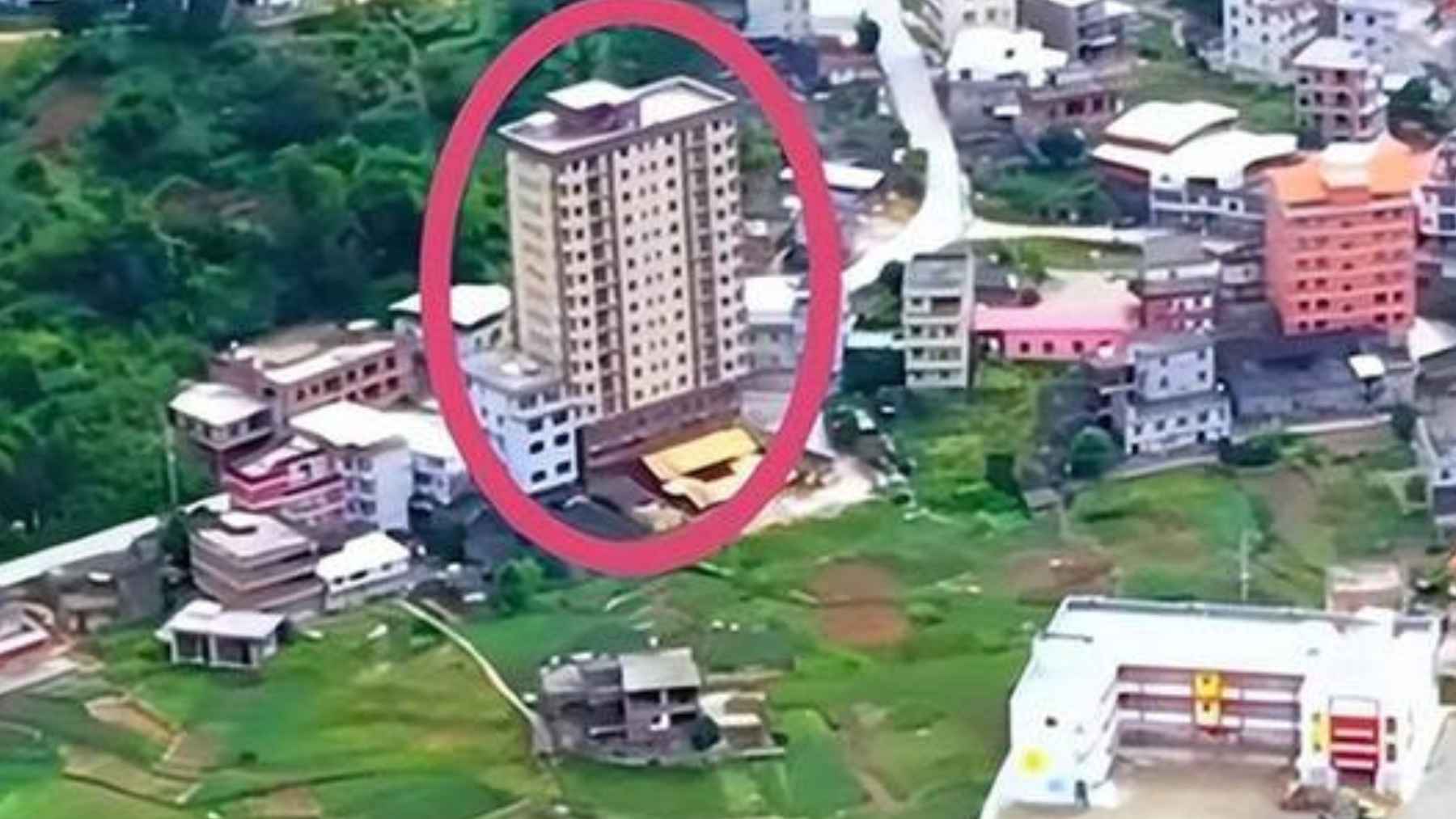
Vertical Ambition: The Zhu family’s 15-story tower in Zhuyuan village accommodates over 100 relatives across 22 private apartments.
Why the climate angle is hard to ignore
Housing is never just shelter. It is also about how much land gets used, how many materials are needed, and how much energy a home will consume year after year.
The IPCC says compact and walkable urban form is linked to lower per capita emissions, and its assessment also finds that higher population density reduces emissions per person across transport, building, and energy sectors.
The numbers get even more concrete. The IPCC says that making urban growth more compact, walkable, and co-located can reduce future urban energy use by 20 to 25% before 2050, while U.S. Energy Information Administration data shows that in 2020 a single-family detached home used nearly three times as much energy, on average, as an apartment in a building with five or more units.
Shared walls can make a real difference, especially when the AC runs all afternoon and the electric bill shows up at the end of the month.
But tall living is not automatically green
Here is the part that often gets lost in feel-good housing stories. A new concrete tower comes with a serious upfront carbon cost, and UNEP says cement and steel alone are responsible for 18% of global emissions. So no, this building cannot simply be labeled a climate win just because it stacks households vertically.
The honest answer is more complicated, and probably more useful. A shared building like this becomes more climate-sensible if it stays heavily occupied, lasts for decades, reduces the need for many detached homes, and keeps everyday energy demand under control through better design and lower per-household consumption.
At the end of the day, what matters most is not the height of the structure but the land, materials, and energy it saves, or fails to save, over the long run.
What this family tower may be telling us
In practical terms, the biggest lesson may be social as much as environmental. This family created a kind of “vertical village” where older adults, children, and relatives returning from other cities can stay connected without being forced into one crowded household.
For places dealing with aging populations, housing pressure, and the high cost of extending roads, services, and utilities farther and farther out, that idea could resonate well beyond one village in China.
Still, density only works when it is planned well. The IPCC notes that public acceptance matters and that better spatial planning can improve health and well-being when density is balanced with green space, services, and quality of life.
That is why this story feels bigger than a curiosity. It suggests, in a very human way, that future housing may need to be closer, smarter, and more shared than many families once imagined.
That broader context is what makes this tower worth watching.
The official report was published on UNEP.