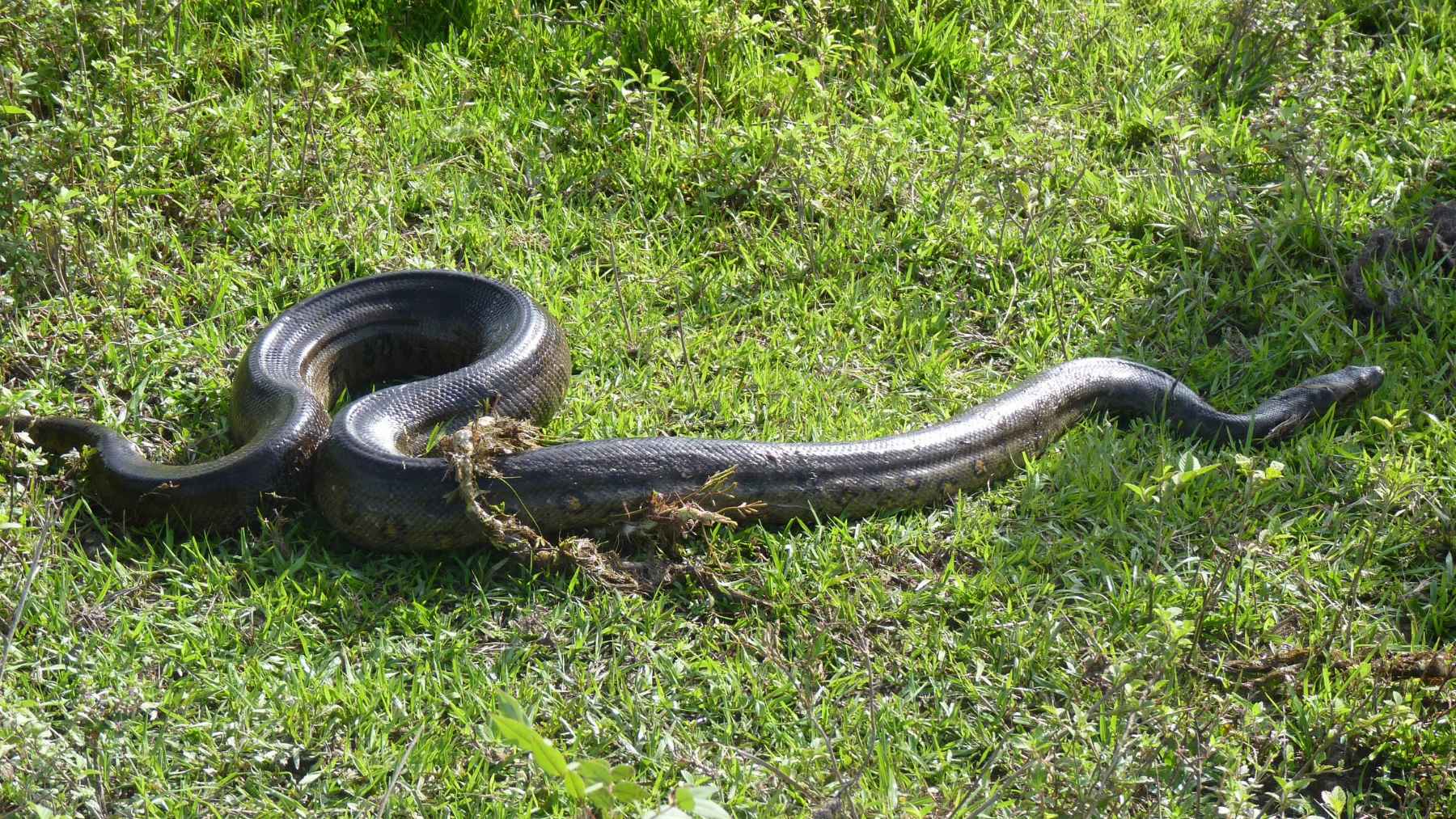
Today, most anacondas in the wild grow around four to five meters long, with rare individuals reaching about seven meters. That is longer than a city bus parked outside the grocery store. The surprising part is that fossils from the Miocene period show almost exactly the same size range, rather than the super snakes many people might expect from a warmer prehistoric world.
To reach that conclusion, the team analyzed 183 fossilized backbones from ancient anacondas found in Falcón State in Venezuela. Those bones came from at least 32 individual snakes collected over several field seasons near the town of Urumaco.
Because anacondas can have more than 300 vertebrae, measuring the size of individual fossils gives a reliable estimate of how long each snake was in life, much like a doctor tracking a child’s height from a growth chart.
On average, the ancient snakes measured about four to five meters, almost identical to modern anacondas. The researchers then used a second technique called ancestral state reconstruction, which compares living species on a family tree, to double check those estimates.
That independent method again pointed to mid-Miocene anacondas already being giants on par with today’s snakes.
The timing matters. Between roughly 12.4 and 5.3 million years ago, during the Middle to Upper Miocene, global temperatures were higher, wetlands were widespread, and food was abundant. Northern South America was a vast swampy landscape that looked a lot like an oversized version of the modern Amazon basin, with broad rivers and flooded forests that would feel familiar to anyone who has seen footage of flooded várzea forests and murky side channels.
In that world, anacondas shared their habitat with other giants, including the twelve meter caiman Purussaurus and the freshwater turtle Stupendemys, which reached around 3.2 meters in shell length.
Those reptiles disappeared as global temperatures cooled and wetlands shrank. Yet anacondas stayed large. Lead author Andrés Alfonso Rojas describes them as “super resilient,” noting that they kept their giant status while many of their neighbors disappeared.
Why did these snakes succeed where other giants failed? The study points to two main advantages. First, anacondas have a strongly aquatic lifestyle, living in swamps, flooded forests, and big rivers like the Amazon River.
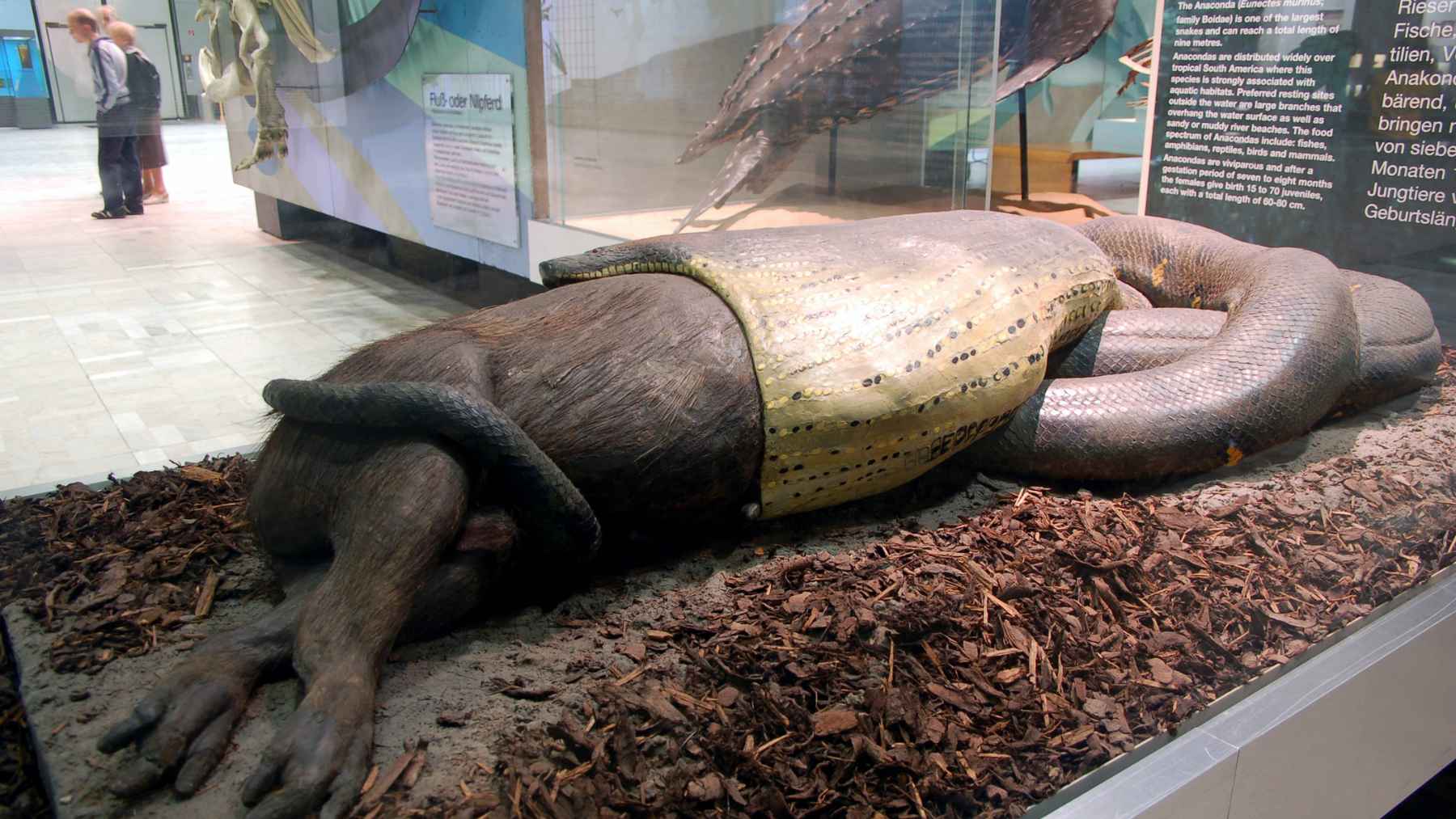
Second, they have a flexible menu that includes fish, capybaras, birds, and even caimans. Even after global conditions cooled, enough wetland habitat and prey remained for the snakes to keep growing to impressive lengths. In practical terms, that means as long as there is deep, slow water and a decent supply of medium to large animals, anacondas can stay big.
The findings also challenge a common assumption that cold blooded animals always grow larger during warm periods and should shrink as the planet cools.
Anacondas did not follow that script. “This is a surprising result,” Alfonso Rojas explains in the university release, because the team expected to find snakes seven or eight meters long in the warm Miocene deposits, yet found no evidence of larger individuals.
For today’s readers, the story is not just about record-breaking reptiles. It is a reminder that some species can ride out major climate shifts if their key habitats survive. At the same time, those Miocene changes unfolded over millions of years.
The human-driven climate crisis is moving much faster and arrives together with pollution, dams, deforestation, and hunting pressure. Even a “super resilient” snake will struggle if the wetlands that support it are drained or fragmented.
By piecing together ancient bones and comparing them with modern snakes, the researchers show that giant anacondas are not a recent anomaly but a long-term feature of tropical South American ecosystems. That kind of deep time perspective helps scientists understand which traits have helped species endure past climate swings and which habitats are most vital to protect now, from Venezuelan floodplains to the backwaters of the modern Amazon.
The study was published in the Journal of Vertebrate Paleontology.