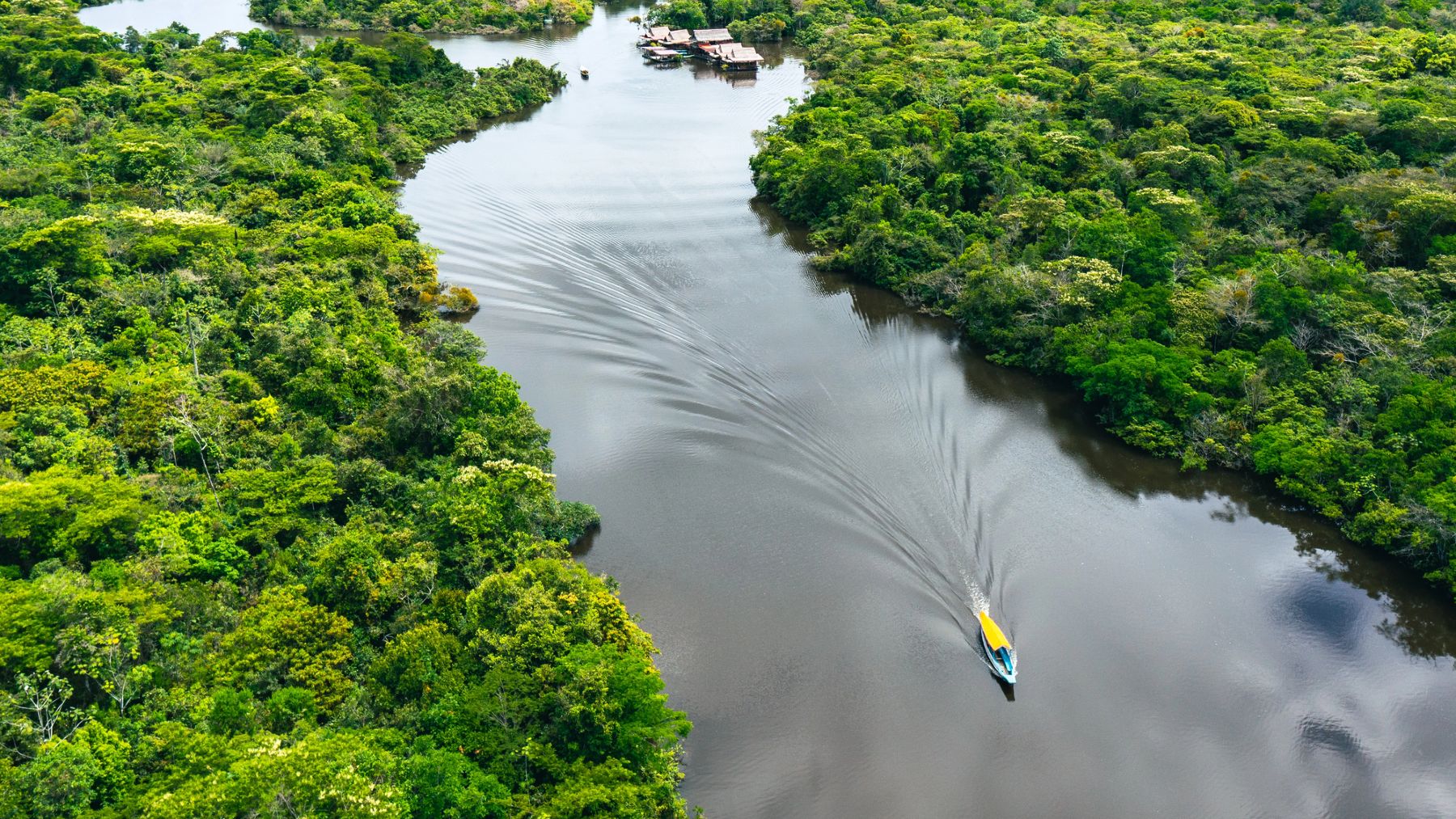
Because of its title as Earth’s lungs, the Amazon rainforest is essential for worldwide energy modernization. The region changes because developers implement innovative ways to harness natural Amazon resources for sustainable energy production. A review follows of two significant projects enabling Amazon to become a leading renewable energy producer while understanding the relationship between preservation efforts and development requirements.
Balsa wood has become an essential choice for wind energy projects.
The Ecuadorian Amazon shows accelerated balsa wood harvesting activity because the world requires renewable energy. The production of wind turbine blades depends heavily on balsa wood as its fundamental material structure to achieve operational efficiency. The total demand for balsa wood extends across each blade because they need up to 150 cubic meters to operate. Green energy initiatives worldwide have made Amazon essential for supplying this critical resource to the world.
Using balsa wood to support green energy initiatives throughout Europe and China leads to environmental complications and social disturbance. Defaulting forests for extraction operations results in both forest destruction and the compelled removal of indigenous native populations. The resource that serves sustainability functions creates opposite environmental damage within its source area. The essential challenge now is discovering a method to benefit economies and protect natural resources simultaneously.
The industry focuses on finding substitute materials to replace wind turbine blade components because of their detrimental environmental effects. Renewable energy industries can achieve biodiversity protection in the Amazon while continuing their advancement by reducing their use of balsa wood. Due to this necessary shift, the successful execution of sustainable solutions between governments, corporations, and environmental organizations becomes necessary.
The Amazon expands its electricity generation through biomass power, which converts discarded wood into energy.
Through an innovative project, the Itacoatiara power plant in the Brazilian Amazon uses wood waste to produce electricity. This environmental initiative obtains support from my climate to convert diesel generators into a biomass power plant fueled by FSC-certified woodchips. The operational plant can produce 45,000 MWh of pollution-free electricity, lowering environmental emissions dramatically. The energy generation process at this facility presents a sustainable methodology for generating power across forested areas by converting waste products into usable power.
The power plant meets 40% of the municipal energy requirements for Itacoatiara because this community has 80,000 residents. Biomass implementation in communities has decreased energy expenses and improved power reliability. The project and its implementation brought fresh employment prospects that led to better life conditions. The renewable energy transformation proves that renewable energy enhances economic revenue and environmental conservation goals.
The plant reaches its success goal because it follows sustainable forestry principles. FSC-certified forestry uses all wood waste for energy production, thus allowing natural forest regeneration with preserved biodiversity. Through this method, the Amazon generates renewable energy sustainably because it preserves its essential resources, which demonstrates effective conservation alongside development efforts.
Sustainable energy remains feasible using carbon credit systems.
Biomass carbon credits from sustainably managed resources started their life cycle within the Itacoatiara project. The carbon credits are vital in obtaining financing while securing sustainable project operations. The credit sales enable this initiative to draw financial investments that support its growth as it strengthens worldwide climate change mitigation activities.
The project attains transparency through extensive monitoring and verification processes. Carbon emissions and energy generation measurements undergo continual independent organization verification to validate sustainability compliance. The verification system creates investor confidence, which validates the project’s environmental and economic results.
The power sector of Amazon faces a critical dilemma to achieve sustainability through responsible ecological management.
The growing importance of Amazon’s participation in the worldwide energy transition requires implementing proper management between environmental protection and industrial growth. Renewable energy projects carry major advantages but require thorough management to defend the rainforest and its native inhabitants. To maintain this delicate balance effectively, sustainable practices and innovative technologies will be needed.
Such transformation requires a united effort across various stakeholders to develop Amazon as a renewable energy source. A combination of government organizations, industrial companies, environmental defenders, and local communities needs to team up to create sustainable solutions. The collaboration of stakeholders allows them to use Amazon’s energy resources without sacrificing their ecological integrity.
The renewable energy developments occurring in the Amazon create models that societies can replicate across the globe. Comprehensive demonstrations of sustainable energy systems now operating in the region will serve as an example for worldwide renewable development projects. Renewables represent an essential element in handling climate change and establishing lasting sustainability for human societies and natural environments.