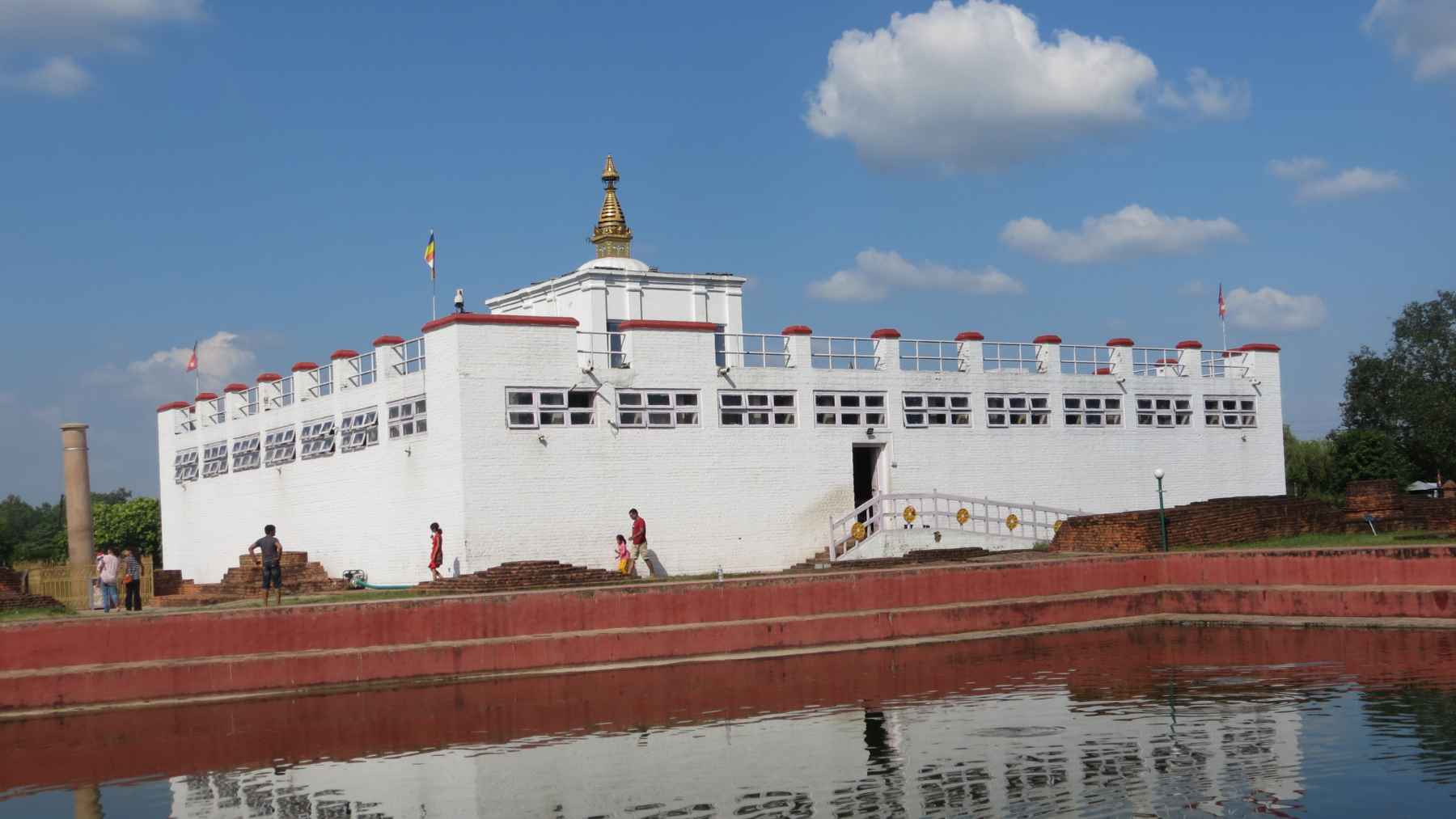
At sunrise in Lumbini in southern Nepal, monks circle the white Maya Devi Temple, chanting and offering incense at the spot many believe the Buddha was born. Beneath the walkways and prayer flags, archaeologists are peeling back layers of brick and soil to test that story against the ground.
New digs at the Buddha’s traditional birthplace and his likely childhood city are offering sharper dates and surprising details about the world of Siddhartha Gautama.
They also feed a wider debate over how much of his biography is history, how much is legend, and how far modern development should go in a place millions see as sacred. Can archaeology answer those questions without shaking anyone’s faith?
Digging beneath the Maya Devi Temple
In 1997, Lumbini was added to the UNESCO World Heritage List as the traditional birthplace of the Buddha. At its center stands the Maya Devi Temple and a sandstone pillar raised by Emperor Ashoka in the third century BCE that states the sage was born there.
A team led by archaeologist Robin Coningham of Durham University and Nepalese partner Kosh Prasad Acharya has since excavated beneath the modern shelter that protects the temple ruins.
They uncovered a brick terrace from the fourth century BCE and, deeper still, post holes from a timber structure that surrounded an ancient tree, dated to about the sixth century BCE. To a layperson, that timber ring sounds modest, yet for archaeologists it looks very much like a purpose built shrine created soon after the Buddha died.
Some specialists argue this makes Lumbini home to the earliest known Buddhist sanctuary in South Asia, which would support a Buddha who lived in the sixth century BCE. Others, including Indologist Oskar von Hinüber, see a pre-Buddhist tree cult that Ashoka later adopted, a reminder that even spectacular digs rarely end long-running arguments.
Hunting for Kapilavastu and a rare urban temple
About 17 miles west, excavators from the Department of Archaeology, Government of Nepal and the Lumbini Development Trust are probing a site called Tilaurakot-Kapilavastu, widely seen as the best candidate for ancient Kapilavastu. Geophysical surveys and trenches show a walled city planned on a grid, with ramparts and gates whose earliest phases belong to roughly the sixth century BCE.
Recent seasons have brought an especially eye-catching find inside the old walls, a rare apsidal temple whose back wall curves in a half circle. Architects know this shape from another important Buddhist site at Sarnath in India, where the Buddha is said to have given his first sermon, and the layout here is strikingly similar.
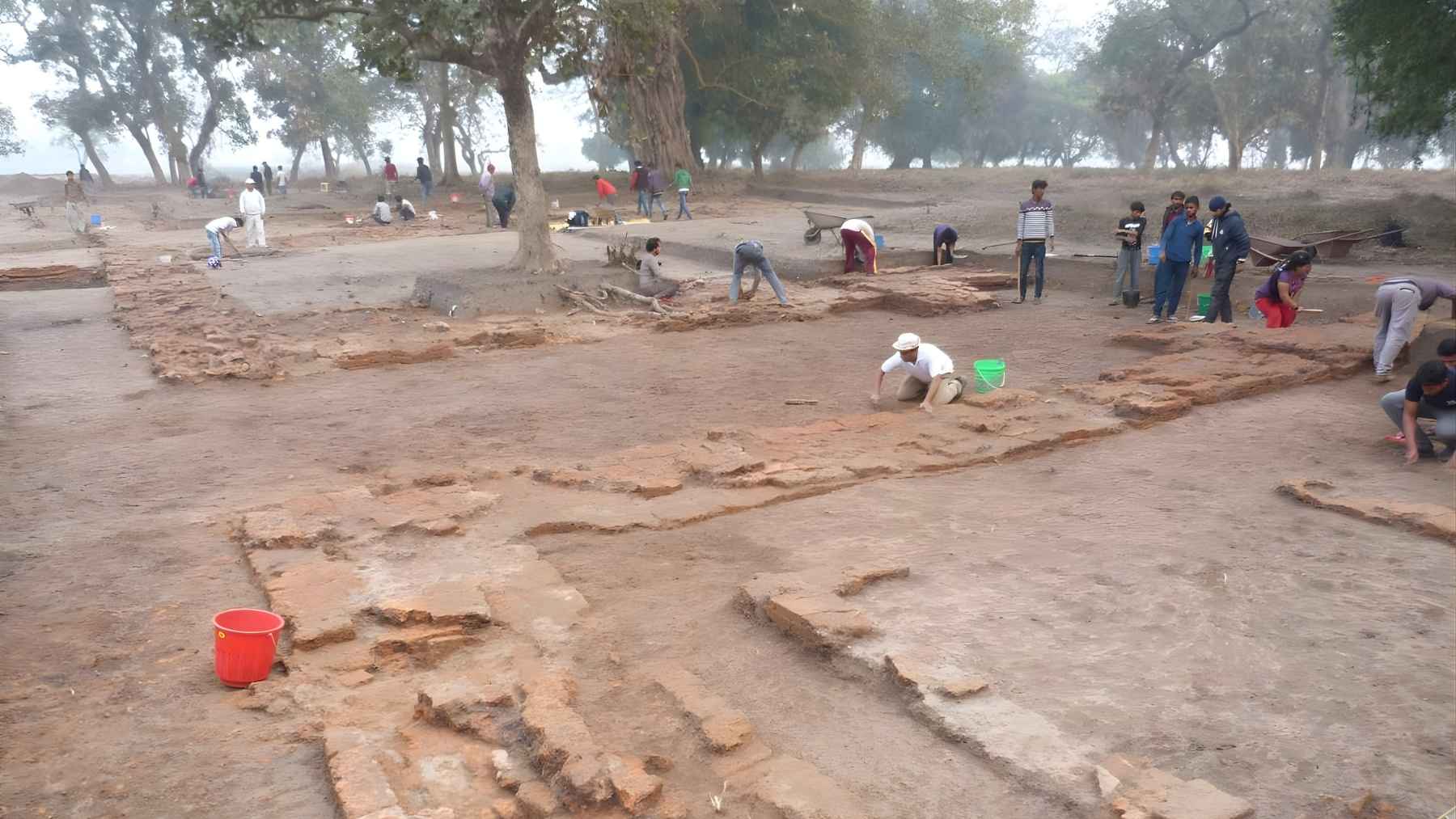
Because the new temple sits within the city rather than in a separate monastery zone, researchers say it strengthens the idea that Tilaurakot was an early pilgrimage stop tied directly to the Buddha’s story.
Along the old route between Lumbini and Tilaurakot, archaeologists have mapped small fortified rest stops, wells, and hoards of punch-marked silver coins that point to a surge of pilgrims during Ashoka’s reign in the third century BCE.
It was this emperor who ordered the Lumbini pillar that still stands in the Sacred Garden and whose inscription simply records that here the Buddha, the sage of the Shakyas, was born.
Faith, tourism and the search for a historical Buddha
Modern scholarship agrees on very little about the Buddha’s personal life, apart from the broad outline that he was a prince who renounced privilege and became a teacher. Religious studies scholar John S.
Strong notes that every traditional biography mixes memory, doctrine, politics, and storytelling, which makes clean historical reconstruction almost impossible. In 2017, Canadian academic David Drewes went further, arguing in the Journal of the International Association of Buddhist Studies that there is no solid evidence to treat the Buddha as a fully-knowable historical figure, a claim that has drawn sharp replies from other experts.
Inside Lumbini’s monasteries, reactions to the digs are just as mixed. The Dalai Lama has written that it is embarrassing that even devoted Buddhists cannot say with confidence when their teacher lived, and he has urged more scientific work on relics.
Some monks welcome that attitude, saying curiosity fits the Buddha’s own advice to test teachings for yourself, while others worry that skeptical headlines or careless construction will unsettle visitors who come seeking calm, not controversy.
On the streets outside the sacred zone, where trowels and prayer beads share the same ground, the debate feels very concrete.
New hotels, the expanded Bhairahawa airport, diesel buses, and streams of tuk tuks bring badly needed cash to a poor region, yet they also cloak the ruins in dust and smoke that settle on fragile brick walls and statues. UNESCO experts have warned of an alarming state of conservation at the Maya Devi Temple shelter and have pressed Nepal to act quickly.
The main archaeological study on the early shrine at Lumbini was published in Antiquity.