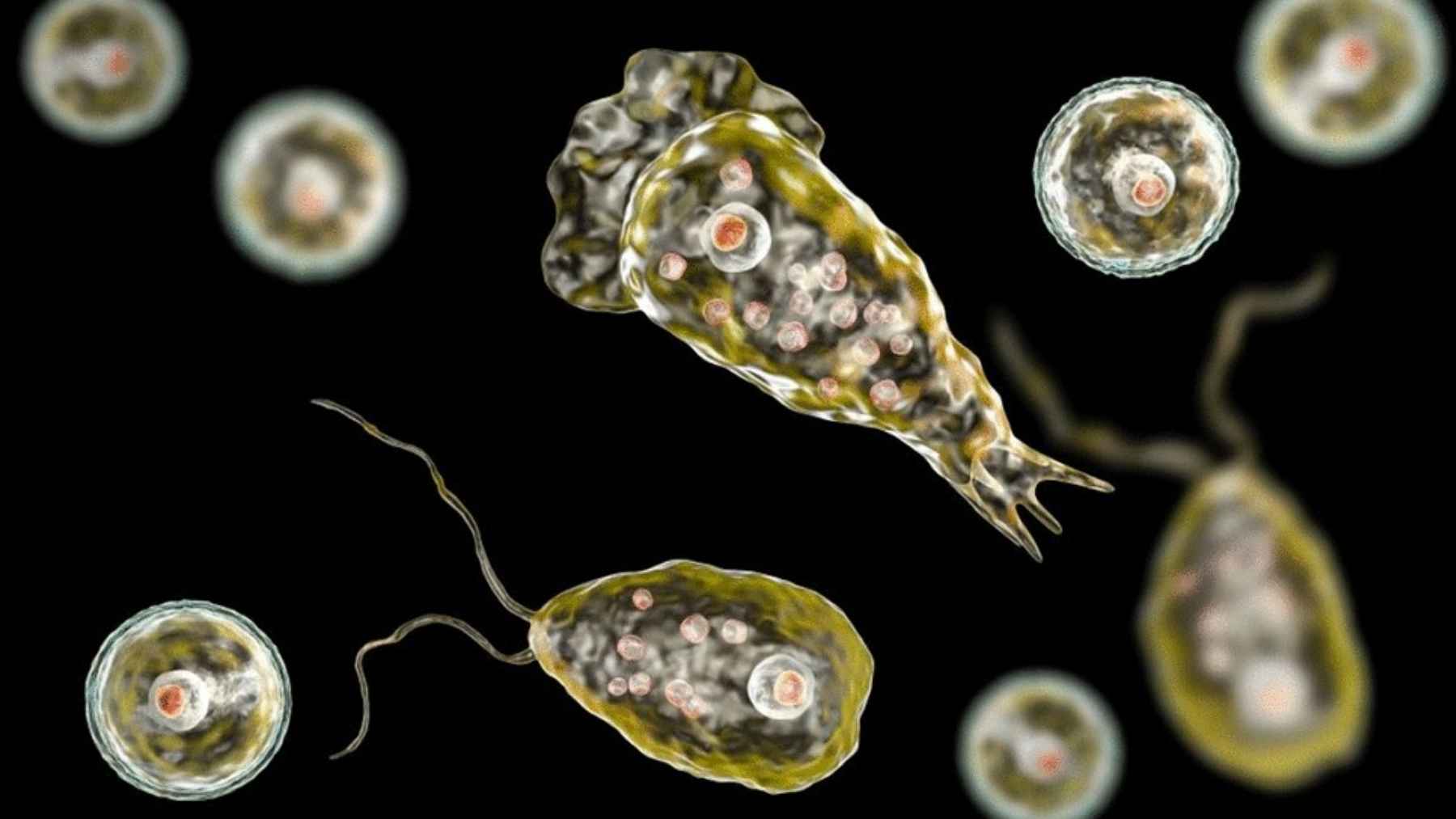
A little known group of microbes is quietly moving into the same places we swim, irrigate crops, and turn on the tap. In a new perspective in the journal Biocontaminant, a team led by Longfei Shu warns that free-living amoebae are emerging as a global public health challenge that is being made worse by climate change and aging water systems.
Most of these single-celled organisms are harmless. A few are not. The most infamous example is Naegleria fowleri, often nicknamed the brain-eating amoeba, which can cause a rare but almost always fatal brain infection when contaminated water is forced high into the nose during activities such as swimming.
In the United States there have been 167 reported cases of this infection since 1962 and only four survivors, according to the Centers for Disease Control and Prevention. A global review found only a handful more survivors among roughly 381 documented cases through 2018.
For most people that still sounds like something that happens to someone else, somewhere else. So why are scientists sounding the alarm now?
What makes these amoebas so stubborn
Free-living amoebae thrive in both natural wetlands and man-made environments such as pipes, storage tanks, hospital plumbing, and cooling towers. They can survive harsh conditions by forming tough cysts, which helps them ride out high temperatures, disinfectants such as chlorine, and other stresses that would kill many bacteria.
Researchers report that some species colonize biofilms inside water distribution systems that people usually consider safe. That means the microbes may be lurking behind the reassuring rush of clear tap water or in warm stagnant corners of a backyard hose, a decorative fountain, or a poorly maintained splash pad on a hot day.
A Trojan horse in the plumbing
The new Biocontaminant paper stresses that amoebae are not only pathogens in their own right. They also act as mobile shelters for other microbes, including bacteria, fungi, viruses, and even genes that confer resistance to antibiotics.
Water quality studies back that up. In one tidal creek in Mumbai, nearly half of the bacteria found living inside amoebae could resist four or more antibiotics, while the same level of resistance turned up in less than one percent of bacteria from the surrounding sediment.
Inside their amoeba hosts, these bacteria and viruses are shielded from disinfectants and can move through water systems in ways that standard monitoring often misses.
In practical terms this means that a single-celled organism we never see can help dangerous germs survive a trip through pipes, reach hospital taps, and gain new resistance traits along the way.
Climate change is widening their comfort zone
The Biocontaminant authors note that climate and environmental changes are amplifying human exposure. Warmer surface waters and more frequent heat waves create ideal conditions for thermophilic amoebae such as Naegleria fowleri in lakes, rivers and even poorly-managed water features.
Reports of fatal infections now include places that were once considered too cool for this organism, which fits broader trends linked to rising temperatures.
At the same time, drought and infrastructure problems push communities to reuse wastewater or tap new sources. When treatment systems are under designed or poorly maintained, scientists warn that free-living amoebae can slip through the cracks and set up shop downstream.
A One Health response that starts before people get sick
So what should be done, short of never swimming again or never trusting a glass of water? The researchers call for a One Health strategy that links environmental monitoring, water engineering, and clinical surveillance instead of treating infections only after they appear.
That includes faster and more affordable diagnostic tests for amoebic infections, routine checks for amoebae in high-risk water systems, and upgrades to treatment technologies such as filtration, ultraviolet light, and ozone that can hit both amoebae and the microbes hiding inside them. International bodies such as the World Health
Organization have already begun issuing technical guidance for controlling Naegleria fowleri in drinking water, which shows that this is no longer a fringe concern.
For everyday readers the message is not to panic. The brain-eating infections that make headlines remain extremely rare. Simple precautions, such as avoiding getting warm freshwater high into the nose, using sterile or boiled water for nasal rinses, and favoring properly maintained pools, already reduce individual risk and align with public health advice.
At the end of the day, though, the bigger story is about how we manage water in a warming world. Tiny and invisible as they are, free-living amoebae reveal cracks in that system and remind us that environmental change, infrastructure, and human health are tightly linked.
The study was published in Biocontaminant.