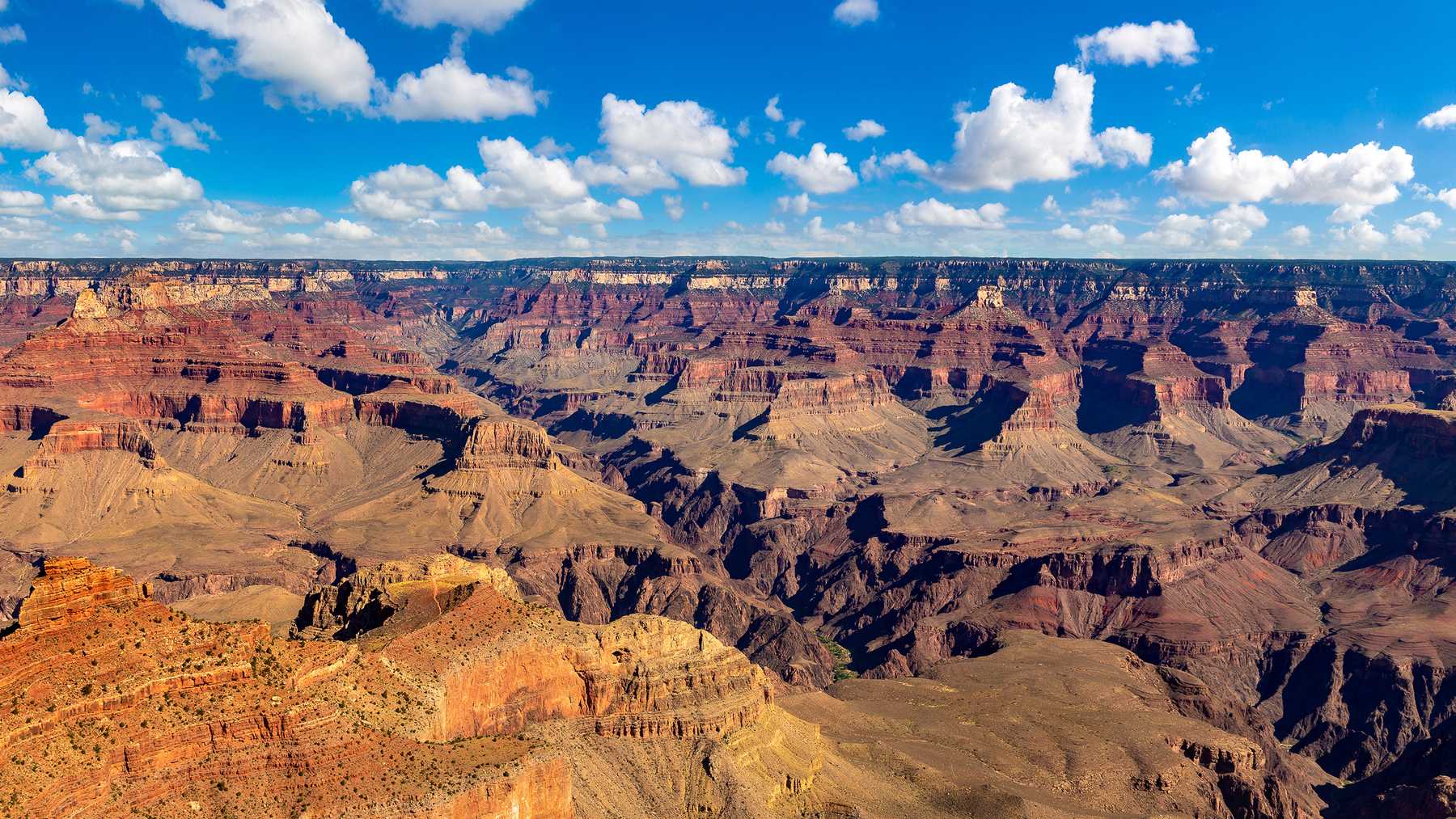
In contemporary society, there is an abundance of cutting-edge technology that permits scientists to conduct revisionist history studies. The Great Canyon is now a renowned tourist attraction, but through scientists’ reinterpretation of history, they were able to uncover a stunning 500,000,000-year-old discovery. According to reports, an estimated 5 million people visit the Grand Canyon per year. With that said, the Great Canyon is accustomed to existing under the spotlight.
An assessment of what led up to the scientists’ 500,000,000-year-old discovery
The Grand Canyon is regarded as one of the seven natural wonders of the world, making it a sought-after place that researchers are fascinated with. Scientists have previously conducted extensive research in the Grand Canyon with the hope of learning how to predict climate change. Others have patrolled the place and collected objects without a specific purpose but with the belief that they could discover something interesting.
In the case of the 500,000,000-year-old discovery, it was researchers from the University of Cambridge who initiated an analysis of the Colorado River in 2023. During the expedition, they collected rock samples, which they dissolved in a solution of hydrofluoric acid once they returned to Cambridge. The rest is history.
What did scientists find in the Great Canyon?
The Cambridge researchers uncovered thousands of tiny fossils upon dissolving the Grand Canyon rocks in a solution. These fossils signalled the existence of a variety of animals that resided in the Grand Canyon during the Cambrian period, between 507 and 502 million years ago. The great discovery left palaeontologists stunned, which is understandable considering how long it had been since the finding.
On the other hand, many people might instinctively question the legitimacy of the discovery, considering that it was made after half a billion years. However, some fossils do take an extensive period to unveil. One of the researchers who was part of the significant breakthrough stated that making such a finding is “partly a game of luck”. People need to note that the palaeontologists are not deserving of all the glory because some fortune has to be involved for people to find something after half a billion years.
Possible evidence to support the accuracy of the discovery made at the Great Canyon
In instances where researchers make such a shocking revelation, they must review all the evidence to ensure that it matches up. In the case of the Great Canyon, the scientists highlighted that the fossil findings match up with the fact that the Canyon was once submerged in the ocean during the Cambrian period.
Thus, there was a diversified marine ecosystem residing in the area, which makes the findings highly accurate. The Cambrian explosion was when most of the various animals first emerged, which may have evolved into what we know them as in modern society.
Unpacking the diverse species identified at the Great Canyon: What is the significance of the discovery?
The researchers’ fossils uncovered the existence of ancient animals such as crustaceans, which might be interrelated with brine shrimp, molluscs, and most interestingly, a newly identified priapulid worm. The newfound worm is unrelated to the modern worms so much that it has been named Kraytdraco spectatus, a name derived from the character of a dragon in Star Wars. The worm captivated scientists’ attention because of its unique features, such as hundreds of teeth and an elongated or retractable throat.
The discovery made at Great Canyon is monumental and is destined to alter how scientists analyse ancient animals. Furthermore, it is a finding that inspires researchers to thoroughly seek leads wherever they believe stunning revelations could be made. Ultimately, it may have taken 500,000,000 years for scholars to make the discovery, but one could argue that the great revelation made at the Great Canyon was better late than never.