A new study of nearly two thousand observations has found that Amazon’s growing “internet from space” constellation is significantly brighter than astronomers consider safe for research.
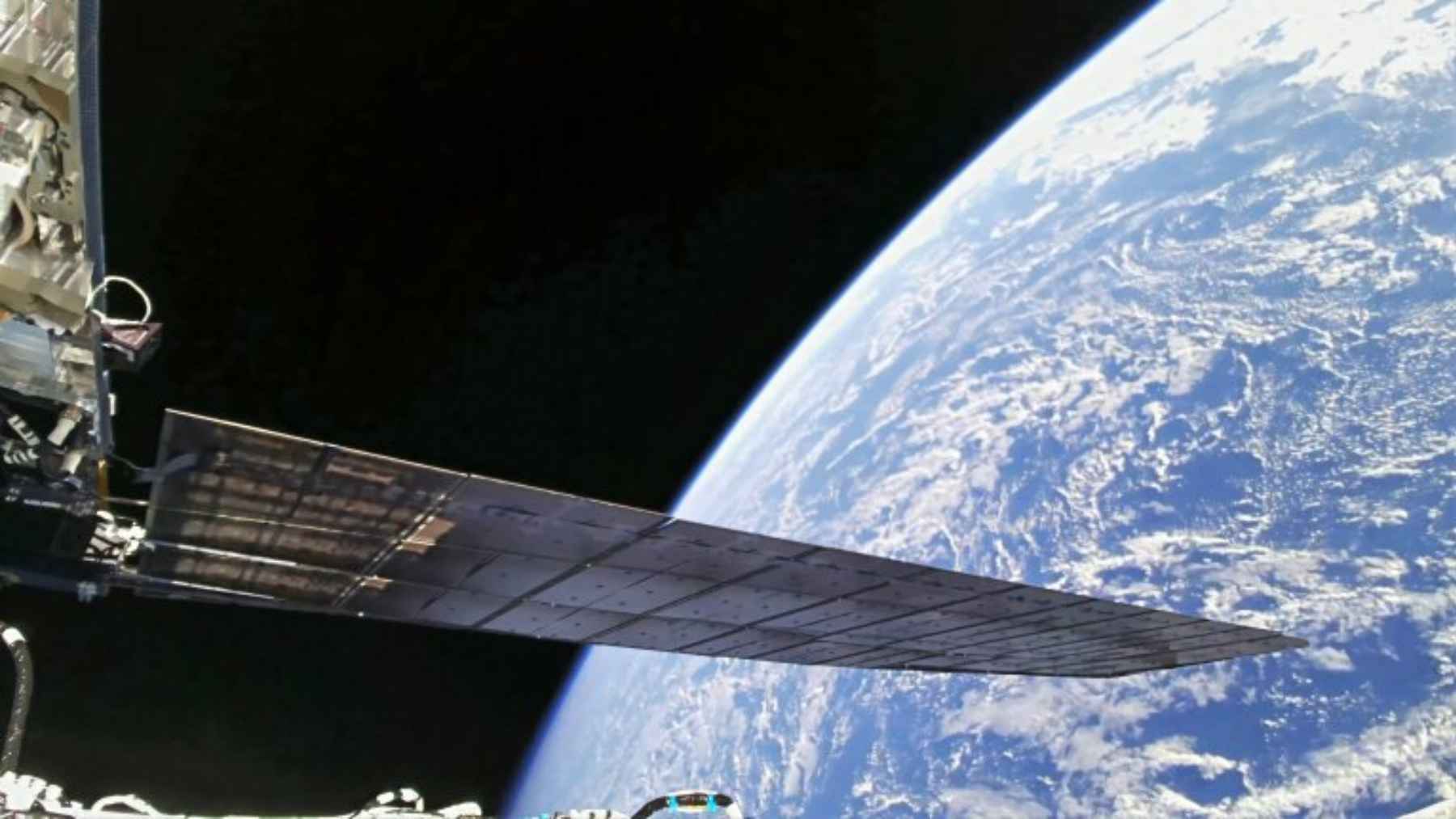
The Amazon Leo satellites, formerly known as Project Kuiper, shine at an average apparent magnitude of 6.28 and in most cases exceed the limits recommended by the International Astronomical Union for protecting scientific observations. For people standing in their backyard, that might sound like a technical detail, yet for the scientific community it is a warning light.
A fast-growing constellation in a darkening sky
The study, led by astronomer Anthony Mallama at the IAU Center for the Protection of the Dark and Quiet Sky, analyzed 1,938 brightness measurements of Amazon Leo satellites in low Earth orbit at about 630 kilometers above the planet.
In their normal operating mode, 92% of the spacecraft were brighter than the threshold that international experts suggested to avoid interference with professional research, and about a quarter were bright enough to be seen without a telescope under good conditions.
The reflective behavior of the fleet is similar to the first generation of SpaceX’s Starlink network, placing Amazon Leo among the brightest commercial constellations in the sky.
Although a magnitude of 6.28 sits just beyond what most people can see with the naked eye, it still spells trouble for sensitive detectors. Modern survey telescopes such as the Vera C. Rubin Observatory in Chile are designed to scan huge areas of the sky every few nights, capturing faint galaxies and near-Earth asteroids in deep, long exposures.
“Bright satellites are particularly troublesome for large-scale astronomical surveys,” Mallama explained, because a single trail can contaminate an image in ways that are very hard to repair.
In some cases the disruption does not stop at the ground. The same analysis and follow up comments point out that satellites in this brightness range can interfere with space-based observatories like the Hubble Space Telescope, where every exposure is costly and cannot easily be repeated.
For astronomers who spend years planning a campaign, losing a frame to a passing communications satellite feels a bit like finding a scratch on the only copy of a family photo.
From light pollution to a new kind of sky footprint
Beyond research labs there is a wider environmental story. About 25% of the Amazon Leo sightings in the study were bright enough to be visible to the unaided eye, especially around twilight when sunlight glints off their surfaces.
Experts in dark sky protection argue that this kind of satellite glare adds to the growing problem of light pollution, changing the natural look of the night for everyone from rural stargazers to kids seeing the Milky Way for the first time.
At the end of the day, the night sky is often treated as a shared natural resource, not just a backdrop for technology. If thousands of internet satellites carve moving streaks across that canvas, humanity risks trading a quiet, star filled sky for a permanent mesh of artificial lights.
The question many researchers now ask is how much of that tradeoff is really necessary to bring reliable broadband to people who still lack it.
Mitigation efforts and what comes next
The new paper also gives some credit to the company behind the constellation. Engineers at Amazon have been working with astronomers since the first test launches, testing materials and orientations that reduce reflected sunlight.
One approach aims to make the underside of the spacecraft act more like a mirror that sends most sunlight back into space instead of scattering it toward the ground, while another keeps sunlit panels turned away from major observatories during key observing times. “Amazon Leo is an instance in which the operator opened a dialogue with astronomers early in the design phase,” noted dark sky expert John Barentine.
Those tweaks have helped, yet to a large extent the numbers still speak for themselves. Even after these changes, most operational Amazon Leo satellites remain above the brightness line that the IAU recommended as acceptable for research.
Earlier work by the same team found that many other internet constellations also cross that line, with AST SpaceMobile’s giant BlueBird platforms standing out among the brightest objects in the night sky.
For regulators and environmental agencies, the growing crowding of low Earth orbit is starting to look less like a niche technical issue and more like a policy challenge tied to light pollution and the protection of natural darkness.
In practical terms this does not mean people will lose their satellite internet if rules become stricter. It does mean that decisions about these networks are now tightly linked to questions about how we protect the sky as part of the environment, alongside clean air, radio quiet zones, or limits on nighttime lighting in cities.
As more companies race to cover the globe, astronomers argue that dark and quiet skies should be treated as a finite resource that deserves a seat at the negotiating table.
The study was published on arXiv.