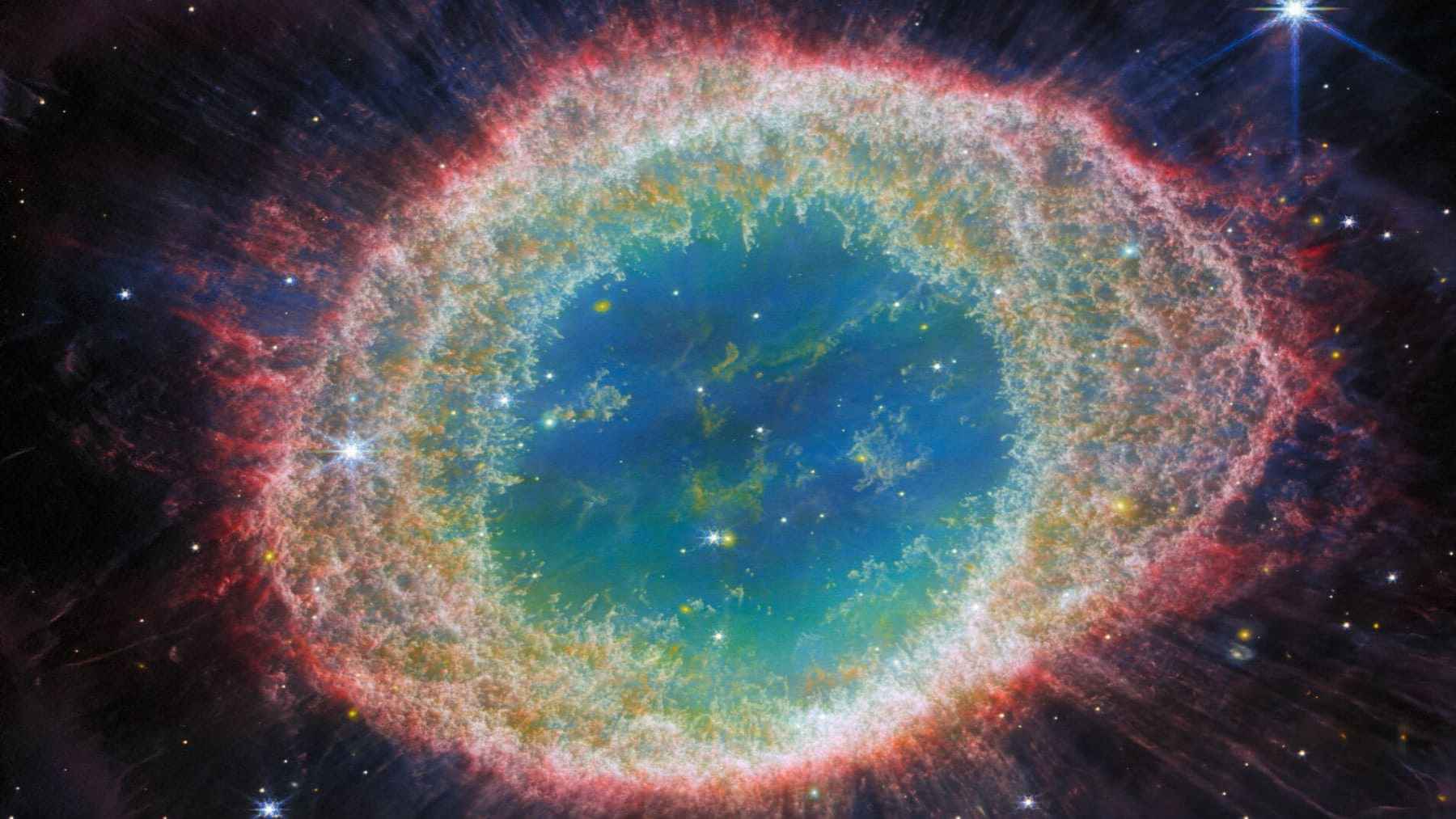
If you have ever scrolled past a space photo that looked like a giant blue eye staring back at you, you have probably met the Helix Nebula. That same object, nicknamed the Eye of God, now has a brand new portrait taken by the James Webb Space Telescope that lets scientists watch a star in its final act.
In a recent observation, Webb used its NIRCam infrared camera to zoom in on part of the nebula and reveal sharp layers of gas and dust peeling away from a dying star. For astronomers, this scene is more than just a pretty picture, because it closely matches what they expect our own Sun to look like in about five billion years.
What the Eye of God really is
The Helix Nebula is a planetary nebula, a glowing shell of gas and dust created when a Sun-like star runs out of fuel and sheds its outer layers. It sits about 650 light years away in the constellation Aquarius and is one of the closest examples of this kind of object to Earth.
Despite the name, a planetary nebula has nothing to do with planets. The term comes from early telescope views that made these objects look like small disks, a bit like distant worlds, to the first observers. In reality, the bright ring is star material blown into space and lit up by intense radiation from the tiny stellar core left in the middle.
James Webb’s infrared close up
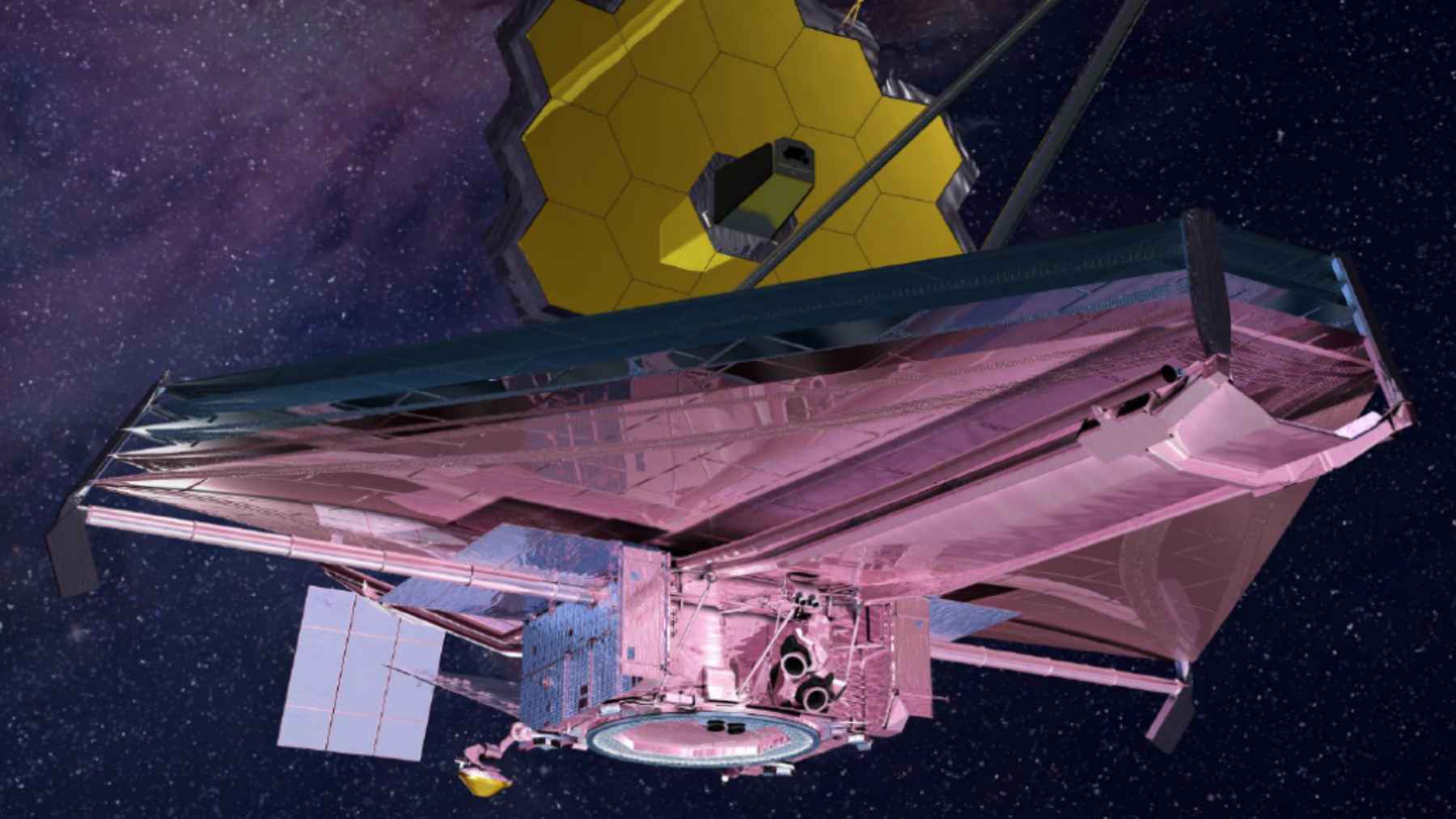
According to NASA, Webb used NIRCam, short for Near Infrared Camera, to capture the new view. Infrared light is invisible to our eyes but very good at slipping through dust, so the instrument can see structures that optical telescopes blur or miss.
In the processed image, the hottest gas near the center shows up with a bluish tint, while cooler regions where hydrogen atoms pair up into molecules glow in yellow and the coldest dusty zones appear red.
Webb’s sharp vision also picks out countless tiny features called cometary knots. Each knot is a dense clump of gas and dust with a bright head and a streaming tail, sculpted by fast winds and harsh radiation coming from the central white dwarf. Even though that white dwarf is too faint to see directly in this particular image, its energy is clearly reshaping everything around it.
A preview of the Sun’s distant future
The star at the heart of the Helix Nebula used to be much like our Sun. Models suggest that in roughly five billion years, the Sun will swell into a red giant, lose a large part of its outer layers, and eventually shrink down to a white dwarf surrounded by a similar glowing cloud.
That timeline is far beyond any human lifetime, so nobody needs to worry about next summer’s beach trip. At the same time, objects like the Helix give scientists a real life laboratory to test how that distant future might unfold.
By comparing Webb’s detailed image with computer simulations, they can check whether their ideas about stellar winds, gas flows, and heating really match what nature is doing.
It can feel strange to look up at the calm disk of the Sun and imagine such a violent ending. Yet the Eye of God reminds us that stars are not frozen decorations in the sky. They are changing objects with lifetimes and final chapters.
From dying stars to new worlds
In the Helix Nebula, the gas streaming into space is rich in carbon, oxygen, nitrogen, and other elements that help build planets and life as we know it. Webb’s observations also reveal pockets of very cold molecular hydrogen and dense knots where more complex molecules can form.
Over time, this star material will drift away and mix with the wider clouds of gas between stars. Future generations of stars and planetary systems can grow out of that recycled matter, so the death of one Sun-like star quietly seeds the birth of many others.
As scientists from Space Telescope Science Institute and the European Space Agency point out, planetary nebulae show that cosmic endings are also new beginnings at a larger scale.
The official press release has been published by NASA.