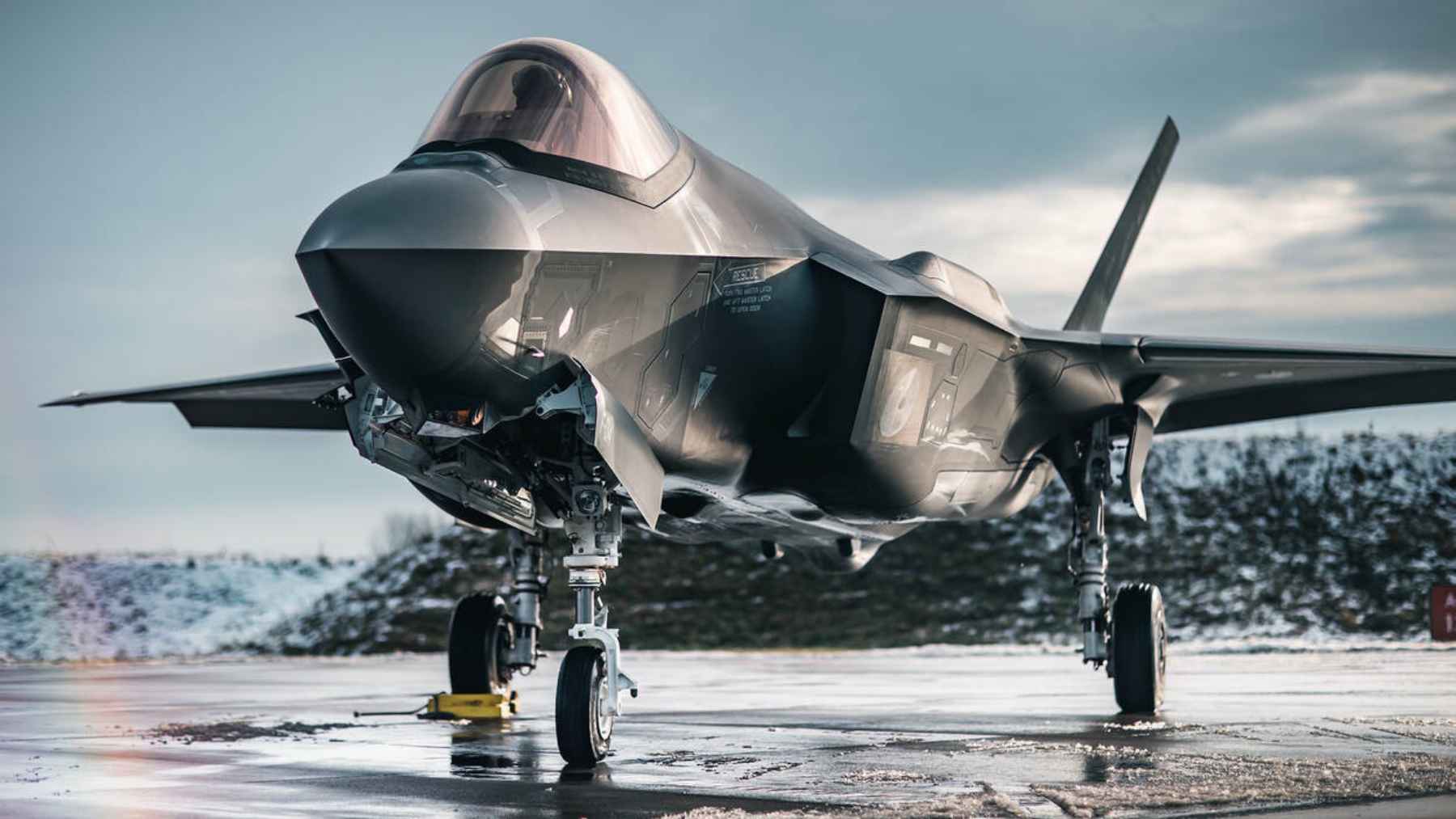
The Royal Netherlands Air Force has confirmed it is deploying 12 F-35A stealth fighters to the United States for a demanding training rotation at Mountain Home Air Force Base in Idaho. It is part of the service’s annual program and fits into NATO’s wider collective defense schedule.
Why fly jets across an ocean just to practice? Because some of the things modern air forces need to rehearse, like large-scale missions and realistic “war-like” scenarios, are hard to do in the Netherlands’ limited airspace.
Why Idaho is the destination
Mountain Home offers wide open training ranges and infrastructure built for complex exercises, including large formations and long mission routes. Dutch officials have pointed to the simple reality that back home there is not enough room for live, large-scale training that matches what pilots might face in a real crisis.
For most people, “airspace limitations” sounds abstract. In practical terms, it is like trying to learn highway driving in a small parking lot, then expecting it to feel normal during rush hour.
What the F-35 crews will practice
The three-week exercise is designed to sharpen skills in air defense and ground attack, including strike and precision bombing drills under realistic conditions. The F-35A is a stealth fighter, meaning it is built to be harder to spot on radar, and it also acts like a flying sensor hub that collects and shares information.
During the training, pilots will run simulated combat missions that demand quick decisions, tight coordination, and accurate timing. They will also face a mock “aggressor” force that imitates electronic interference, which is basically the airborne version of someone trying to jam your signal and scramble what you see and hear.
The tankers that keep the deployment moving
The deployment also includes four Airbus A330 MRTT tanker aircraft supporting the transatlantic journey and operations. These tankers are part of NATO’s Multinational MRTT Fleet, which provides shared refueling and transport capacity for participating countries, with a main operating base at Eindhoven in the Netherlands.
That support matters because fighter jets are not built for nonstop marathon flights. Mid-air refueling is what makes long transfers and long-range training possible, especially when crews need to arrive ready to work rather than exhausted from complicated logistics.
A broader push to plug into NATO’s network
This U.S. exercise comes as the Netherlands also pushes deeper into modern command-and-control, where speed is not just about flying fast but also about moving information fast. Earlier, Dutch F-35s successfully demonstrated real-time data sharing with the national Keystone command system during the multinational Ramstein Flag exercise at Leeuwarden Air Base.
That kind of test is about shortening the time between spotting a threat and responding to it, so allied forces can act on the same picture at the same moment. It is not as visible as a jet taking off, but in a real emergency it can be the difference between reacting in minutes or reacting too late.
The official announcement was published by the Netherlands Ministry of Defence.
Imge credit: Royal Netherlands Air Force