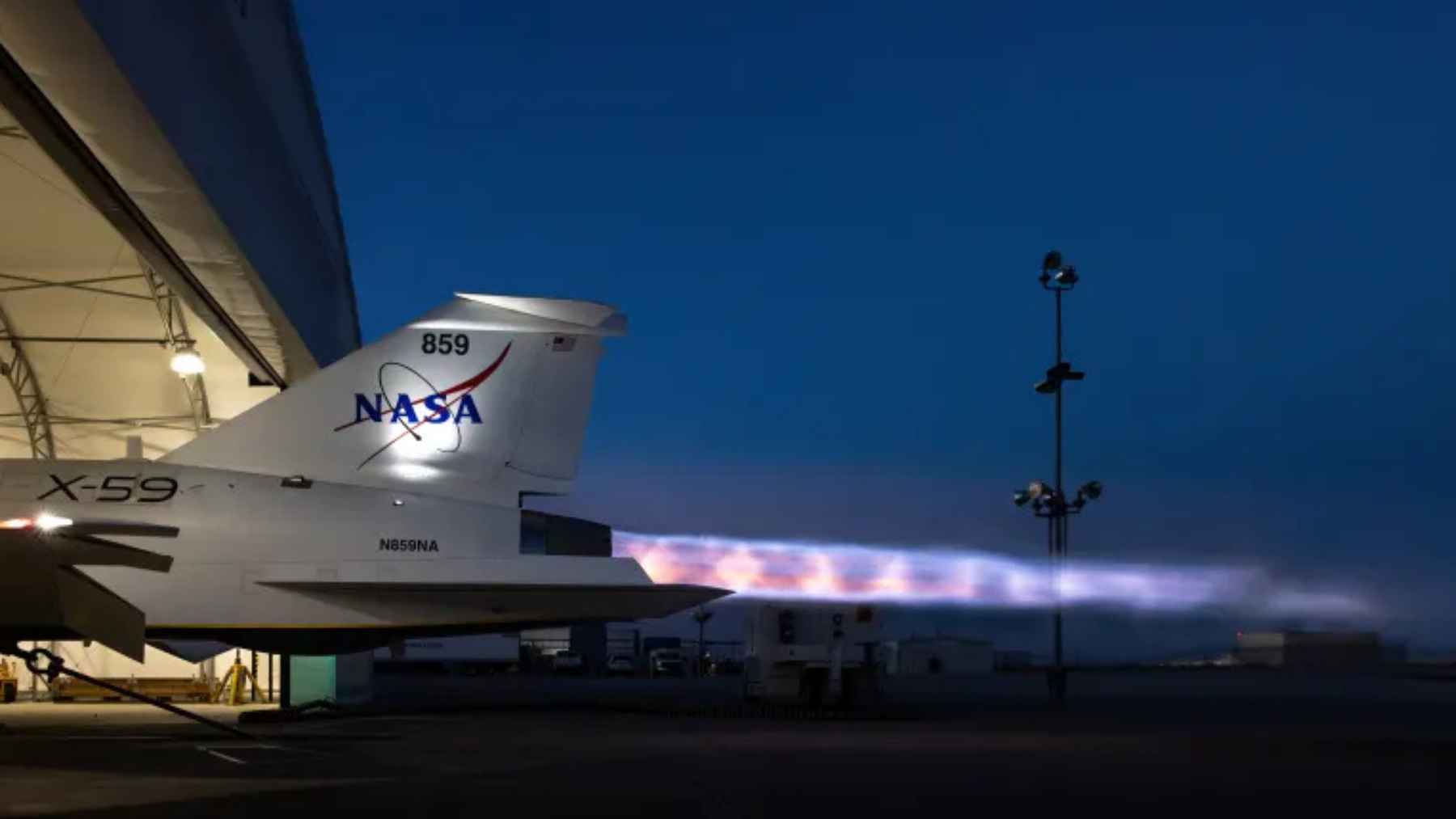
NASA’s experimental X-59 quiet supersonic aircraft has taken a major step toward the sky after its engine roared in maximum afterburner for the first time at a test site in Palmdale, California. The full-power ground run checked whether the one-of-a-kind jet can produce the extra thrust it needs to cruise faster than sound while keeping noise in check.
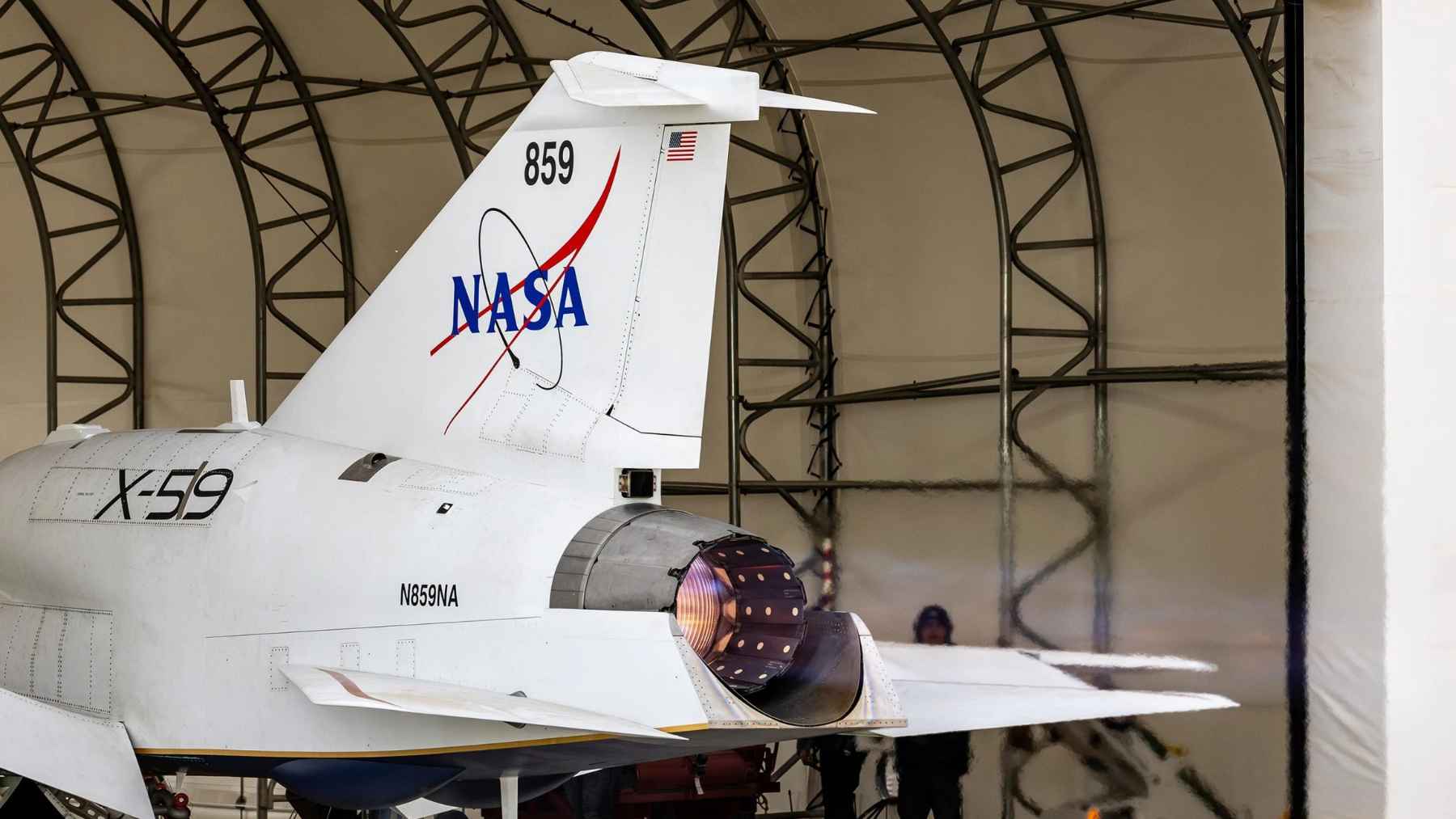
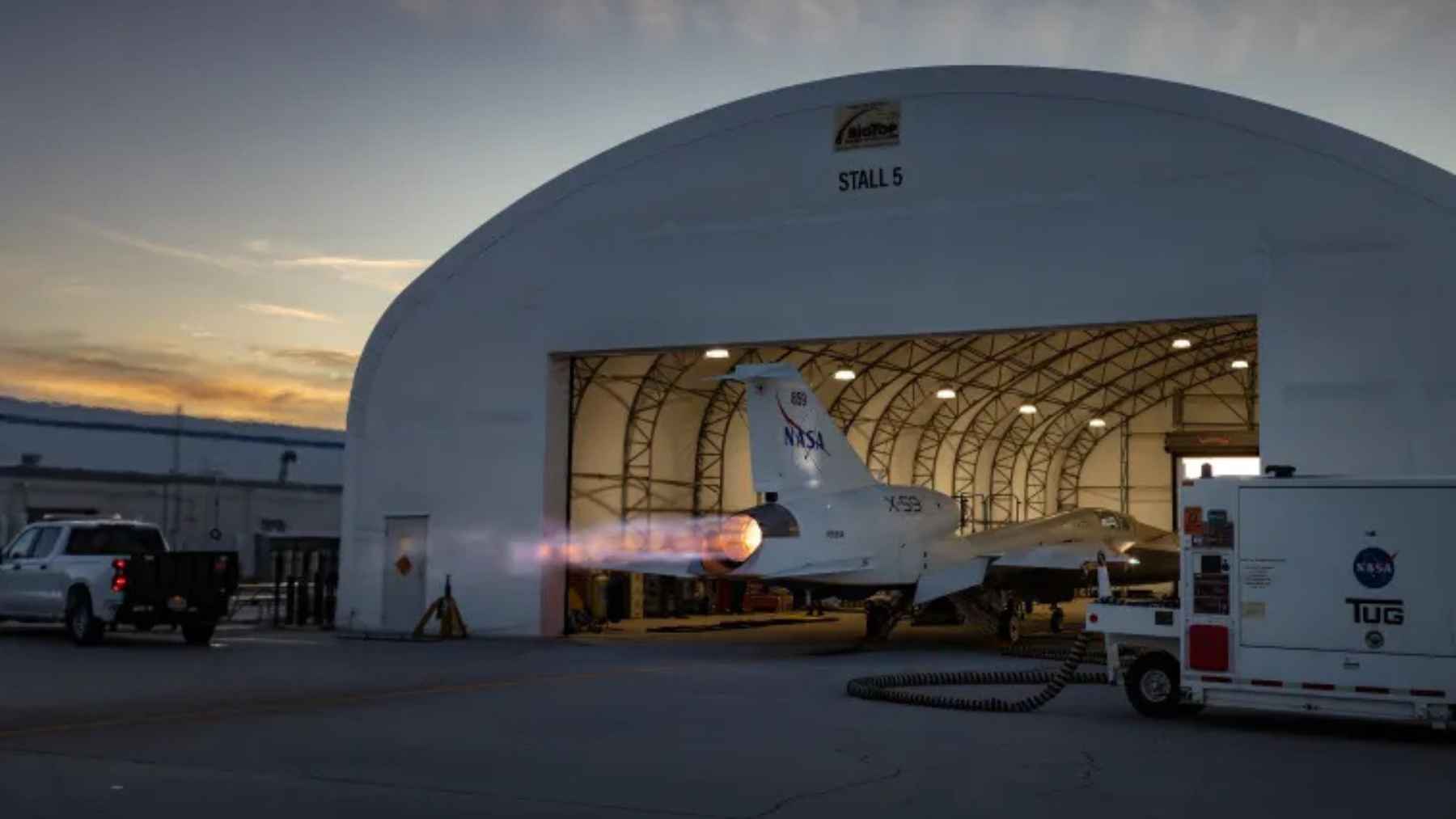
In new photos shared by NASA and manufacturer Lockheed Martin, the long nosed X-59 glows at the edge of a hangar at the company’s Skunk Works facility while a vivid plume of exhaust spills from its tail.
Lockheed Martin called the scene “precision, power and engineering excellence, all on full display” in a post on X. The big question now is simple, can supersonic flight return in a quieter and more neighbor friendly form?
How The X-59 tested its afterburner
An afterburner is a part of some jet engines that sprays extra fuel into the hot exhaust, creating a burst of thrust for short stretches of high-speed flight. On the X-59 that system feeds a single F414-GE-100 jet engine, a modified version of the powerplant used in the F A 18 Super Hornet that has powered decades of carrier operations for the United States Navy.
During the recent ground runs at Skunk Works, engineers pushed the engine through a series of increasingly demanding tests, ending with maximum afterburner. “Running the F414-GE-100 with an afterburner will let the X-59 reach its planned supersonic speeds,” NASA explained.
The checks showed the engine could stay within its temperature limits, maintain enough airflow for flight and work smoothly with cooling, electrical and control systems, a sign that the plane is ready to move toward taxi trials and its first flights.
Turning sonic booms into a soft thump
Supersonic flight simply means moving faster than sound, roughly seven hundred miles per hour at cruising altitude, but the real trouble starts with the noise.
When a plane crosses that threshold, pressure waves in the air pile up into a sharp shock that people hear as a single loud boom that can rattle windows, startle pets and wake anyone trying to sleep.
The X-59 was shaped from nose to tail to soften that boom into what engineers call a sonic thump instead. Its long, thin nose, top-mounted engine and smooth underside are meant to spread the shock waves so the sound that reaches people is closer to distant thunder or a car door closing down the street, a noise level that earlier NASA research suggests many communities could accept as part of normal city life.
What comes next for quiet supersonic flight
The X-59 is the flying centerpiece of NASA’s Quesst mission, a program that aims to show regulators that carefully shaped aircraft can cut the noise of breaking the sound barrier to more manageable levels.
Once ground testing is complete, test pilots will take the aircraft into the air for a step-by-step campaign that gradually expands its speed and altitude, with F 15 research jets flying nearby to measure the shock waves using specialized probes.
Later in the project, NASA plans to fly the X-59 over selected residential areas in the United States while arrays of microphones and teams of social scientists record how loud the thumps sound and how people feel about them.
In practical terms, that means combining acoustic data with survey responses and handing the full package to aviation authorities, who will decide whether future passenger or cargo aircraft based on similar designs should be allowed to cruise quietly at supersonic speeds over land once again.
For now the X-59 is still a one seat research aircraft parked in a desert hangar rather than a commercial jet. Even so, the fiery afterburner run in Palmdale suggests that the long effort to make high-speed air travel quieter is moving from computer models and wind tunnel tests to the next phase, asking real communities whether they can live with a softer sonic footprint above their rooftops.
The main press release has been published by NASA.