Four thousand years ago, at a small cemetery in what is now central Thailand, one woman may have been getting a mild buzz from a favorite local chew. Her teeth have now delivered the earliest direct chemical evidence that people in Southeast Asia were using psychoactive betel nut, a seed that can make users feel more awake and talkative.
The discovery gives scientists a new way to track how ancient communities used mood changing plants.
The new research team, led by Piyawit Moonkham at Chiang Mai University, analyzed hardened dental plaque from Bronze Age skeletons at the site of Nong Ratchawat. In one young woman’s molars, they detected key compounds from betel nut that are known to boost alertness and euphoria.
Other archaeologists welcome the technical breakthrough but say more evidence is needed before we can be sure this was already a widespread habit four thousand years ago.
Betel nut, from daily pick me up to health concern
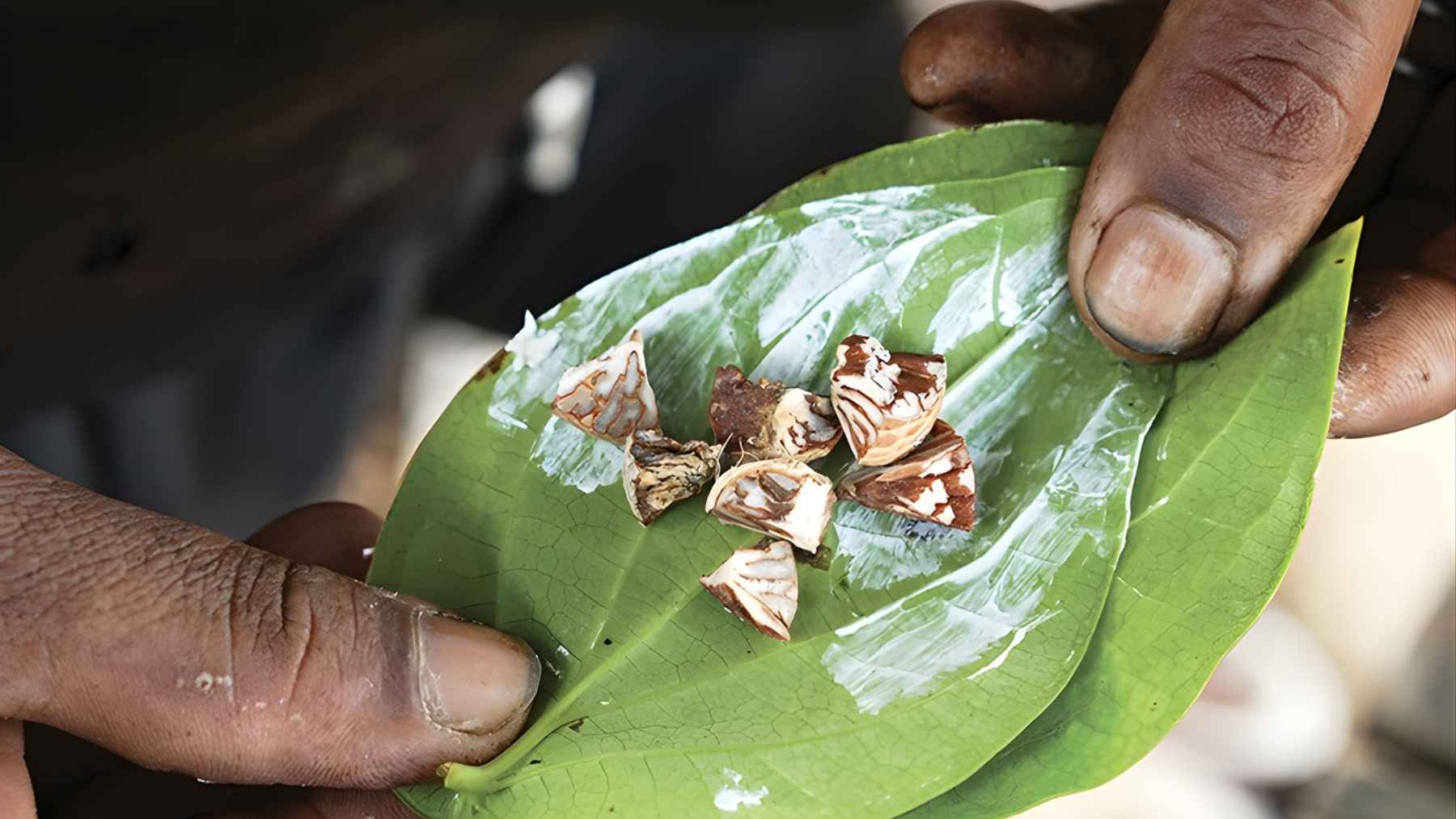
Betel nut is the seed of the areca palm, often wrapped in a betel leaf with slaked lime to form a chew called a quid. People across South and Southeast Asia have used it for thousands of years to stay awake, feel more talkative, or take the edge off a long day.
Today it is still chewed by millions, and public health experts say it is now the fourth most commonly used psychoactive substance worldwide, after tobacco, alcohol, and caffeine. Long-term use is strongly linked to oral cancers, so health agencies and governments in places such as Thailand and India have pushed campaigns to discourage the habit and cut those risks.
Moonkham, who grew up watching his grandparents chew betel nut, has suggested that people may also have turned to it for stress relief or even to cope with mental illness. That more nuanced view sits alongside modern warnings and helps explain why this small seed has held on in so many communities despite serious health concerns.
Plaque time capsules at Nong Ratchawat
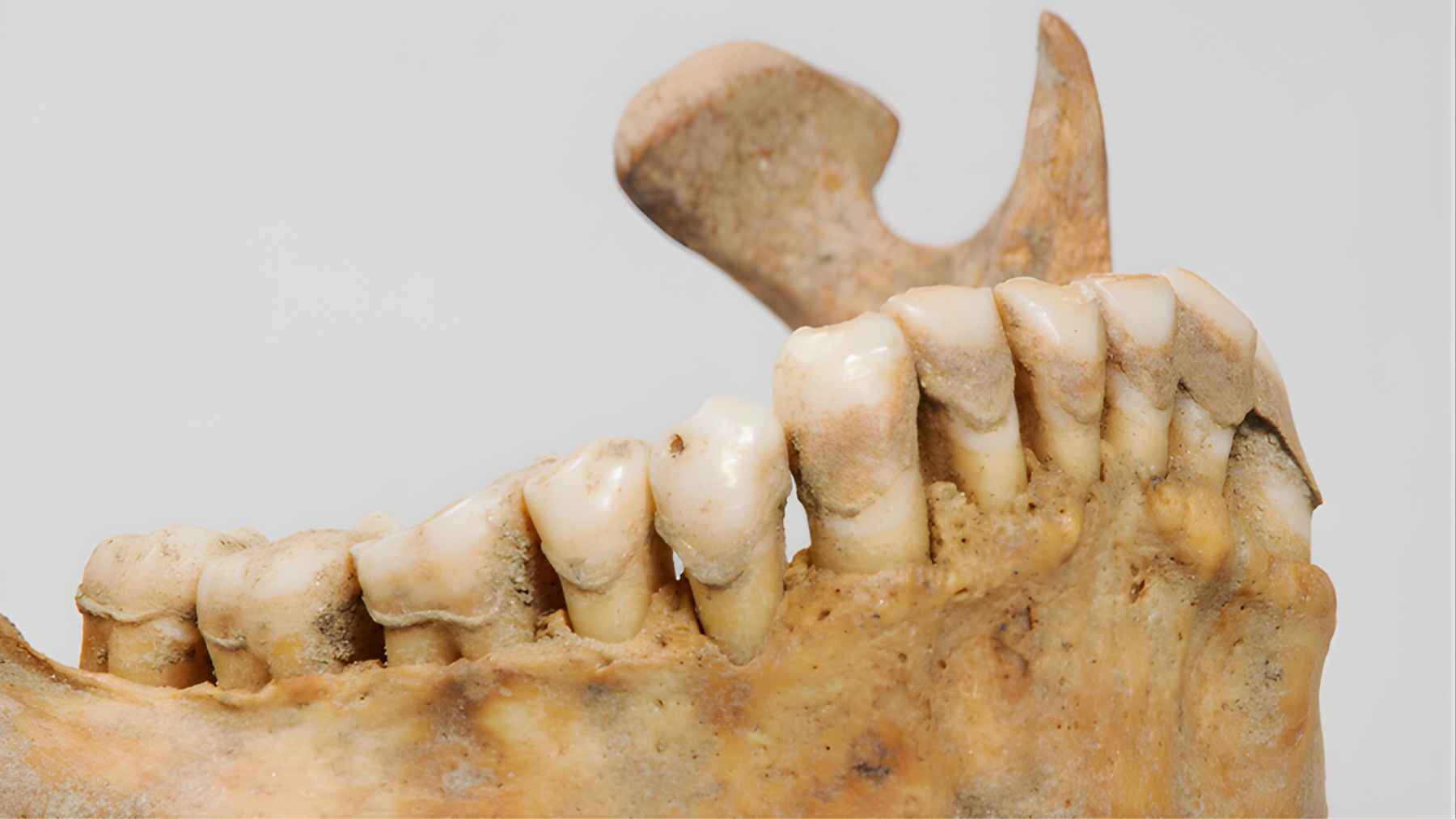
Since 2003, excavations at Nong Ratchawat in central Thailand have uncovered more than 150burials from the Bronze Age. For the new research, scientists collected 36 tiny samples of dental calculus, the rock hard plaque that builds up on teeth before a deep cleaning at the dentist, from six individuals.
Because calculus mineralizes in place and can trap food particles and chemical traces, it acts like a microscopic time capsule of a person’s diet and habits. The team then used sensitive chemical analysis to look for plant compounds that might still be preserved inside these gritty flakes.
To check that their method worked, the researchers mixed dried betel nut, pink limestone paste, betel leaves, tree bark, tobacco, and human saliva to make modern quids in the lab, then tested the red liquid that resulted. Those experimental samples gave them a clear chemical fingerprint that they could compare directly with the ancient plaque.
The Bronze Age woman behind the evidence
In three calculus samples taken from different molars of a single woman, labeled Burial 11, the team detected the compounds arecoline and arecaidine. These chemicals are key ingredients in betel nut and also appear in other stimulant plants such as coffee and tobacco, where they have strong effects on the human body.
Finding this chemical fingerprint in plaque suggests repeated chewing over time rather than a one time experiment, because residues slowly build up as a person keeps using the plant.
Yet this woman’s teeth showed no obvious red or black staining and her grave did not contain the usual shell fragments or tools linked to betel chewing, so the team suspects different preparation methods, careful cleaning, or later damage may have erased those visible clues.
Senior author Shannon Tushingham of the California Academy of Sciences said their approach lets them “make the invisible visible,” turning hardened plaque into a record of everyday behavior rather than just something a hygienist scrapes away.
The woman’s grave goods, including stone beads, suggest she lived an ordinary life in her community, which makes her chemical traces all the more valuable for understanding routine practices rather than rare rituals.
Debate over the earliest betel chewers
Not everyone is ready to call this the final word on when betel chewing began in Southeast Asia. Miriam Stark of University of Hawaii at Manoa notes that Nong Ratchawat has fewer radiocarbon dates and less detailed documentation than some other sites, and that only one of the six people sampled showed betel-related compounds.
Other digs, including the nine thousand year old Spirit Cave in northwestern Thailand, have produced plant remains or stained teeth that many researchers link to betel use. For Stark, the new work is an important starting point that shows how dental calculus can answer old questions, but she argues it still needs to be combined with physical clues such as plant fragments and tools.
Archaeobotanist Cristina Castillo of University College London has also warned that compounds like arecoline may appear in several species within the Areca palm family, not just the classic betel nut. In a 2022 study in the journal Economic Botany, she argued that new chemical methods should, for the most part, be backed up by traditional archaeological evidence before scientists rewrite cultural histories.
Researchers writing in follow-up pieces have echoed that caution while highlighting how new techniques are reshaping the study of ancient plant use.
The main study has been published in the journal Frontiers in Environmental Archaeology.