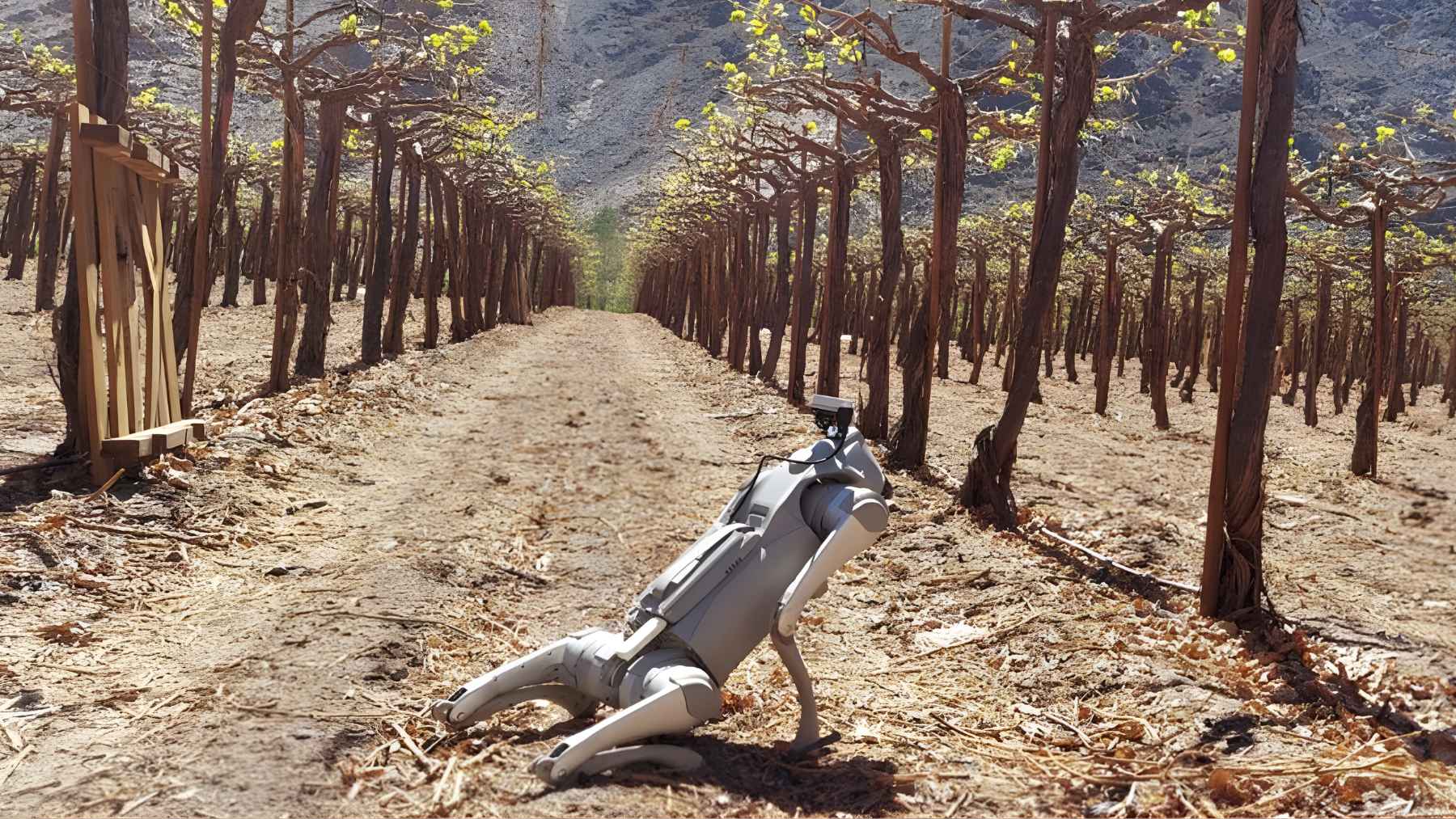
Four-legged robots are starting to patrol fruit orchards, scanning leaves and counting berries where human agronomists used to walk row after row. In Chilean table grape blocks, one AI powered “agronomist dog” is already helping growers cut mistakes, reduce waste, and keep a much closer eye on plant health.
Across the globe, farm robots are moving from science fiction to line items on the budget. The worldwide market for agricultural robots is expected to climb above $100 billion within about eight years, driven by fewer farmers in the field, rising labor costs, government support for mechanization, and rapid advances in artificial intelligence.
Why farms are calling in robot dogs
For years, agriculture has been one of the slowest industries to adopt new technology. That lag has consequences. Jobs that are central to food production, such as agronomy, are often seen by younger workers as exhausting and not very glamorous, especially when global labor shortages mean longer days and more ground to cover.
Kedar Iyer, CEO of Frutas AI, argues that this is exactly why automation is no longer a nice to have but a necessity. The traditional picture of an agronomist is someone who spends long hours walking under the sun, looking, counting, and trying to remember which block had issues last week. Robots, in his view, can take over the endless walking so humans can focus on decisions.
How the Agronomist Robot Dog works
Frutas AI’s Agronomist Robot Dog is built to live in the rows. It autonomously scouts farms, takes inventory, and monitors crops that stay under about five feet tall, including blueberries and other low-growing fruit. The robot walks the orchard without supervision and checks each plant in real time, instead of just a few sample points.
Along the way it collects detailed data on fruit yield and size, flags rows that need human attention, learns growth patterns, and then returns on its own to a charging base.
Growers can let it work on its own inside defined areas or steer it through a mobile app while watching its progress on screen, something that feels surprisingly natural if you are already used to tracking a delivery on your phone.
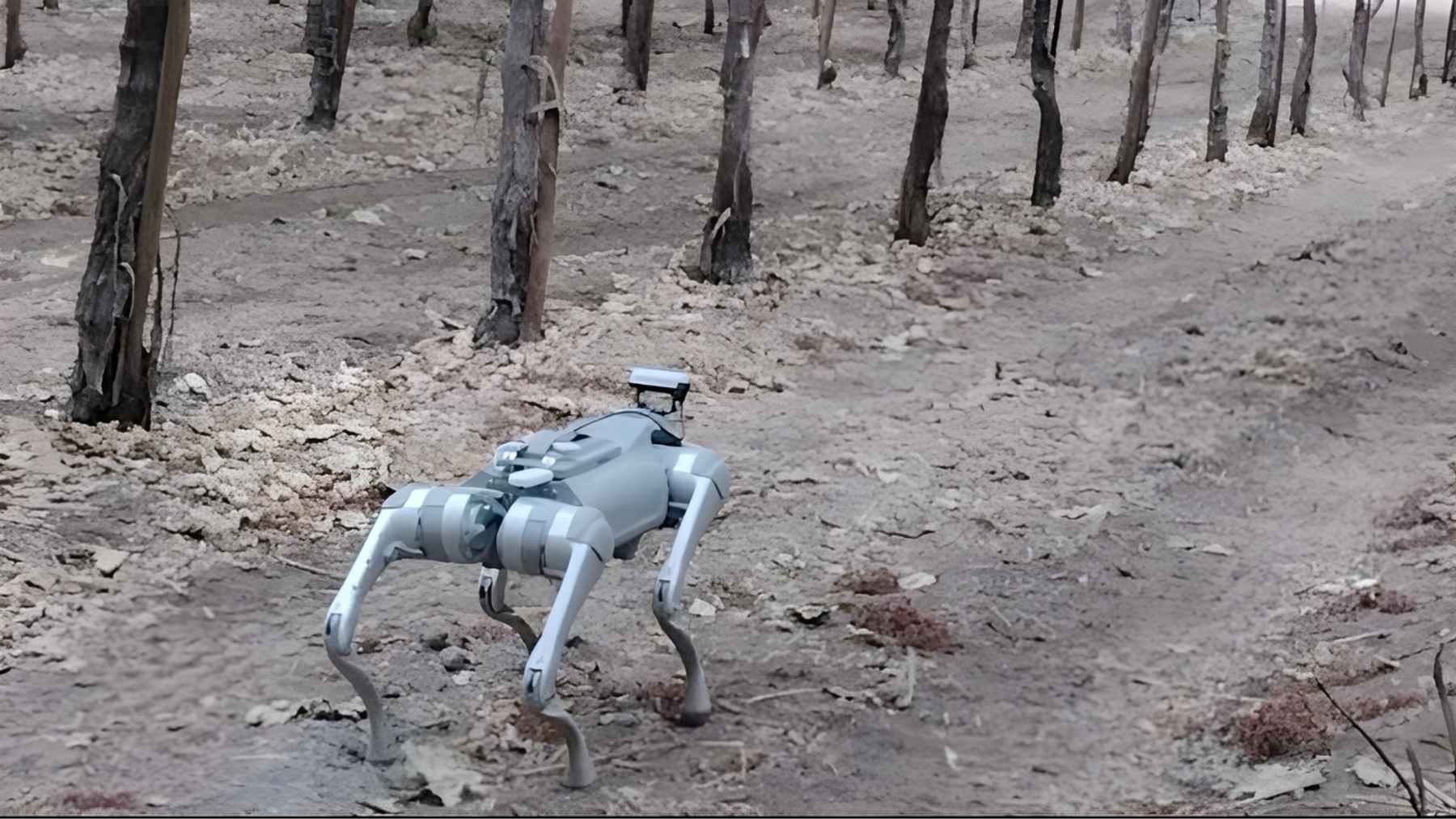
Under the hood, the robot combines animal inspired movement with computer vision. Iyer likes to describe it as a kind of “mountain goat with a brain” that calculates the stability of every step in milliseconds, which helps it move across uneven or muddy ground where wheeled machines struggle.
Its cameras and AI models create three-dimensional information for every plant, processing data from hundreds of trees or bushes in minutes instead of the hours a person would need for the same manual count.
From one percent of the field to one hundred
In a typical season, a human agronomist might be able to scout only one percent of a large farm, then estimate conditions in the remaining ninety nine percent.
The robot dog, by contrast, can walk every row and build a full picture of the crop. Iyer says that richer data translates into lower nutrient costs, less waste of inputs, and better data management, which together reduce risk and make yields more predictable.
The promise is not just theoretical. In early trials on table grape vineyards in Chile in September 2025, the robot helped cut adjustment errors by ninety five percent, improved consistency in fruit size, and delivered data on uniformity, size, and color with about ninety percent accuracy.
For growers, that kind of precision can mean fewer wasted inputs and more reliable harvest forecasts, which is essential when every box shipped has a carbon footprint attached to it.
Something else happened in those first weeks in the field. Workers started treating the machine as a coworker. According to Iyer, the robot quickly became a “buddy” for staff, a small sign that collaboration between humans and AI machines can feel more natural than it sounds on paper.
Limits in the mud
The technology is still a work in progress. The robot can manage gentle slopes and small obstacles, but it needs lanes free of large pipes and fallen branches so it does not stumble and slow down. Connectivity is another weak spot.
Many rural and mountainous farms still have dead zones with no signal. When the robot loses its connection, it keeps working offline, then uploads the data only when it returns to the charging dock, typically at least every four hours.
At the end of the day, this means farms that want the full benefit of smart machines will also need investments in something far less flashy than a robot dog, namely clear pathways and reliable rural internet. The robots are arriving faster than rural infrastructure in many regions, so there is still a gap to close.
A new role for human agronomists
Does all this mean agronomists will be replaced by four metal legs and a stack of sensors? For the most part, experts suggest a different picture. Iyer calls agronomy “ripe for transformation,” not elimination, and emphasizes that human insight remains central even as repetitive tasks shift to machines.
If robots can handle the tedious counting and mapping, agronomists can spend more time interpreting data, planning nutrient strategies that avoid overuse, and catching early signs of stress that might otherwise lead to higher emissions or wasted water.
In practical terms, that could make high-tech monitoring available even to farms that struggle to hire enough skilled staff, while also cutting resource use per box of fruit.
For now, one thing is clear. As AI powered “farm dogs” begin pacing between the rows, the quiet revolution in how we grow food is already underway.
The interview was published on PortalFruticola.com.