Have you ever rolled up your sleeve at a blood drive and assumed your blood type was nothing special? A new study from Thailand suggests that for a tiny handful of people, that assumption is very wrong.
By reviewing more than 544,000 blood samples from donors and hospital patients in Bangkok, a team at Mahidol University and Siriraj Hospital found only three people with an ultra-rare “hybrid” blood type known as B(A). That works out to roughly one person in 180,000, or about 0.00055% of all the samples tested.
The discovery may not change daily life for those three individuals. They are considered healthy and are clinically typed as blood group B. But in the hospital lab, this microscopic quirk can confuse standard blood tests and make life harder for transfusion teams who need clear answers fast.
A blood type that sends mixed signals
To understand why B(A) matters, it helps to know how the ABO system works. Most of us are told we belong to one of eight common groups such as A positive or O negative. Those labels come from tiny sugar molecules called antigens that sit on the surface of red blood cells. Types A and B carry different antigens, AB carries both and O carries neither.
These antigens are built by an enzyme encoded by the ABO gene. In the new study, researchers found that the three B(A) cases share a set of four specific changes in this gene. Those mutations tweak the enzyme so that blood which is essentially type B produces a faint trace of A antigen as well.
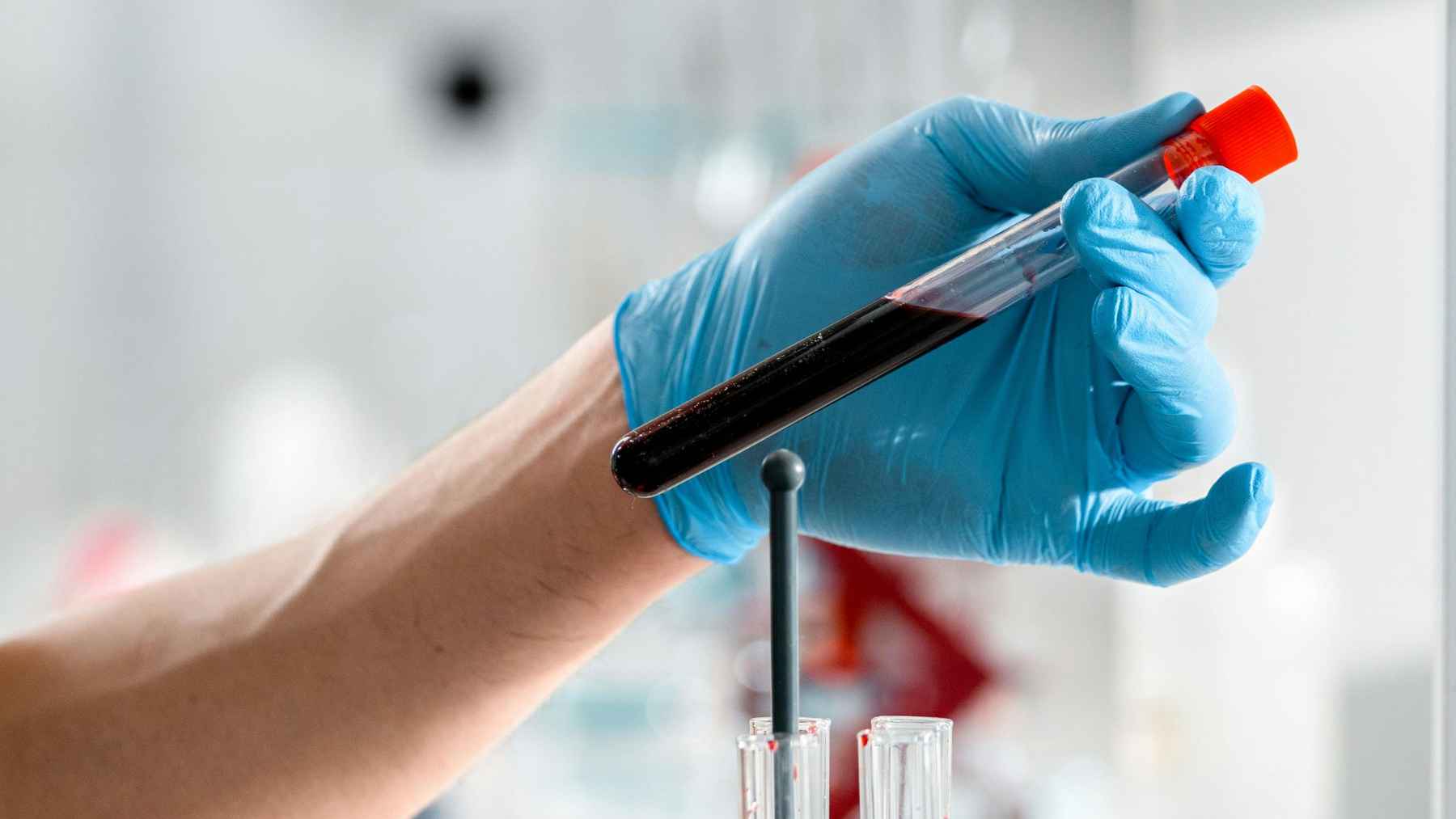
On a day when everything is calm in the lab, technicians might notice that the red cells and the plasma are giving slightly different answers about the same person’s blood type. That situation is known as an ABO discrepancy. It can delay transfusions while staff double check results and, in rare scenarios, could increase the risk of a mismatch if the anomaly is not recognized.
In the Thai dataset, 396 patients, or about 0.15%, and 74 donors, about 0.03%, showed some kind of ABO discrepancy. Only one patient and two donors turned out to have the B(A) phenotype.
Why such a rare type still matters
For the most part, people with B(A) live completely normal lives. They do not need special diets or extra checkups. The problem appears when someone needs blood in a hurry, for example after a road accident or major surgery. In those moments, hospital teams rely on fast, reliable typing to avoid dangerous immune reactions.
If a hybrid type like B(A) slips through routine screening, the results can look inconsistent. That is why the authors emphasize the need for stronger protocols whenever the numbers on the screen do not quite add up.
In the study abstract, they call ABO discrepancies “one of the significant challenges encountered in transfusion medicine” and note that patient illness and treatments can also blur the picture.
Other experts who commented on the work underline the same point. They stress that advanced tools such as DNA sequencing and specialized reference labs are becoming essential backstops for tricky cases where classic tests struggle to keep up.
The research team is cautious about overstating what they know. “Future studies are needed to understand the structural and functional consequences of the mutated AB transferase,” they explain, pointing out that this hybrid enzyme is still only partly understood.
Hidden biodiversity in human blood
We usually talk about biodiversity in terms of forests, coral reefs or endangered animals. Yet this study is a reminder that there is also quiet diversity inside our own veins. The newly described B(A) allele is genetically distinct from all previously reported versions of this phenotype, adding one more line to the growing catalog of human blood variation.
In recent years, scientists have reported several new blood group systems and extremely rare types in different parts of the world. One recent case from the Caribbean, nicknamed “Gwada negative,” appears to belong to a blood group so scarce that a single patient is the only known compatible donor for herself.
For global health services, that invisible diversity matters. As populations move and mix, hospitals increasingly face patients whose blood does not fit neatly into textbook categories. Studies like this one help transfusion services refine their testing strategies so that even unusual cases receive safe, compatible blood.
For everyday donors, the message is simple. Giving blood remains one of the easiest ways to support community health and, as this work shows, a broad and diverse donor pool can also help scientists map rare types that might be vital for someone in a future emergency.
At the end of the day, three people out of more than half a million might not sound like much. Yet their unusual blood type is quietly pushing medicine to look closer, test smarter and respect the hidden complexity of something as familiar as a routine blood draw.
The study was published in Transfusion and Apheresis Science.