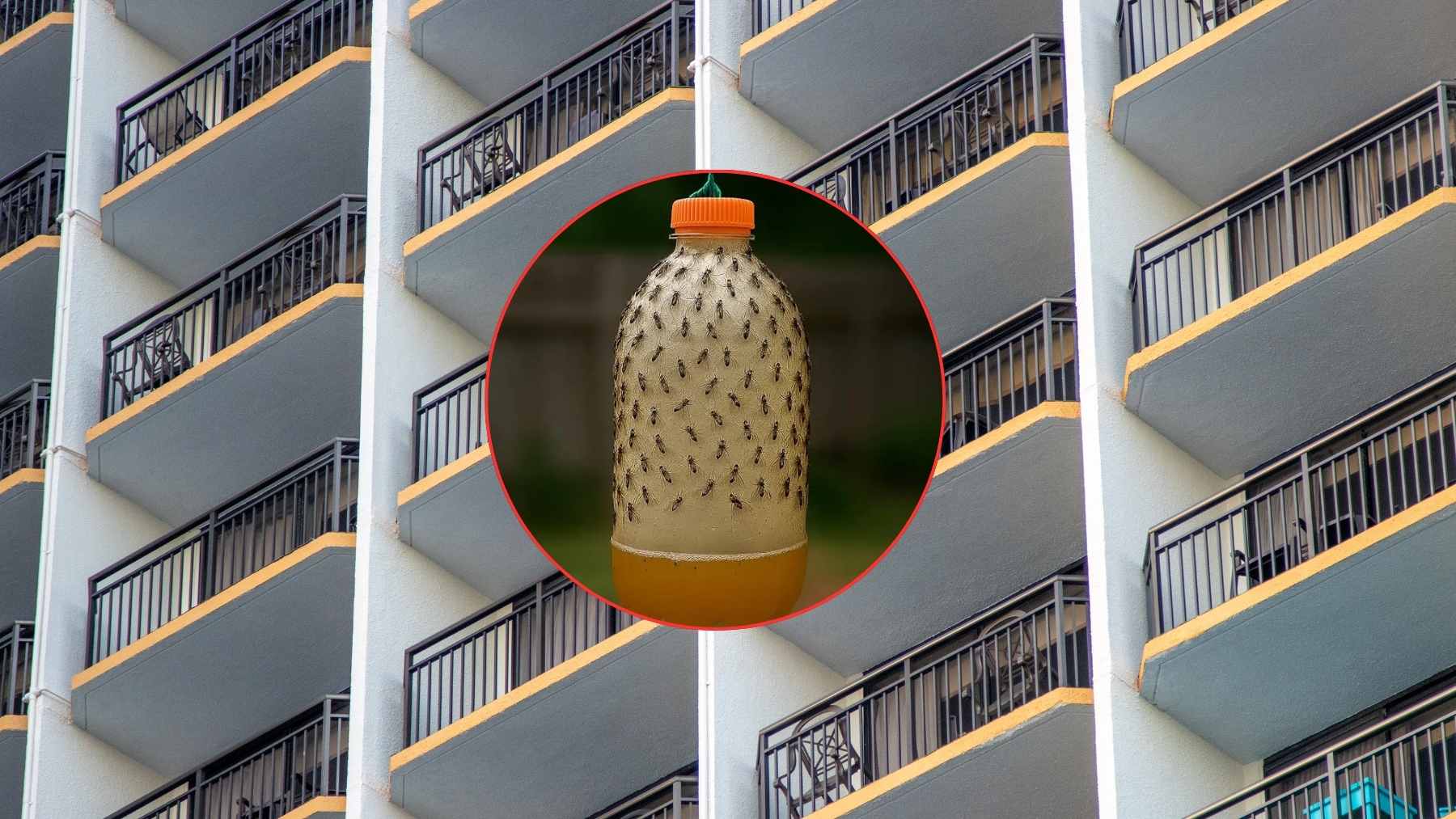
Across many apartment blocks, plastic bottles filled with cloudy liquid now swing from balcony railings, promising fewer mosquitoes and flies on hot nights. The idea is cheap and easy to copy, which is why it has jumped from TikTok clips to family chats. Look a little closer, though, and the balcony bottle trick seems more like a small helper than a miracle cure.
Picture a sticky July evening, the metal rail still warm to the touch as the sun goes down. Plastic bottles hang over pots of basil and chairs, half full of water and white vinegar, catching the last light. You try to enjoy dinner while something buzzes around your ankles and you cannot help asking yourself when everyone started doing this.
Why balconies are filling with water and vinegar bottles
Once you start looking for them, you see these bottles everywhere, like satellite dishes or laundry on the line. Ask around and you usually hear the same story, where someone saw a video, an aunt shared a miracle trick, or a coworker swore their mosquito problem vanished overnight. With stories like that, who would not want to try it at least once?
Laura, 32, lives on the fifth floor of a busy avenue and remembers when her balcony dinners felt like an open buffet for mosquitoes. After a friend sent her a reel that promised instant relief, she rinsed two old water bottles, filled them halfway with tap water and a generous splash of white vinegar, tied them with string, and hung them like makeshift lanterns.
“Maybe a little” is how she describes the change now, then adds that maybe the air was simply less humid that night.
What the mix really does to mosquitoes and other pests
In theory, the logic sounds reasonable. Vinegar has an acidic smell that may bother some insects, so people hope the scent creates a barrier around the balcony. Some home versions add dish soap or sugar so the bottle works as a simple trap where flies fall in and drown.
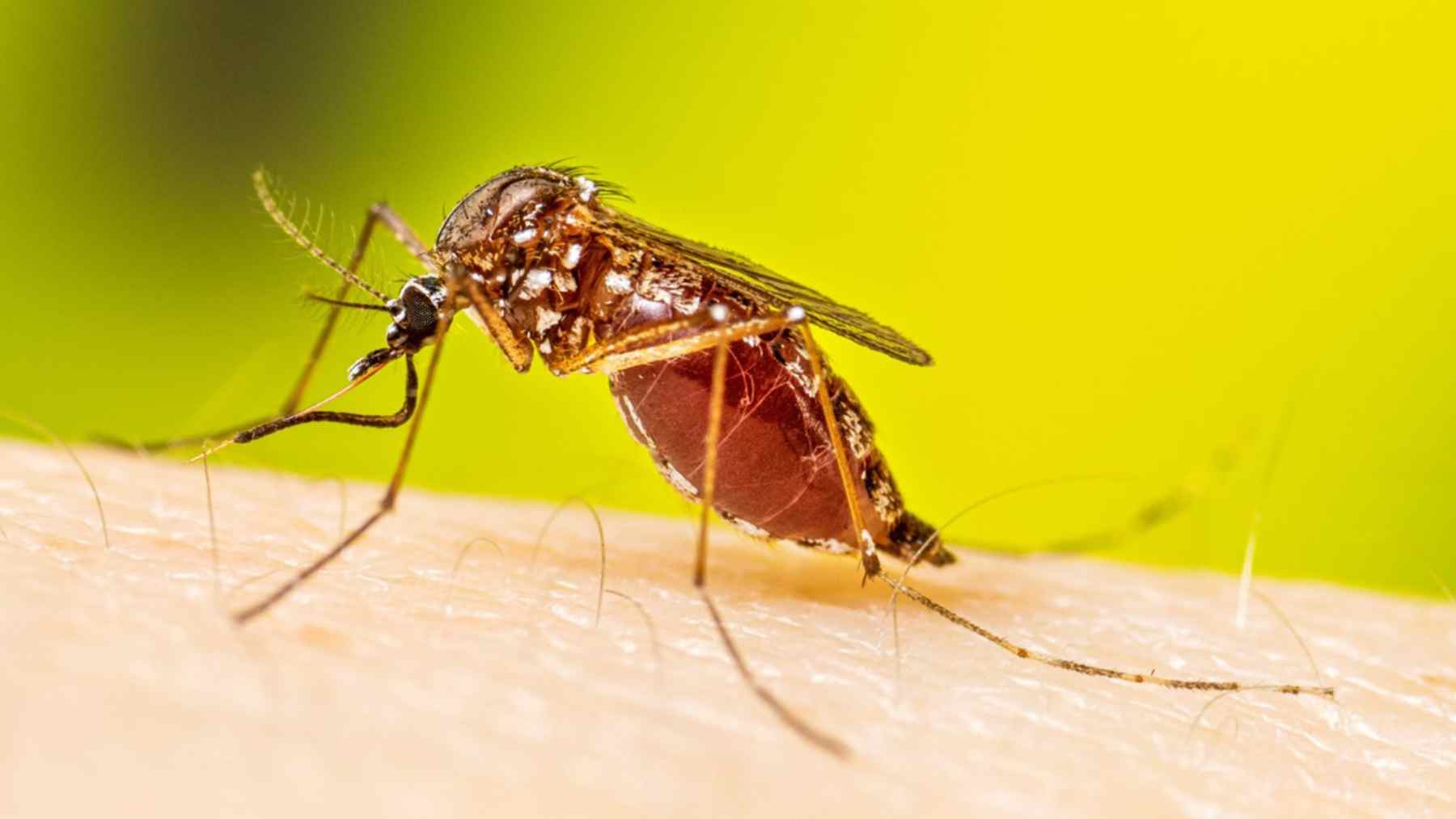
Scientists who study insects are more cautious. They point out that there is little solid research showing that a basic mix of water and vinegar in a bottle can protect an entire balcony. Outdoors, breezes dilute and carry smells away, so any protective cloud around the bottle is fragile and extremely local.
When urban pest control technicians visit apartments, they often find these bottles already swinging from the railings. One of them summed it up very bluntly and told me “If vinegar bottles really worked the way social media claims, my clients would have fired me years ago”. The bottles were there, he said, and the mosquitoes were still happily biting.
Cheap balcony experiment, if you still want to try it
Even with its limits, there are reasons this trend refuses to disappear. A recycled plastic bottle and basic white vinegar cost almost nothing, so the financial risk of trying it is close to zero. On top of that, the bottle is a visible reminder that you are doing something to improve your space.
The basic method is straightforward. Take a clear plastic bottle of about 1 to 1.5 liters, fill it one third of the way with water, then add a generous splash of white vinegar until it smells strong. If you want more of a trap for flies, you can open the bottle, add a spoonful of sugar and a drop of dish soap, and leave the neck open so insects fall in and find it hard to climb back out.
The most realistic approach is to treat the bottle as one small layer in a bigger plan rather than a magic shield. Screens on doors and windows, fans that keep air moving, clean drains with no standing water, and even some plants that mosquitoes dislike can all work together to make your balcony more comfortable.
The main source for this practice has been social media videos and personal anecdotes, not an official scientific study or press release published in a journal or by a research organization.
The official guidance on mosquito control was published on the Centers for Disease Control and Prevention website.