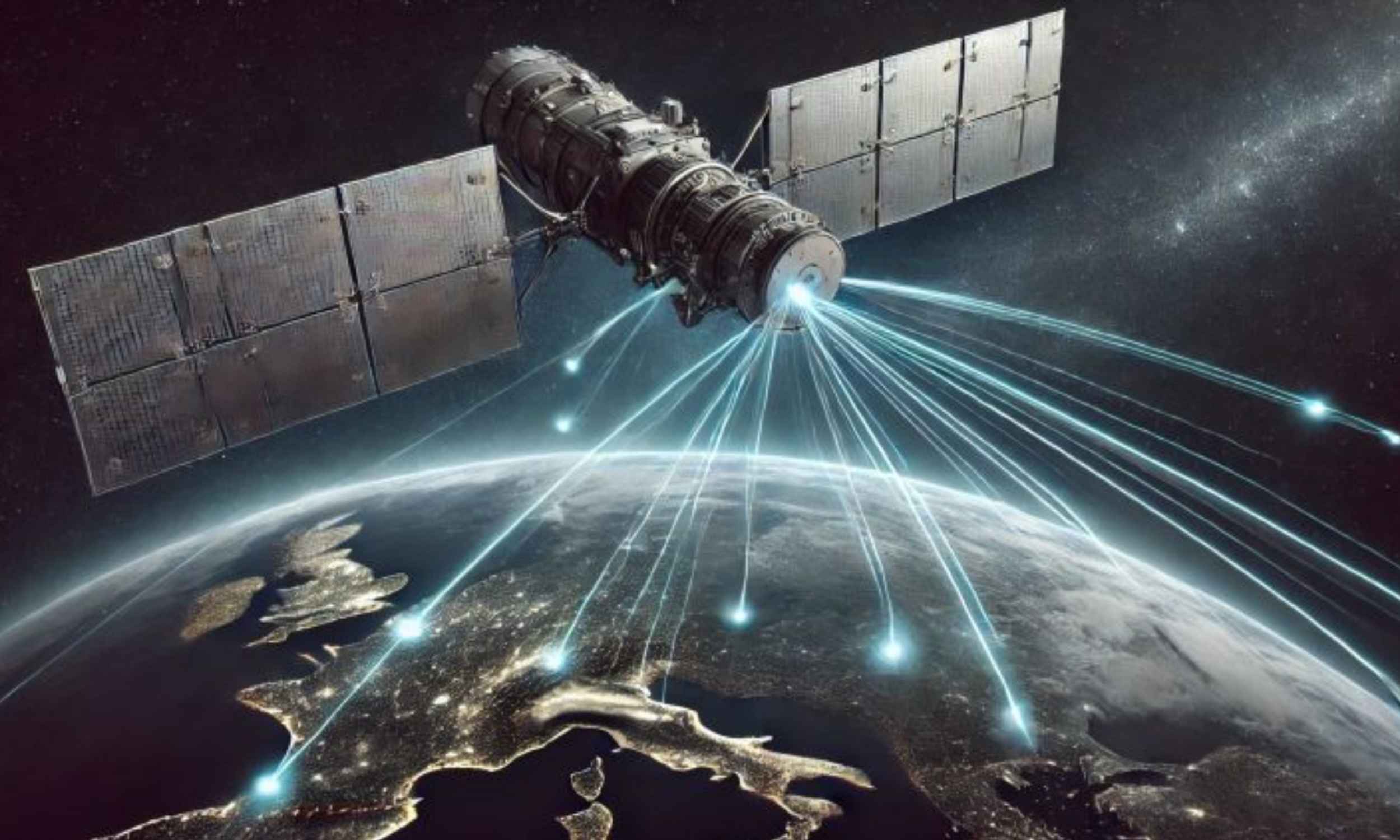
If you picture satellites in orbit, you probably think of GPS on your phone or the weather map you check before a heatwave. The United States military is looking at the same sky for something very different. It is building a laser-linked web of satellites that could become the nervous system of future wars in space.
Laser communications at the core of Pentagon space strategy
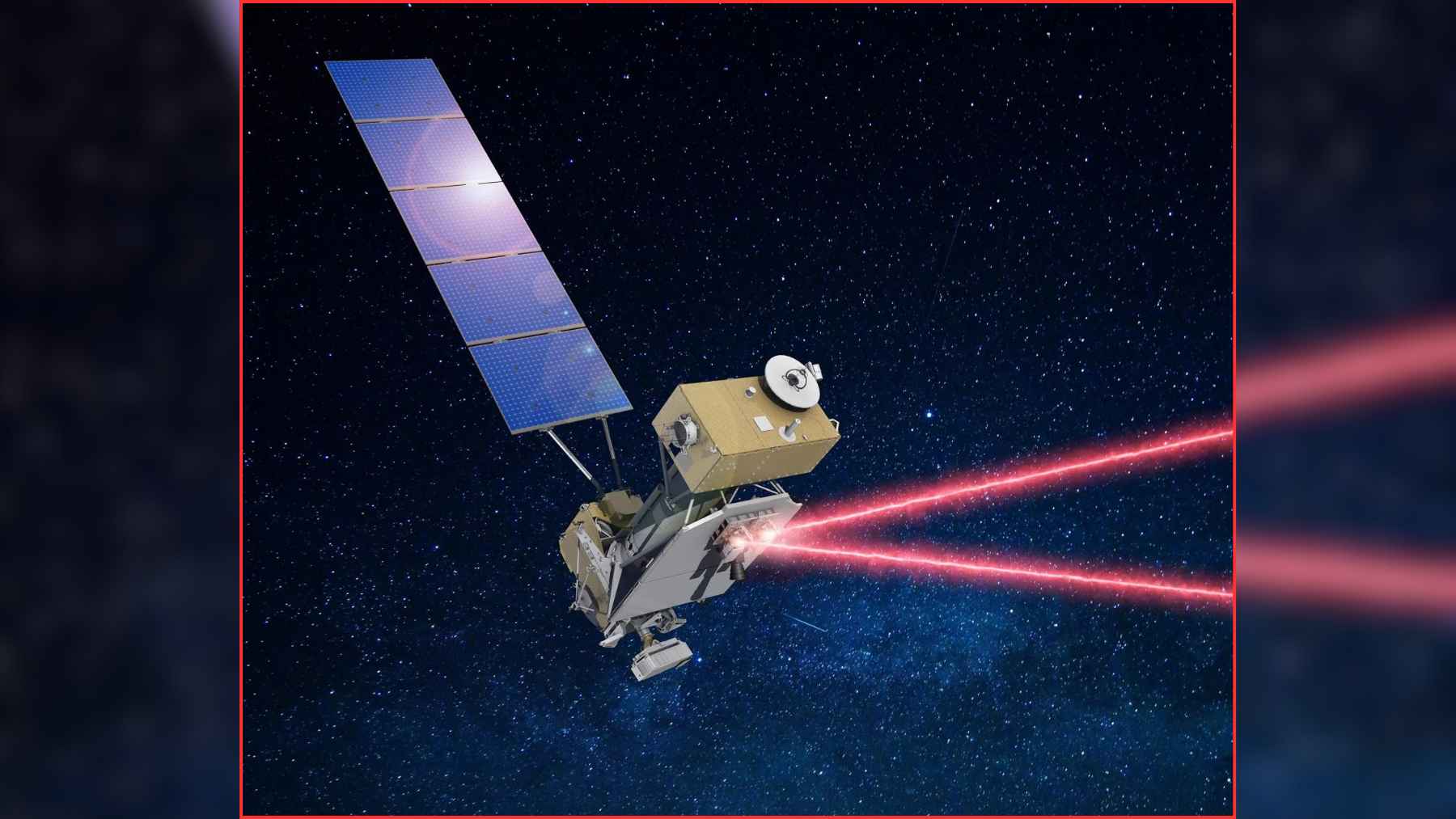
At the heart of that plan is a new optical receiver described in a recent paper in the journal Optical Engineering. Researchers from the Space Development Agency designed and tested hardware that can pick up laser signals from satellites even when those signals fade and flicker while crossing Earth’s atmosphere.
The receiver is built to match the agency’s Optical Communication Terminal standard, which tells different companies exactly how to build laser systems that can talk to each other.
This standard underpins the Proliferated Warfighter Space Architecture, a planned mesh of at least several hundred small satellites in low Earth orbit that would move data for missile warning, tracking and battlefield communications.
A recent report from the U.S. Government Accountability Office notes that the Pentagon has already committed nearly $11 billion to this architecture and could spend about $35 billion by the end of the decade.
How the burst mode optical receiver works
So what makes this receiver different from the technology on today’s military satellites? The key idea is something engineers call burst mode. As a satellite races over a ground station, the strength of its laser signal can swing by around twenty decibels because distance, pointing geometry and turbulence all change during the pass.
Instead of blasting data at full speed all the time and hoping for the best, burst mode lets the system slow down when conditions are bad so the link does not drop. The paper describes operating modes where the laser is on for only a fraction of the time, yet shines much more brightly during those brief pulses while using the same average power.
One tested mode delivers roughly 36.7 megabits per second, compared with about 1,110 megabits per second in continuous operation, but it keeps the connection alive when a conventional link would simply fail.
To catch those fragile pulses, the prototype receiver uses a large area avalanche photodiode about 100 micrometers across. That sensor can collect laser light that has been distorted by the atmosphere without first fixing the beam with complex adaptive optics.
In plain language, the front end is simpler, smaller and more rugged, which matters if you want receivers not only in fixed bunkers but also on ships or aircraft dealing with clouds, rain and vibration. The authors write that “the developed receiver architecture represents the first APD based SDA burst mode waveform compatible receiver” and say that future work will focus on even lower noise designs.
For military planners, the attraction is obvious. Laser links can carry much more data than traditional radio connections and use far narrower beams, which makes them harder to jam or intercept. Optical links are also immune to radio frequency congestion and do not need spectrum licenses, a growing advantage as civilian and military operators crowd the airwaves.
Space debris mega constellations and the environment
Yet the environmental picture is more complicated. The same GAO report warns that the new laser system will ride on top of a satellite architecture that may eventually include hundreds of spacecraft, with each new tranche adding more vehicles and more complexity.
Another GAO study on large constellations estimates that roughly 5,500 active satellites were already in orbit in 2022 and that one forecast sees about 58,000 additional satellites by 2030.
More hardware in orbit means more chances for collisions and debris. The European Space Agency’s latest space environment reports caution that the debris population is already large enough to threaten long-term sustainability of busy orbits.
Independent studies of large low orbit constellations reach similar conclusions, finding that massive fleets of small satellites could sharply increase collision risks and even drive a several fold rise in the climate impact of launch and reentry activity by mid-century if plans go ahead unchecked.
Impact on astronomy and scientific observation
Astronomy also feels the strain. A recent NASA-led analysis projects that if satellite numbers grow as expected, light trails from these spacecraft could contaminate up to 40% of Hubble Space Telescope images and as many as 96% of images from some future missions. Radio astronomers face their own headaches from constellations that rely on powerful radio links.
Here is where laser communications offer a partial silver lining. Narrow optical beams do not spill radio noise into sensitive bands, so they can ease pressure on telescopes that listen to faint cosmic signals.
That benefit, however, does not erase the wider impacts of putting hundreds of additional defense satellites into already crowded orbits or the rocket emissions needed to loft them.
Security sustainability and the road ahead
At the end of the day, this new receiver is a tool. It can help move crucial data for early warning and disaster response, not only for war fighting. It also helps lock in a model of space activity where dense constellations become the norm.
The big question is whether governments will connect their push for faster, more secure links with equally serious rules for debris mitigation, darkening of satellites and responsible end-of-life disposal.
The study was published in Optical Engineering.