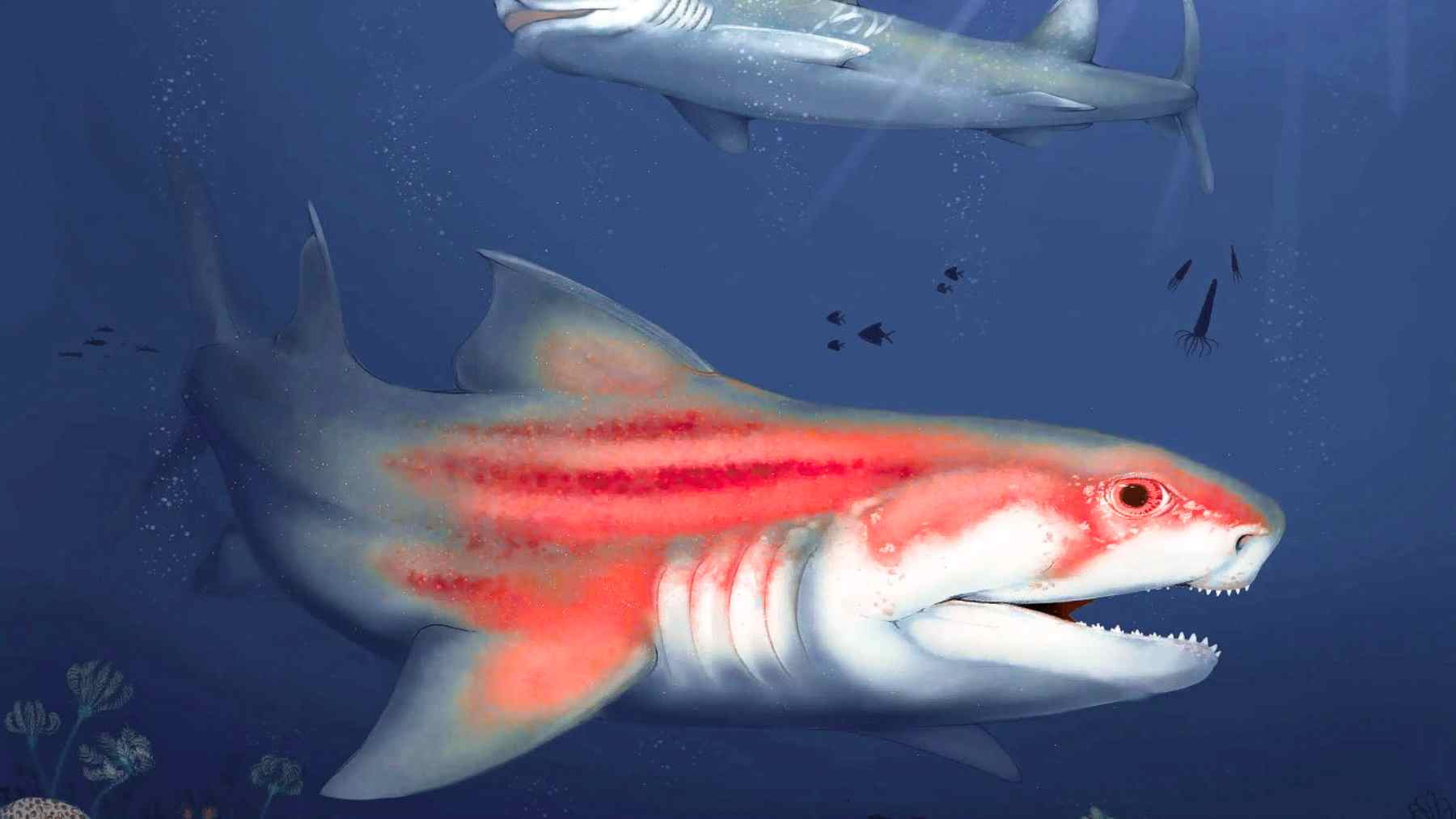
Two sharks that swam in an ancient sea more than 325 million years ago have been discovered—of all places—inside Mammoth Cave National Park in Kentucky, part of the world’s longest known cave system. Their fossils were recovered from rock layers laid down during the Mississippian Period, when the region sat near the equator and teemed with marine life. The find adds two new species to the shark family tree and highlights a counterintuitive truth: caves can preserve delicate fossil details that the open surface often destroys.
The newly described sharks are Troglocladodus trimblei and Glikmanius careforum, both members of an extinct group called ctenacanth sharks. Researchers identified them from fossilized teeth, fin spines, and gill structures collected from cave passages—material that had been overlooked for decades in museum drawers. A peer-reviewed paper in the Journal of Vertebrate Paleontology formally introduced the species and reframed the park as not just a biological hotspot, but also a major paleontological archive.
A cave that preserves details the surface often destroys
Shark fossils are usually a story told by teeth, because cartilage breaks down and rarely survives. That is what makes Mammoth Cave so valuable. Inside caves, fossils are sheltered from rain, sun, and repeated freeze-thaw cycles that can crack and scatter fragile remains. As paleontologist John Paul Hodnett put it, “In such a stable environment, those things look like they just came out of the shark’s mouth yesterday.”
The park’s paleontologists and partners found not only teeth, but also partial jaws, gill rakers, and fin spines—elements that can be critical for understanding how ancient sharks lived and how different lineages evolved. That stability helped reveal a standout detail for Glikmanius careforum: a partial set of jaws and gill structures that is rare for this genus and helps clarify its anatomy.
Meet the sharks
Troglocladodus trimblei—named “cave branching tooth” for its distinctive tooth shape—would have been a 10 to 12 foot predator in the shallow sea that once covered the region. The species name honors Barclay Trimble, the Mammoth Cave superintendent who has championed fossil research in the park.
Glikmanius careforum is named for the Cave Research Foundation, a longtime partner in Mammoth Cave exploration and science. It appears to have been similarly sized, with jaw proportions suggesting a short head and powerful bite. The discovery pushes the origins of Glikmanius back more than 50 million years earlier than paleontologists expected, implying the lineage diversified sooner than previously documented.
The National Park Service says the animals would have hunted nearshore habitats and fed on smaller sharks, bony fish, and squid-like orthocones (straight-shelled cephalopods) in the warm, tropical seaway. At the time, much of what is now Kentucky was submerged, and an ancient ocean connection linked eastern North America to parts of Europe and northern Africa. As the continents drifted toward the supercontinent Pangea, those seaways narrowed and eventually disappeared, leaving the marine ecosystem entombed in limestone.
A discovery powered by long-term collaboration
The fossils came to light through the park’s ongoing Paleontological Resources Inventory, a collaboration between Mammoth Cave staff, the National Park Service Paleontology Program, and university researchers. The effort began in 2019 to document and safeguard fossils found throughout the cave system and to reexamine historical collections that might contain unrecognized species.
“Every new discovery at Mammoth Cave is possible due to collaborations,” Trimble said in the park’s announcement. “We are grateful for the many partnerships that help us uncover and share the stories of these ancient animals.”
Alabama specimens played an important role too. The University of Alabama Museums has highlighted that comparative material from its collections helped researchers interpret Mammoth Cave fossils and confirm diagnostic features of the sharks—an example of how museum archives can become essential for new science when revisited with fresh questions.
Why this matters beyond Mammoth Cave
The discovery underscores how national parks can protect more than scenery and wildlife. Fossils in national parks are protected resources, and systematic inventories can reveal scientifically significant finds without new excavations. The Mammoth Cave team and its partners have now documented dozens of ancient fish species from cave deposits, suggesting the park’s subterranean record may be one of the most important windows into Mississippian marine life in eastern North America.
It also offers a useful reminder for paleontology: “new” fossil sites are not always new places. Sometimes they are familiar landscapes—like a famous tourist cave—where the right expertise, partnerships, and patience finally allow a hidden archive to speak.