Tiny, newly-hatched, long-necked dinosaurs may have been the main fuel that kept Jurassic predators going, according to a new reconstruction of a 150-million-year-old ecosystem in what is now Colorado.
The work, led by paleontologist Cassius Morrison and colleagues at University College London, maps more than twelve thousand possible food chains from a single fossil-rich site. The results point to a sobering pattern. Baby sauropods were easy prey, and predators took full advantage.
A crowded Jurassic neighborhood built on baby dinosaurs
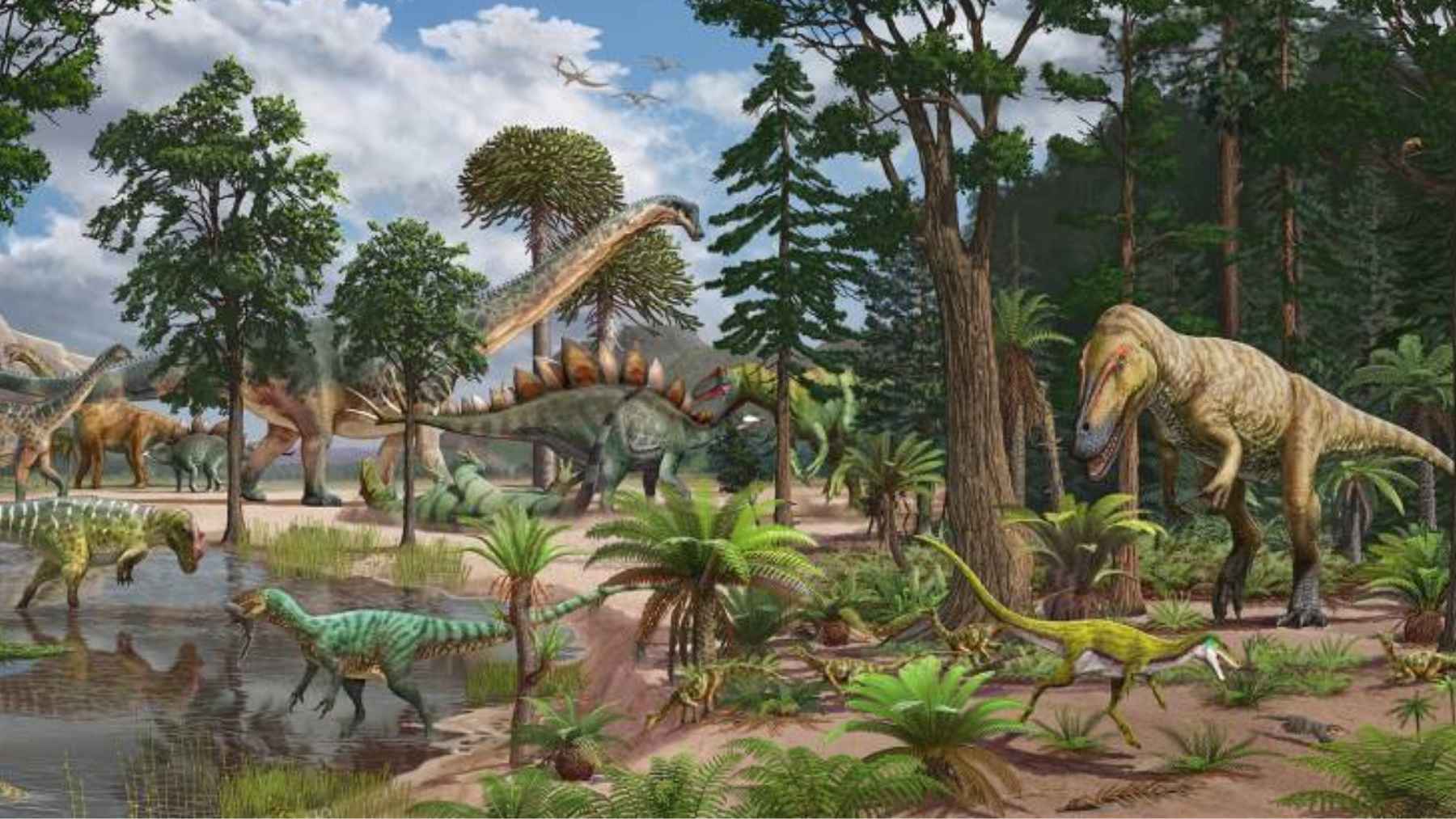
The team focused on the Dry Mesa Dinosaur Quarry, part of the famous Morrison Formation in the western United States. For roughly ten thousand years, river floods buried bones from at least six species of giant plant eaters, including relatives of Diplodocus, Brachiosaurus, Apatosaurus, Camarasaurus, Supersaurus and Haplocanthosaurus.
Sharing that landscape were large meat eaters such as Allosaurus and Torvosaurus, along with Ceratosaurus and several smaller, agile theropods. Early mammals, crocodile relatives, turtles and pterosaurs rounded out the scene, all living among fern-filled floodplains and conifer forests.
On paper, it sounds like a classic dinosaur documentary. Huge herbivores. Sharp-toothed hunters. But when researchers asked a simple question, the picture changed. Who was actually getting eaten most often?
Rebuilding a lost food web
To answer that, the team treated the Jurassic site the way ecologists study modern savannas. They combined body size estimates, tooth wear, bite marks, isotope chemistry and even rare gut contents that preserve an animal’s last meal. These clues fed into software normally used to model living ecosystems.
Out of that work came a dense network with more than twelve thousand feeding links. Sauropods sat right at the center. Not just as giant plant eaters, but as a living buffet for predators.
Young and very young sauropods connected to far more carnivores than any other herbivore group. Stegosaurus and other armored plant eaters were tougher and more dangerous, so they appear far less often as prey.
In practical terms, that means the Late Jurassic felt a bit like an endless baby boom that predators could tap into. Hatchlings were abundant, slow and unprotected. Adults, by contrast, were massive, swinging heavy tails and moving in herds, which made an attack risky even for the biggest hunters.
Why baby giants were so vulnerable
The irony is striking. Adults of these species were longer than a blue whale and weighed many tens of tons. Yet their eggs were only about thirty centimeters across, and hatchlings stood little more than half a meter tall.
According to the team, sheer size probably made hands-on parenting almost impossible. A single misplaced foot could crush a nest. Fossil and modeling evidence instead suggest a strategy closer to modern sea turtles. Adults laid many eggs, left them, and trusted that a tiny fraction of offspring would survive on their own.
For predators, that hands-off approach created what one scientist called a world where “life was cheap” for the smallest sauropods. Injured Allosaurus skeletons from the same rock layers show healed damage likely inflicted by spiked Stegosaurus tails, yet those animals survived long enough to recover.
Easy access to unguarded youngsters may have kept even wounded hunters fed.
From Jurassic nursery grounds to T. rex territory
The study does not stop at Dry Mesa. By comparing this baby-based buffet with later ecosystems, the authors argue that the decline of sauropods in many regions during the Late Cretaceous may have reshaped predator evolution. With fewer defenseless youngsters available, apex hunters such as Tyrannosaurus rex faced a menu dominated by heavily-armed prey like Triceratops.
That tougher hunting environment likely favored traits such as stronger bite forces, sharper senses and even larger body size. In other words, the terrifying reputation of T. rex may trace back, in part, to a missing resource that Jurassic predators once took for granted.
Why this deep time ecology matters now
All of this might sound very far from today’s concerns about collapsing fisheries or disappearing forests. Yet the basic lesson feels familiar. Ecosystems often rest on vulnerable life stages. Remove or overload that early tier and the entire web above can shift.
In Late Jurassic Colorado, a steady supply of unprotected dinosaur hatchlings allowed injured carnivores to survive and supported a surprisingly high number of meat eaters. In modern oceans and grasslands, conservation biologists worry about similar tipping points when early life stages of key species are wiped out by habitat loss, pollution or overharvesting.
At the end of the day, this fossil quarry is more than a graveyard. It is a snapshot of how real ecosystems work when no one is there to manage them, and a reminder that abundance for a few often depends on extreme risk for many.
The press release was published on UCL News.