Imagine a world without people. Who takes over the biggest, emptiest habitat on Earth, the ocean? In a recent interview, University of Oxford zoologist Tim Coulson floated an unexpected contender, octopuses, and the idea has been bouncing around the internet ever since.
It is not a scientific “confirmation” that an octopus civilization is inevitable. But it does underline something real and easy to miss while we rush through our day — these animals are already doing complex things in seas that are changing fast.
A thought experiment, not a prophecy
Coulson’s starting point is basic evolutionary biology. Evolution, he said, is driven by genetic mutations that can help some individuals survive and reproduce, so over generations those traits become more common.
He also emphasized a blunt reality, “extinction is the fate of all species, including humans.”
From there, the interview turns into a thought experiment. If humans and our close great ape relatives vanished, which species could step into new ecological roles, and maybe even become the first non-human builders of “civilization”?
Coulson argues that birds and insects can be brilliant in their own ways, but they generally lack the fine motor skills needed to construct the kinds of structures we associate with complex societies.
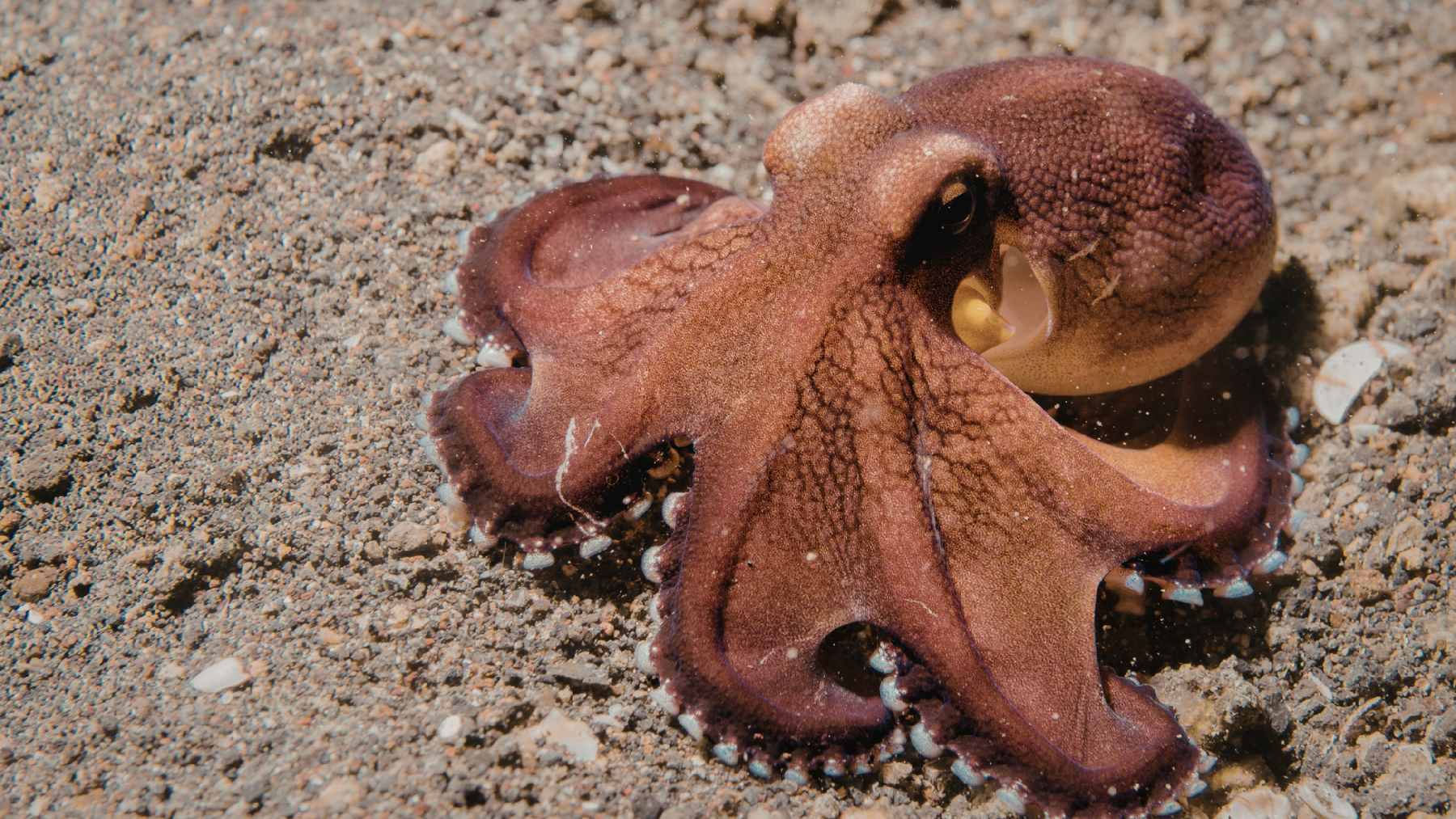
That is where octopuses enter the story. Coulson calls them “among the most intelligent, adaptable, and resourceful creatures on Earth,” pointing to problem-solving, camouflage, and a nervous system built for flexibility. He repeatedly notes the big caveat: it is speculation, and evolution is unpredictable over long stretches of time.
What octopus intelligence actually looks like
The appeal of octopuses is not just their Hollywood vibe. The common octopus has around 500 million neurons, a number often compared to dogs, and about two thirds of those neurons sit in its arms rather than in a single centralized brain.
In practical terms, each arm can do a lot of sensing and decision-making “on the spot” while the animal coordinates the whole body.
Scientists have been trying to understand what that distributed design really means for behavior. Research on octopus neurobiology describes a nervous system split between the central brain and the arm nervous system, with each component capable of meaningful autonomy.
A 2025 University of Chicago report adds a helpful detail: octopus arms contain more neurons combined than the animal’s brain, which helps explain their precise, almost improvisational movements.
And then there is the evidence you can actually picture. A 2009 study in Current Biology documented “coconut-carrying” octopuses that transport shell halves and assemble them into shelter only when needed, behavior the authors treated as tool use.
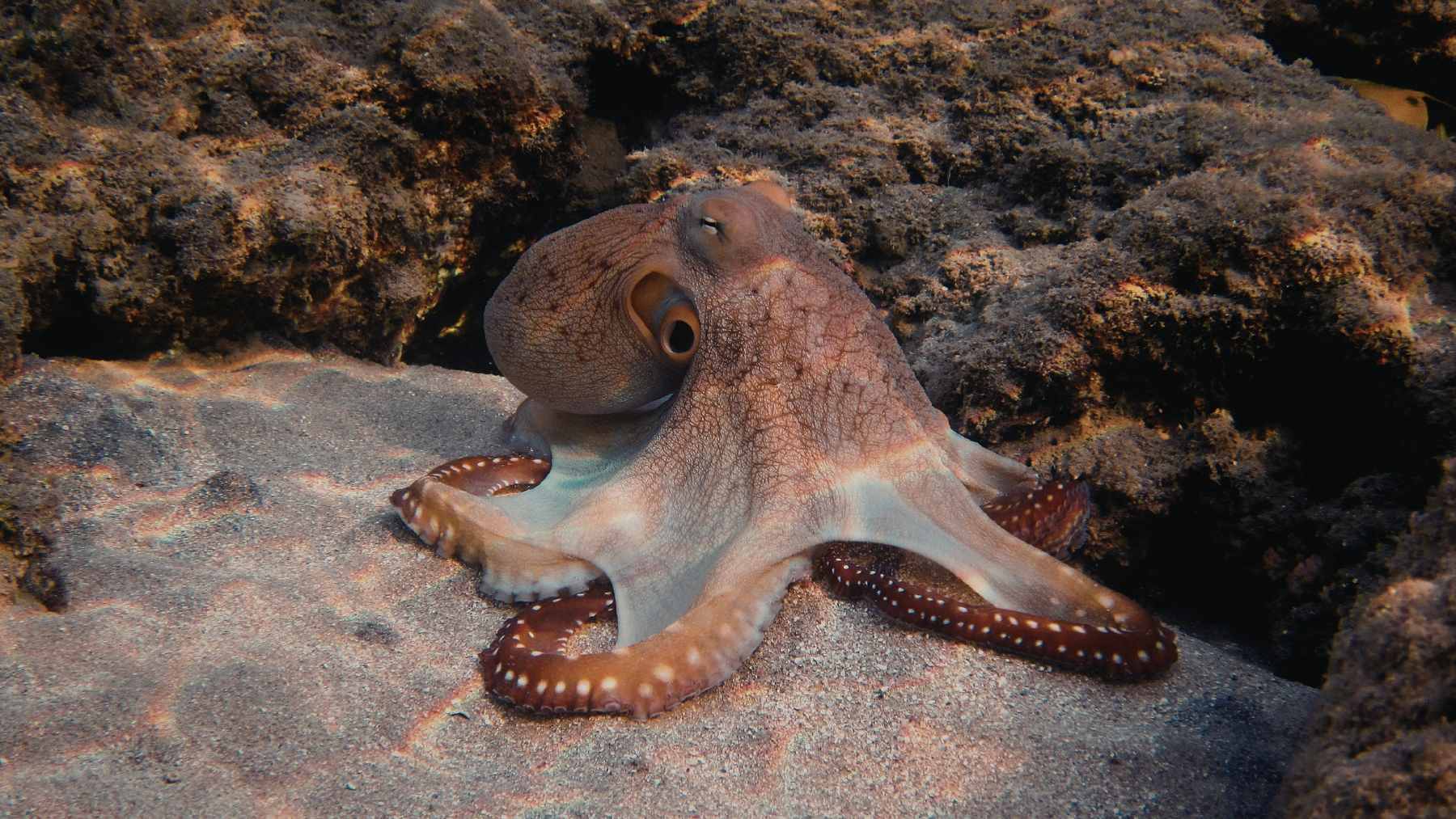
Other experiments show octopuses can adjust quickly when a puzzle task changes, hinting at behavioral flexibility that goes beyond simple trial-and-error.
The ocean they inherit is already shifting
Here is the twist that matters for environmental news. Even if the “octopus takeover” is mostly a mental exercise, octopuses are living through an era of rapid ocean change right now.
A 2016 analysis found cephalopod populations increased across many time series over the last six decades, although researchers stressed that causes likely vary by region and are not always clear.
Still, the big forces are hard to ignore. The IPCC has reported that the ocean has taken up more than 90 percent of the excess heat in the climate system, meaning marine life is effectively swimming in the planet’s heat sponge.
In the same assessment, the IPCC warned that warming reduces mixing between ocean layers, which can cut the supply of oxygen and nutrients for marine life.
Chemistry is shifting too. NOAA notes that surface ocean pH has fallen by about 0.1 since the Industrial Revolution, which translates to roughly a 30 percent increase in acidity. Octopuses may not build shells, but many of their prey do, and their habitats depend on those broader ecosystems holding together.
What readers can take away today
Octopuses also sit right in the middle of human choices, especially food and policy. In the United Kingdom, the government extended the scope of the Animal Welfare (Sentience) Bill to include octopus and other cephalopods, citing a government-commissioned independent review as part of the rationale.
That does not settle every question about what octopuses “feel,” but it shows how fast marine science is entering real-world debates.
Pollution is another everyday link between people and the animals we imagine inheriting the sea. A recent open-access study in Applied Food Research compared microplastic contamination in fresh versus canned seafood, including common octopus, and reported higher contamination frequency and concentration in canned samples overall.
For common octopus, the paper reported 0.005 ± 0.006 microplastic particles per gram in fresh tissue versus 0.12 ± 0.13 particles per gram in canned samples.
At the end of the day, Coulson’s octopus scenario works best as a mirror. Evolution runs on deep time, but climate change and pollution are rewriting the oceans within a few human generations, and that gap is the real headline.
The study was published on ScienceDirect.