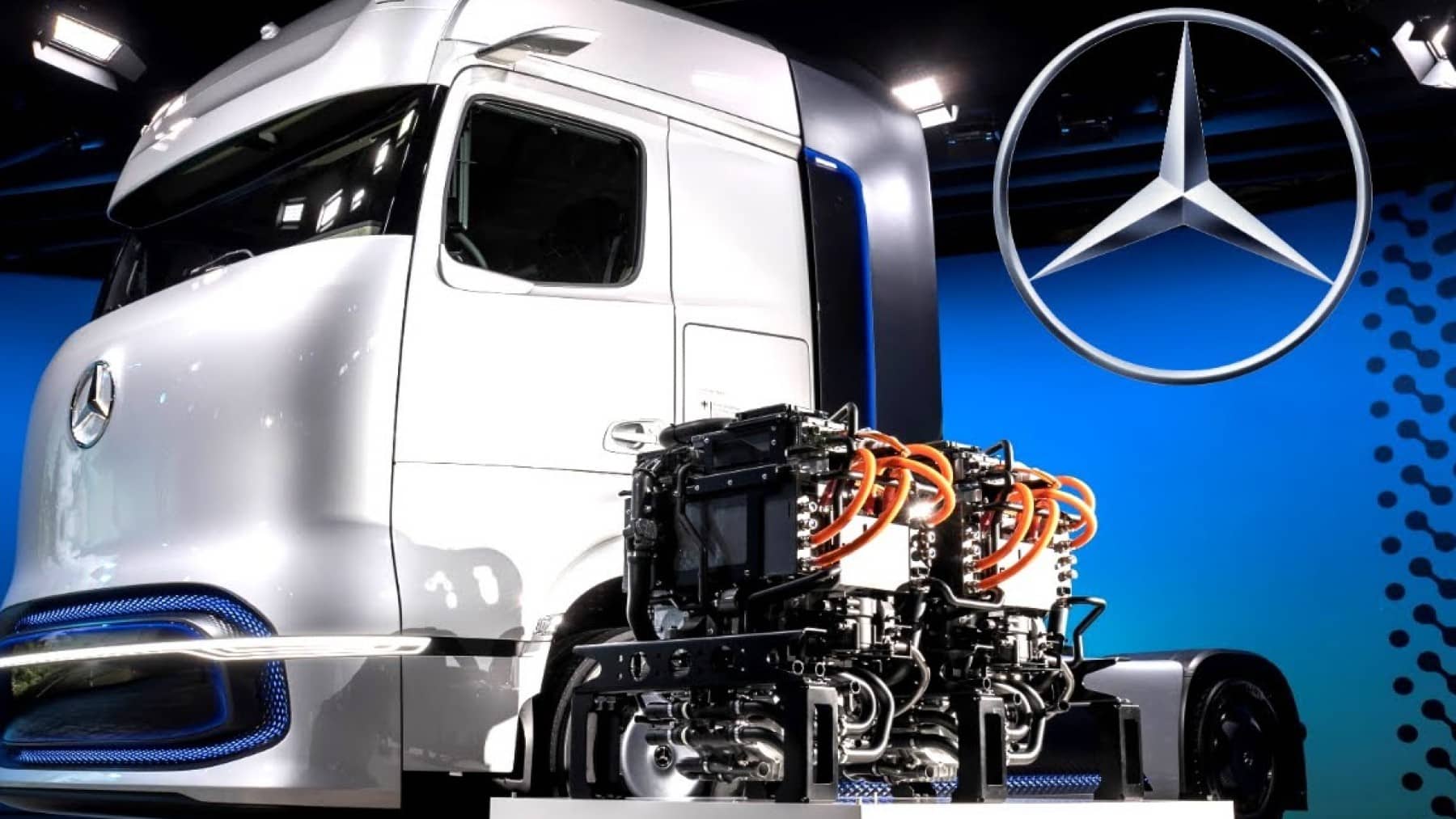
Mercedes-Benz has decided to stop developing and producing fuel cell-powered hydrogen cars. The company will no longer make its hydrogen-powered model, the GLC F-Cell, and has no plans to create new fuel cell vehicles in the future. Instead, Mercedes-Benz’s fuel cell division will be merged into a new joint venture with Volvo, which will focus on creating hydrogen fuel cell trucks, not passenger cars.
BMW now the only major German automaker still focused on fuel cell cars
This shift marks a significant change in the automotive industry, as Mercedes-Benz joins other major carmakers like Volkswagen, who have already committed to electric vehicles as their future direction. BMW is now the only major German automaker still focused on fuel cell cars. Mercedes-Benz had spent decades working on fuel cell technology, aiming to create cars that are zero-emission, can travel long distances, and refuel quickly. However, fuel cell cars are much more expensive to produce than battery-powered electric vehicles.
Currently, Mercedes-Benz’s passenger hydrogen fuel-cell vehicle is the GLC F-Cell. This unique plug-in hybrid combines innovative fuel-cell and battery technologies for the first time, running not only on electricity but also on pure hydrogen. The vehicle was first released in the United States in late 2019 and was the first vehicle to combine hydrogen PEM fuel cell and battery technology in a plug-in hybrid fuel cell electric vehicle
The Mercedez GLC F-Cell: Pushing hydrogen innovation
The lithium-ion battery has a gross capacity of 13.5 kWh and also serves as an energy source for the electric motor. Its plug-in technology allows for easy charging via a 7.4 kW on-board charger using a standard household socket, a wallbox, or a public charging station. Charging from 10 to 100 percent State of Charge (SoC) takes about 1.5 hours when using the full power.
Like the drive motor, an asynchronous motor with 155 kW (211 hp) and 365 Nm of torque, the high-capacity storage battery is compactly installed in the rear of the SUV. The vehicle also features two carbon-fiber-encased tanks integrated into the floor, holding 4.4 kg of hydrogen. Thanks to globally standardized 700-bar tank technology, the hydrogen supply can be refilled in just three minutes which is as quick as refueling a traditional combustion-engine vehicle.
The future is hydrogen?
While hydrogen vehicles are fast becoming new additions across automobile companies, the reality of them matching the same widespread extent of electric vehicles is still up for debate. Experts have increasingly advocated for a focus on battery-electric vehicles over fuel cell cars because battery-powered models are much more energy-efficient.
While battery electric vehicles have an efficiency of 70-90%, fuel cell vehicles only operate at 25-35% efficiency. Volkswagen has argued that using twice as much renewable energy to power fuel cell cars, rather than battery electric vehicles, is not sustainable for the economy, particularly when it comes to passenger vehicles. Consequently, the consensus is that battery electric vehicles are the preferred technology for the future of clean transportation.
However, to remain competitive and to and give consumers more choice, there is still a growing space for hydrogen fuel-cell vehicles. In addition, hydrogen vehicles may be more suited for long haul vehicles which is the route Mercedez appears to be going down with their venture with Volvo. While electric vehicles may be the best technology in terms of long-term trajectory for passenger vehicles, having multiple green energy solutions helps to diversify consumer choice and speed up the process of leaving behind internal combustion engines.
Hydrogen is not the only alternative option being explored for engines, and many independent companies are pushing boundaries with innovative technologies to help garner support from both government, consumers, and major automobile companies to go green. With cars not going anywhere anytime soon, green-engine solutions are in critical need to help offshoot carbon emissions.