North Carolina is facing a federal ultimatum that sounds technical on paper but feels very real if you live near a highway or share the road with eighteen wheelers. A federal review found that 54% of certain commercial truck licenses issued in the state were illegal, and nearly $50 million in transportation funding is now on the line unless those licenses are revoked.
At first glance this looks like a bureaucratic crisis about paperwork, immigration status, and who signed what. In practice, it is about who is driving some of the heaviest, most polluting vehicles on the road and how that affects safety, air quality, and even rivers.
What the audit actually found
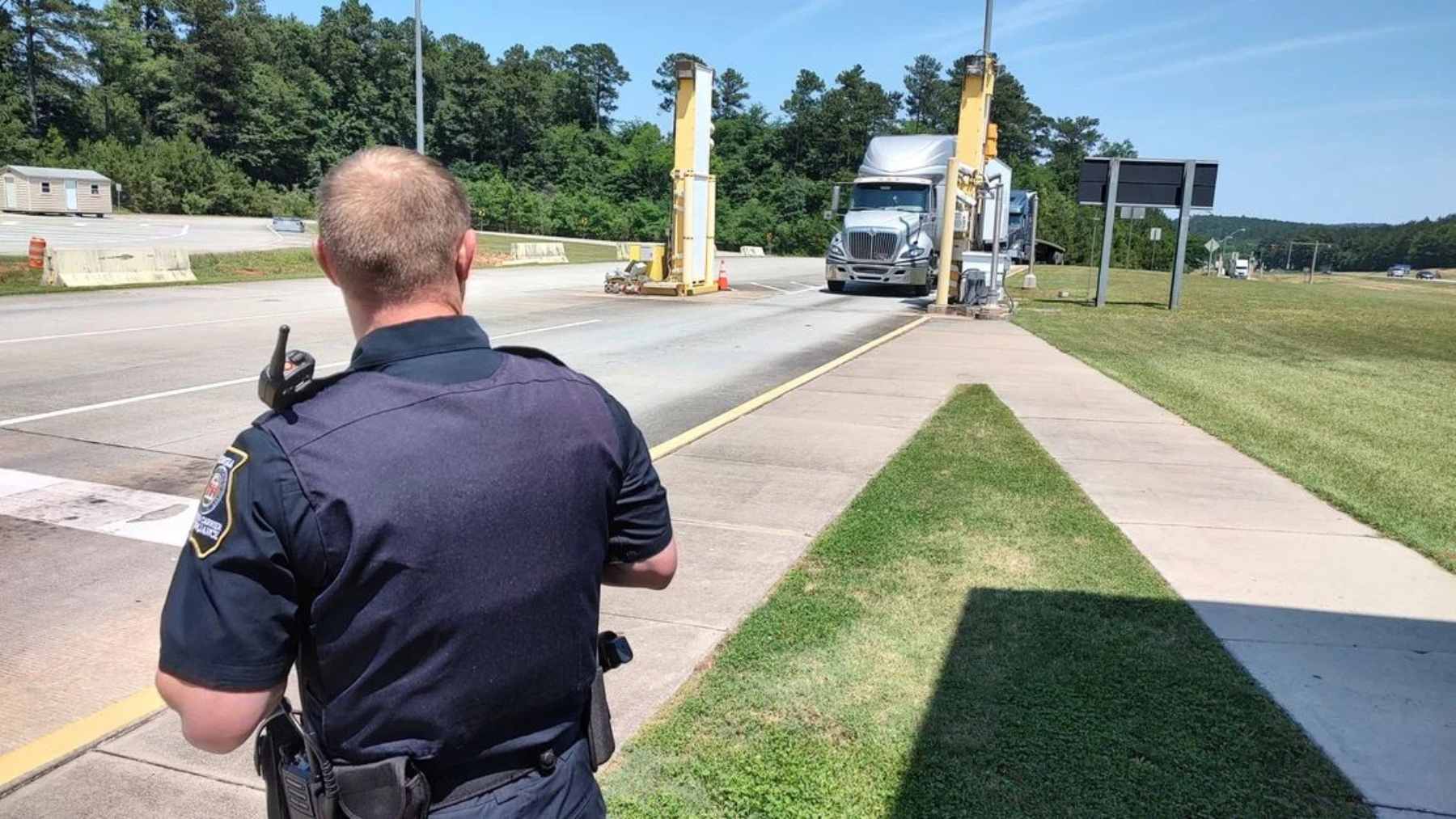
The Federal Motor Carrier Safety Administration reviewed a sample of non-domiciled commercial driver’s licenses, which are permits issued to immigrants whose permanent residence is outside the state. In North Carolina, auditors concluded that 54% of those licenses had been issued in violation of federal rules, often because the state did not properly verify whether drivers were allowed to be in the country at all.
Records show 924 of these licenses remain active in the state. If North Carolina does not pause new non-domiciled licenses, identify every noncompliant one, and revoke or reissue them, the US Department of Transportation says it will withhold almost $50 million in federal funds.
Immigrants already play a major role in freight. They make up roughly one fifth of all US truck drivers, yet non-domiciled licenses account for only about 5% of commercial licenses nationwide, around two hundred thousand drivers.
So the vast majority of immigrant drivers are fully licensed and essential to keeping goods moving. The problem highlighted in North Carolina is not their presence, but the state’s failure to follow its own rules.
Heavy trucks, heavy footprint
Why should an environmental outlet care about a licensing scandal? Because who drives these trucks, and how well they are trained, affects more than crash statistics.
Transportation is the largest source of US greenhouse gas emissions. In 2022 it produced about 28% to 29% of the country’s climate pollution, and medium- and heavy-duty trucks contributed roughly 23% of transportation emissions. These rigs burn large amounts of diesel, release fine particles that lodge in lungs, and add to that familiar brown haze over busy corridors.
Freight does not only touch the climate. Truck-based freight contributes significantly to air pollution, noise, and congestion in communities that sit along highways, near warehouses, and close to big logistics hubs. Trucks represent only about 7% of road miles but around 28% of total congestion time, which means more idling, more fumes, and longer commutes for everyone stuck behind them.
When those trucks carry fuel, chemicals, or other hazardous loads, the stakes rise again. Most hazardous materials in the United States move by truck and they travel about twice as many ton miles as trains for these cargoes. Federal data counted more than 27,000 hazardous material incidents across all modes of transport in 2024, most of them involving trucks.
A single mistake can turn into a local environmental emergency. In 2025, a tanker truck crash in Washington State spilled thousands of gallons of gasoline and diesel into a creek that feeds the Elwha River, threatening newly-restored salmon runs and even shutting down a nearby water treatment plant as a precaution.
That is why it matters who is behind the wheel and how rigorously their skills are checked.
Licensing integrity as climate and safety policy
Federal law already requires commercial drivers to understand road signs and safety instructions in English, and industry groups have long warned that weak enforcement of both training and language rules puts everyone at risk. If a driver hauling fuel cannot fully grasp a detour notice around a sensitive watershed or the instructions on a hazardous materials placard, the margin for error shrinks.
At the same time, the trucking sector is under pressure to clean up its pollution. New federal rules on heavy-duty vehicle emissions are projected to cut about one billion metric tons of carbon dioxide from trucks produced between 2027 and 2055, while also reducing pollution for millions of people who live near major freight routes. Cleaner engines or electric trucks are one side of the equation. Competent, properly licensed drivers are the other.
There is also a justice angle that is easy to miss. Many immigrant truckers work difficult routes for long hours, often through neighborhoods that already breathe the dirtiest air. Advocates worry that sloppy state systems and sudden crackdowns can lump responsible drivers together with a small number of bad cases, while the communities living next to busy truck corridors keep absorbing the noise and fumes.
What to watch next
North Carolina officials say they are working with federal authorities to fix the problems in their licensing system. The state now has to thread a narrow path. Pull too many drivers off the road at once and supply chains will feel it, from grocery deliveries to the packages that show up at your front door. Move too slowly and the federal government can cut off funds that pay for safer, more resilient roads.
For people worried about the environment, the lesson is simple. Sustainable freight is not only about batteries, new engines, or clever logistics software. It starts with basic integrity in how we decide who is qualified to drive the heaviest machines on the road, especially when they carry cargo that can damage air, water, and climate in a single bad moment.
The press release was published on FMCSA.