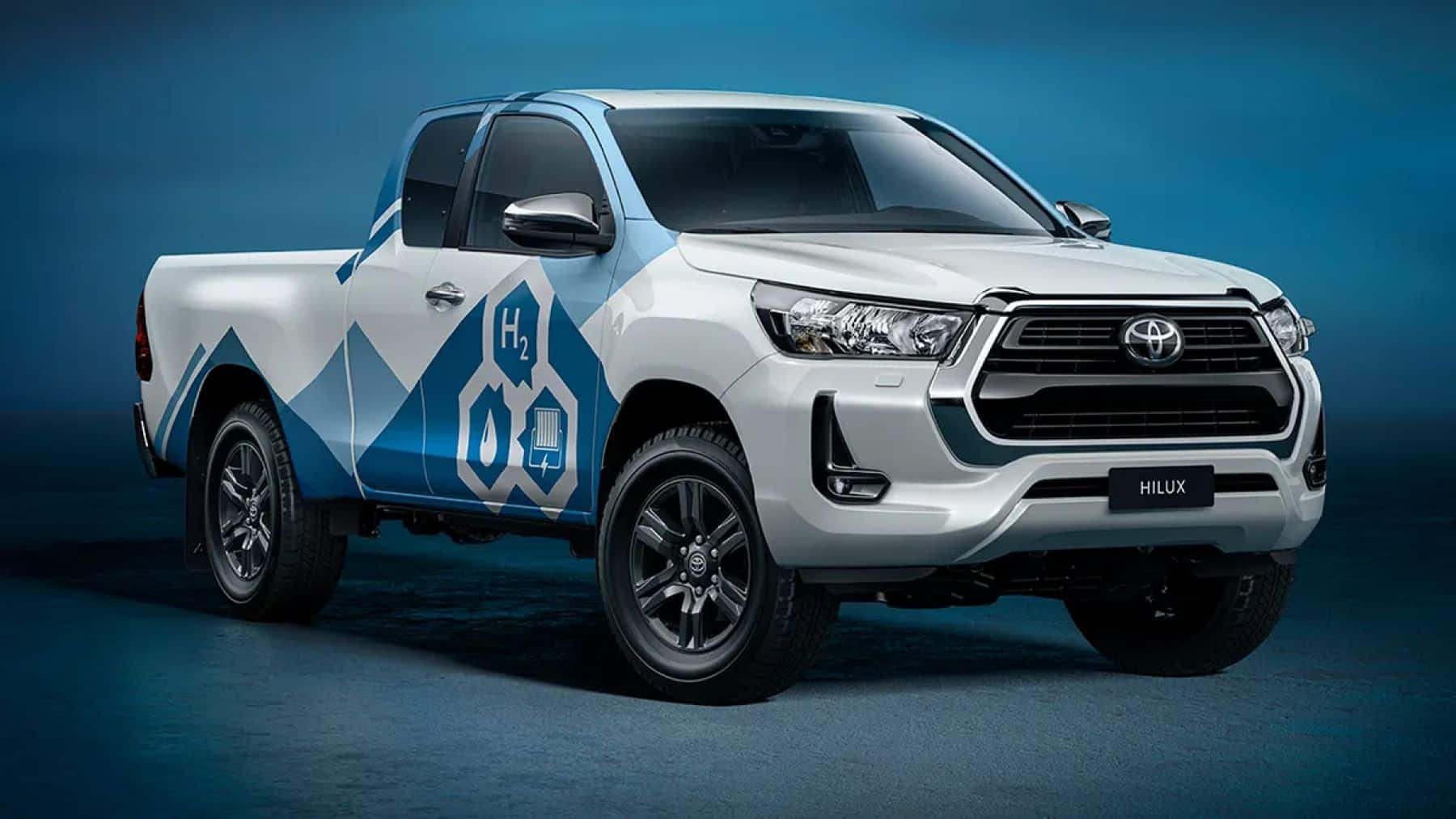
Toyota has just unveiled its latest Tacoma concept model, and it’s not the electric vehicle (EV) you would suspect. Toyota has long been a leader in the alternative engine sector, with its solutions paving the way for an accelerated industry move away from the internal combustion engine. With the world currently in the middle of an energy crisis, the need to find more sustainable solutions across sectors is more of an imperative than ever for the sake of the future of the planet.
Toyota paves the way for more sustainable solutions
The Japanese automobile developer has long been setting itself apart as an industry leader in the alternative engine sector. With the passenger vehicle industry largely focusing on the electric engine as the future of the sector, largely due to the success of American electric vehicle developer Tesla’s advanced engine solutions, all major automobile companies now offer their consumers an electric engine model as well, and include these solutions as one avenue to meet their carbon neutrality goals.
Toyota has seen major success with its electric vehicles, providing an extensive lineup of options ranging from hybrid solutions to fully electric vehicles, informing their ‘Beyond Zero’ objectives:
“Beyond Zero is Toyota’s vision to reach carbon neutrality with our products, services and operations, and go beyond, as we find new ways to make a positive impact on our planet and society,” describes Toyota on its website. “We currently offer more low and zero emission vehicles combined than any other automaker, to give customers numerous choices to reduce their carbon footprint.”
While continuing to offer hybrid electric vehicles as opposed to only producing fully electric vehicles may seem like one step forward and two steps back in terms of moving away from fossil fuel engine technology, these models remain the most popular electric vehicle choice among consumers and are a necessary bridging step to move towards full electrification while supporting infrastructure sees further development.
Toyota puts this new Tacoma on full display
Notwithstanding its advanced electric solutions, Toyota has continued to make a name for itself with its hydrogen fuel-cell technology. Recognizing the importance of not solely relying on electric technology to transform the industry, Toyota has been a pioneer of this technology, pushing for its adoption in industries where electrification is not feasible.
In line with this, Toyota recently unveiled its 2025 Tacoma H2-Overlander concept vehicle, showcasing a potential hydrogen-powered off-road pickup vehicle the company may develop in future models. The concept vehicle is engineered with the TNGA-F platform and its flagship Hydrogen model, the Mirai’s powertrain. Kitted out with a 24.9-kWh lithium-ion battery pack, the vehicle has a total output of 547hp, made up by a 301-hp front motor and a 252-hp rear motor. Additionally, it features a 15-kilowatt power supply, which can be used to electrify a campsite should you wish to take the model on an off-road adventure.
Hydrogen to provide increased sustainable solutions
While the majority of automobile developers continue to set their sights on electrification only as the future of their engine solutions, Toyota remains one of the few automobile developers that still strongly pushes for the inclusion of hydrogen as part of this transformation.
Inspiring other developers, the company has continued to collaborate with both local and global competitors to assist other companies with producing their own hydrogen fuel-cell technology. The reality is, there is no seamless way to provide a sustainable move away from the internal combustion engine unless multiple stakeholders are involved in scaling up the supporting infrastructure for these vehicles in order to convince consumers to make the switch, as well as providing more entry-level friendly prices.
Disclaimer: Our coverage of events affecting companies is purely informative and descriptive. Under no circumstances does it seek to promote an opinion or create a trend, nor can it be taken as investment advice or a recommendation of any kind.