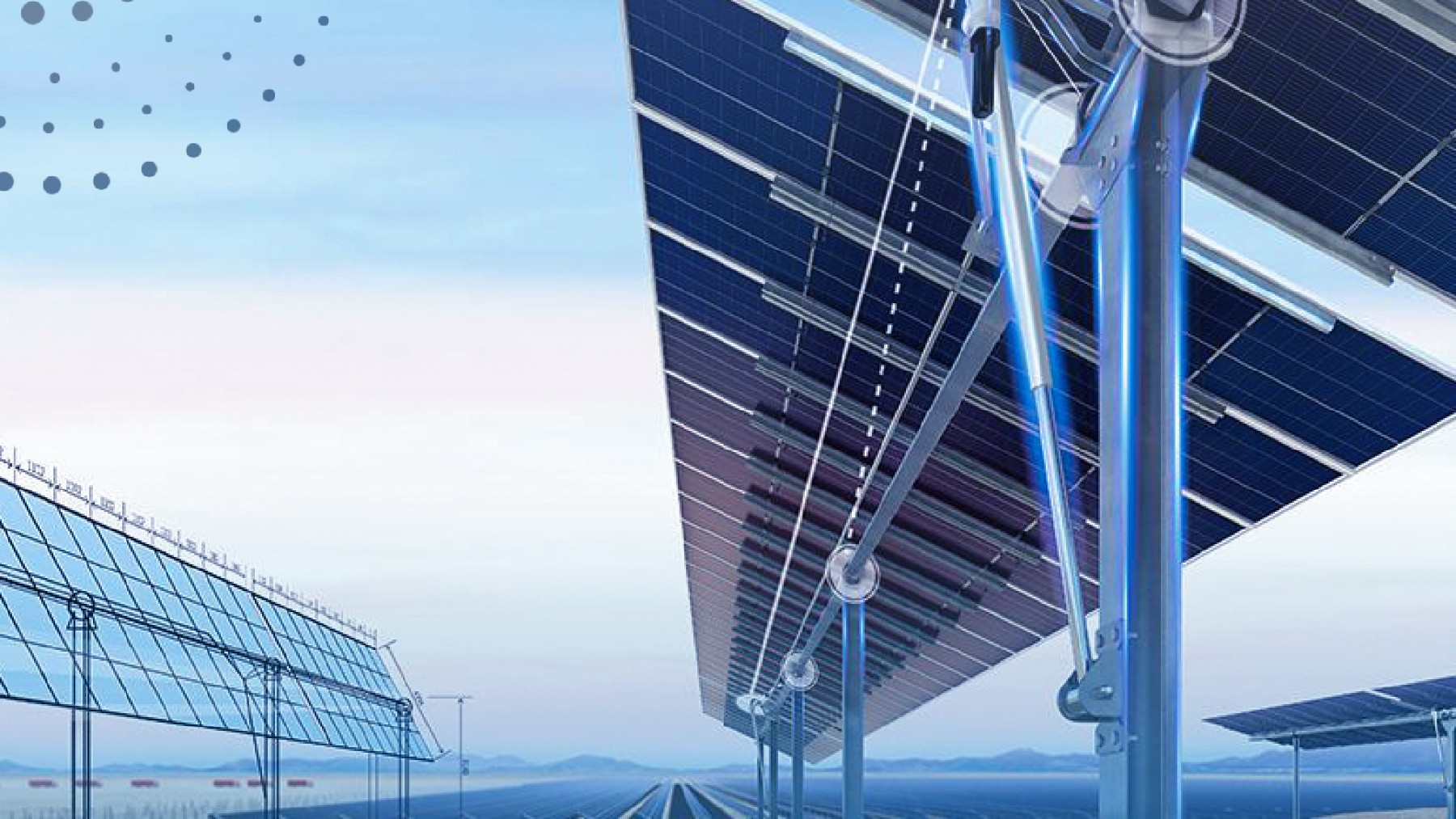
The two-sided solar panel was a failure, but a 40-year-old invention could resurrect them. If you were impressed by the mystery of the impossible, ultra-powerful solar panel, you can’t miss the news below. As Xataka records, as conventional crystalline silicon solar panels approach their theoretical limit of efficiency, an alternative once scorned for its installation costs has been gaining followers: bifacial solar panels.
The reason is that the latest models with HJT technology can pay for themselves much faster. Compared to traditional solar panels, which only capture light on one side, bifacial panels can do the same thing on both sides. This means that they absorb the light reflected from nearby surfaces, in addition to the light that reaches them directly from the sun.
There are three types of panels within this typology that are differentiated according to the material of their second side: glass/glass, glass/transparent sheet and glass/opaque sheet. The first is the most efficient and robust piece. However, it is also the most expensive and heaviest, which has so far dampened interest in it.
The two-sided solar panel did not catch on years ago, but this could be its moment
The latest bifacial modules come with big news. They employ a heterojunction technology (HJT) of two different semiconductor materials: crystalline silicon and amorphous silicon. This advanced form of photovoltaic cell consists of depositing a layer of amorphous silicon on each side of a crystalline silicon cell to develop a heterojunction.
The amorphous silicon has a wider bandgap, which makes it possible to efficiently capture high-energy photons, while the crystalline silicon is in control of low-energy photons. The heterojunction of the two achieves more effective light absorption and lowers efficiency losses due to electronic recombination.
HJT panels were pioneered by the Japanese company Sanyo (now owned by Panasonic) in the 1980s. Since then, several manufacturers have tested them and improved their technology to reach commercial production and reduce the photovoltaic industry’s dependence on materials such as silver.
In 2020, Italy’s 3Sun EGP demonstrated that heterojunction bifacial solar modules could reach and exceed 24.5% efficiency. The latest panels from companies such as China’s Maysun use double-sided toughened glass and 210 mm cells capable of transforming 25% of energy.
Also, algorithms such as the one proposed by Soltec increase light capture by calculating the perfect angle considering the radiation from both sides of the module. In the latest generation modules, the HJT cell has a symmetrical front and rear structure that increases the energy output of the rear area by 30%, leading to a faster payback of the higher installation costs typical of bifacial panels.
Two-sided solar panel could work this time around
In addition, the new HJT modules also suffer less degradation over time and tend to be less sensitive to high temperatures than traditional solar panels, making it possible for manufacturers to provide multi-decade warranties.
New-generation bifacial solar panels may be especially viable in high-latitude areas where the sunlight angle is low to capture light reflected from snow and other surfaces. Other optimal areas are areas with high soil reflectivity. For example, desert sand, the white roof of a factory or a large commercial building.
Although the two-sided solar panel did not catch on some time ago, the newly implemented technology could make it attractive even in agriculture, especially on crops with the potential to harness sunlight passing through the glass.