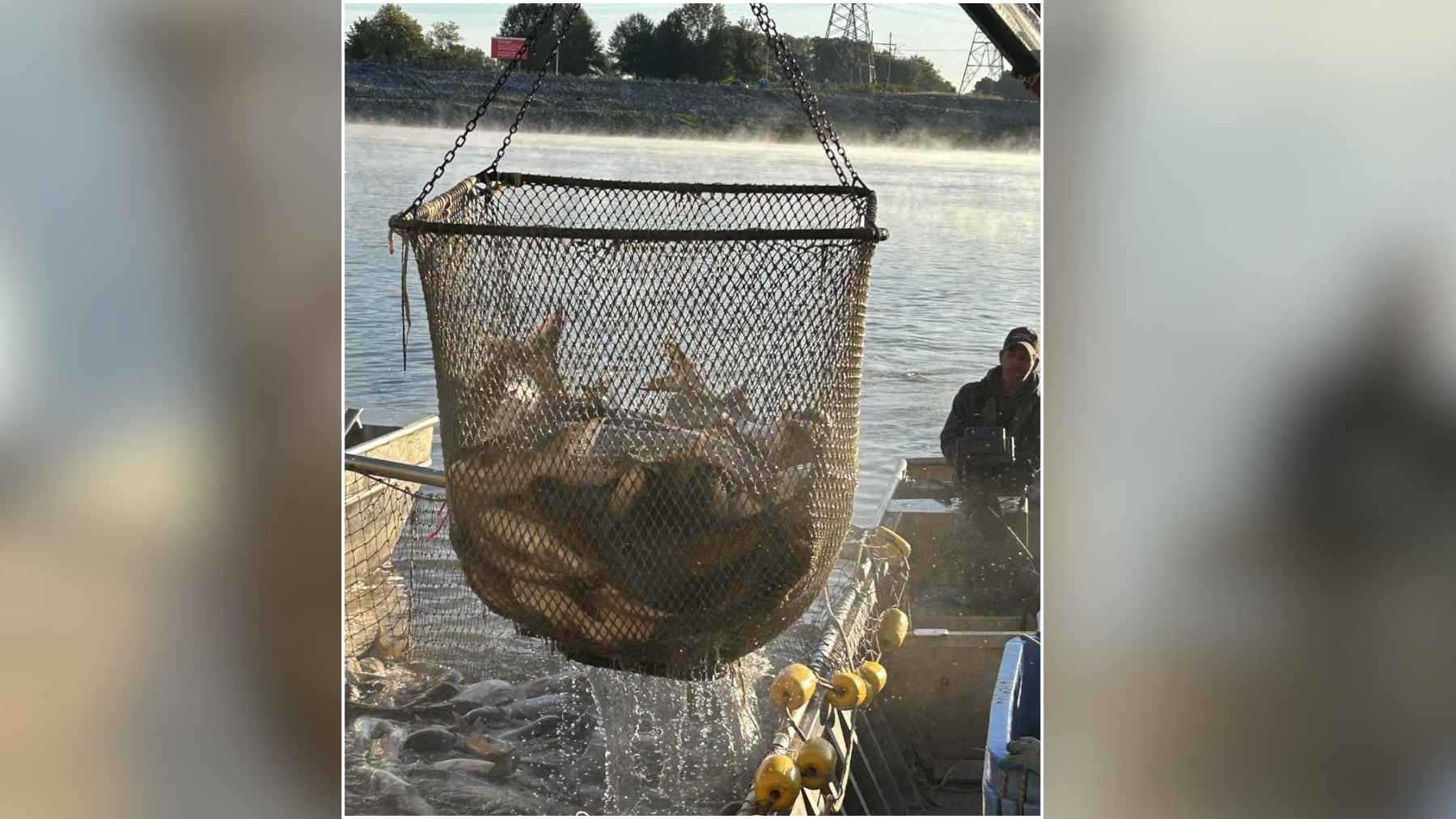
For the past four years, biologists from the Kansas Department of Wildlife and Parks have been pulling a staggering amount of invasive Asian carp from the Kansas River. Since 2022 they have removed roughly 109,000 pounds of fish, with 2025 alone accounting for more than 36,000 pounds. Officials say the goal is to give native fish a fighting chance again and to cut the risk of leaping carp slamming into boaters on hot summer weekends.
At first glance it sounds brutal. Thousands of fish are stunned with electricity and hauled out of the water. Yet to a large extent, the science community sees this as emergency surgery on a river system that has been overwhelmed by a fast breeding invader.
A river overwhelmed by hungry newcomers
The Kansas campaign targets three species of Asian carp, silver, bighead and black carp, which were brought from Asia in the 1970s to help clean aquaculture ponds. Over time the fish escaped into connected rivers and spread through the Mississippi River basin.
These carp feed heavily on plankton, the tiny plants and animals that many native fish depend on in their first months of life. Studies in North America and Europe show that carp stirring up sediments and devouring plankton can turn clear, plant-rich waters into turbid, algae-dominated systems, with less oxygen and fewer native species.
On the surface it just looks like “more fish in the river.” In ecological terms it is more like a crowd that eats the buffet before anyone else arrives.
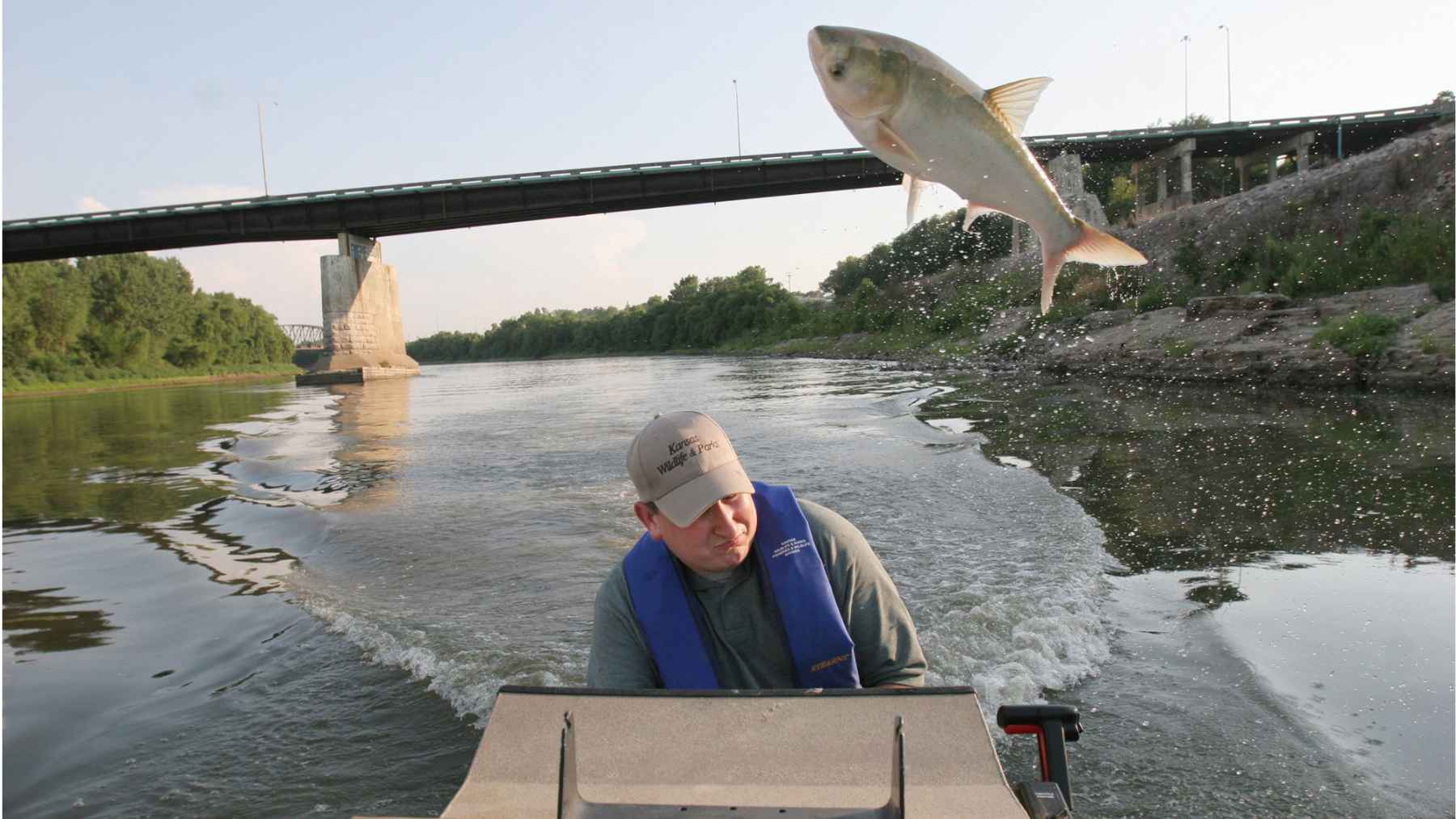
How Kansas is thinning the invasion
To keep that crowd in check, Kansas crews rely on a mix of traditional fishing tools and new technology. They use electrofishing boats that send controlled pulses through the water, gill nets, and a specialized electrified “dozer trawl” that pushes through carp hotspots. The dozer trawl stuns fish in front of the boat while a net scoops them up as the vessel moves forward.
“In recent years we added an electrified dozer trawl designed specifically for invasive carp removal,” invasive carp biologist Liam Odell explained in interviews with local media. “This system stuns fish using electricity, similar to standard electrofishing, while a push trawl on the bow collects stunned carp as the boat moves forward.”
Once the carp are removed, Kansas officials have clarified that the fish are returned to the river in carefully chosen spots so their bodies can decompose. They describe this as a nutrient recycling step that puts carbon, nitrogen and phosphorus back into the food web instead of sending tons of biomass to landfills.
It may feel counterintuitive. You pull fish out to help the ecosystem, then let them break down in the same system. But for the most part, managers argue that the real problem is living, feeding carp, not their remains.
Early signs of a river in recovery
According to Odell, biologists now see encouraging trends in stretches of river where removals have been most intense. Carp numbers show signs of decline there, and native species such as sport fish and forage fish are starting to rebound. He summed it up by saying that these removal efforts appear to have produced “positive effects in Kansas waterways and for native species.”
For people who fish or paddle the Kansas, that is where the story becomes very concrete. More native fish in the net, fewer large carp crashing into the side of the boat, and a food web that looks a bit more like it did before the invaders arrived.
A bigger experiment in invasive species control
Kansas is not acting alone. The U.S. Fish and Wildlife Service recently announced nearly $19 million in grants for invasive carp management across eighteen states in the Mississippi basin, including Kansas. More than half of that funding goes to targeted mass removal, with additional support for monitoring and deterrent barriers.
By the agency’s own estimates, these programs now remove more than twenty million pounds of invasive carp from United States waters each year. That is a huge number, yet managers still describe it as holding the line rather than winning outright.
The experience echoes what European authorities have found with common carp and other invasive fish. A technical report from the Ministry for the Ecological Transition and the Demographic Challenge notes that once carp are firmly established, no single method can remove them.
It recommends combined strategies that include physical removal, barriers and traps, with chemical, biological and genetic tools only as carefully tested options, plus strong prevention and early detection to keep new invasions from taking hold. In other words, there is no magic switch to flip. It is more like constant housekeeping on a very large, very wet floor.
What this means for readers far from Kansas
You may never set foot on the Kansas River, yet the story has lessons that travel. Invasive species control often looks harsh up close, whether it involves electrofishing, trapping or cutting down non -ative plants.
The alternative, according to decades of research, is a slow loss of native biodiversity, cloudy water that is harder to treat for drinking, and recreational areas that become less attractive for swimming, boating and fishing.
For everyday people, the most effective actions are surprisingly simple. Clean and dry boats and gear between rivers, avoid releasing live bait or aquarium fish into local waters, and support policies that invest in prevention and monitoring rather than waiting for expensive emergency fixes.
At the end of the day, Kansas is using electricity and nets not because anyone enjoys shocking fish, but because the river has reached a tipping point where active management is the only way to give native life some breathing room again.
The press release was published by the U.S. Fish and Wildlife Service.