What happens in a forest before lightning steals the spotlight? A new study says treetops can flicker with faint electrical glows called coronae during thunderstorms. Researchers recorded these weak discharges outdoors for the first time, showing that the effect is real and may be far more common than scientists once thought.
The flashes were captured during storms along the US East Coast in the summer of 2024, but they were not visible to the human eye. Instead, the team used ultraviolet equipment, which detects a kind of light our eyes cannot see, to spot them on several tree species.
That matters because the same hidden glow may lightly singe leaves, affect nearby air chemistry, and reveal a missing piece of how thunderstorms interact with forests.
What these ghostly coronae really are
So what is a corona, exactly? It is not a lightning bolt and it is not fire. It is a weak electrical discharge that forms when a storm overhead creates a strong electric field and charge gathers at the sharpest points available, such as the tips of leaves high in a tree.
Scientists have suspected this for nearly a century, and lab experiments over the past several decades showed how it could happen.
In dark indoor tests, the effect looks like a faint blue shimmer. Related earlier Penn State research also found that leaf coronae can create highly reactive chemicals during storms, which could influence air quality around forests.
How the team caught them in the wild
To catch the effect in real weather, lead author Patrick McFarland of Pennsylvania State University and colleagues turned a 2013 Toyota Sienna into a storm-chasing lab.
The van carried a weather station, an electric field detector, a laser rangefinder, and a roof-mounted periscope that fed light into an ultraviolet camera. In practical terms, that gave the team a way to see a signal that stormy daylight normally washes out.
During one storm in Pembroke, North Carolina, the team aimed the camera at branches of a sweetgum tree and later found 41 corona events in 90 minutes. Some glows lasted as long as three seconds and often seemed to hop from leaf to leaf as branches moved in the wind.
Similar behavior showed up on a nearby loblolly pine and in four more storms tracked from Florida to Pennsylvania.
Why this could matter for forests
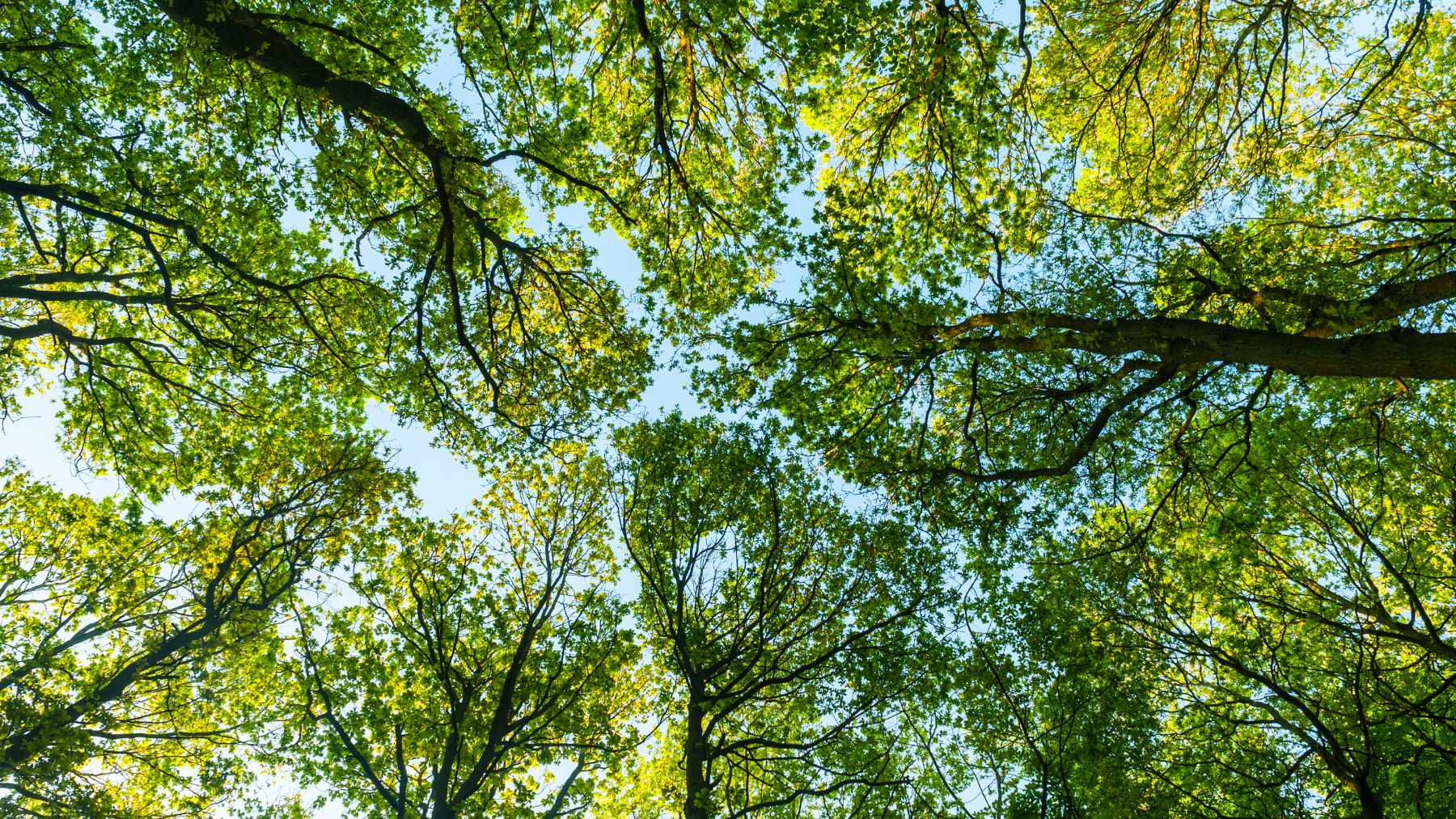
The biggest takeaway is not just that the glows exist. It is that they may appear across whole canopies during storms, perhaps on dozens or even hundreds of leaves at once. If people could see the ultraviolet effect directly, many treetops might look as if they were covered in tiny flickers sweeping through the forest.
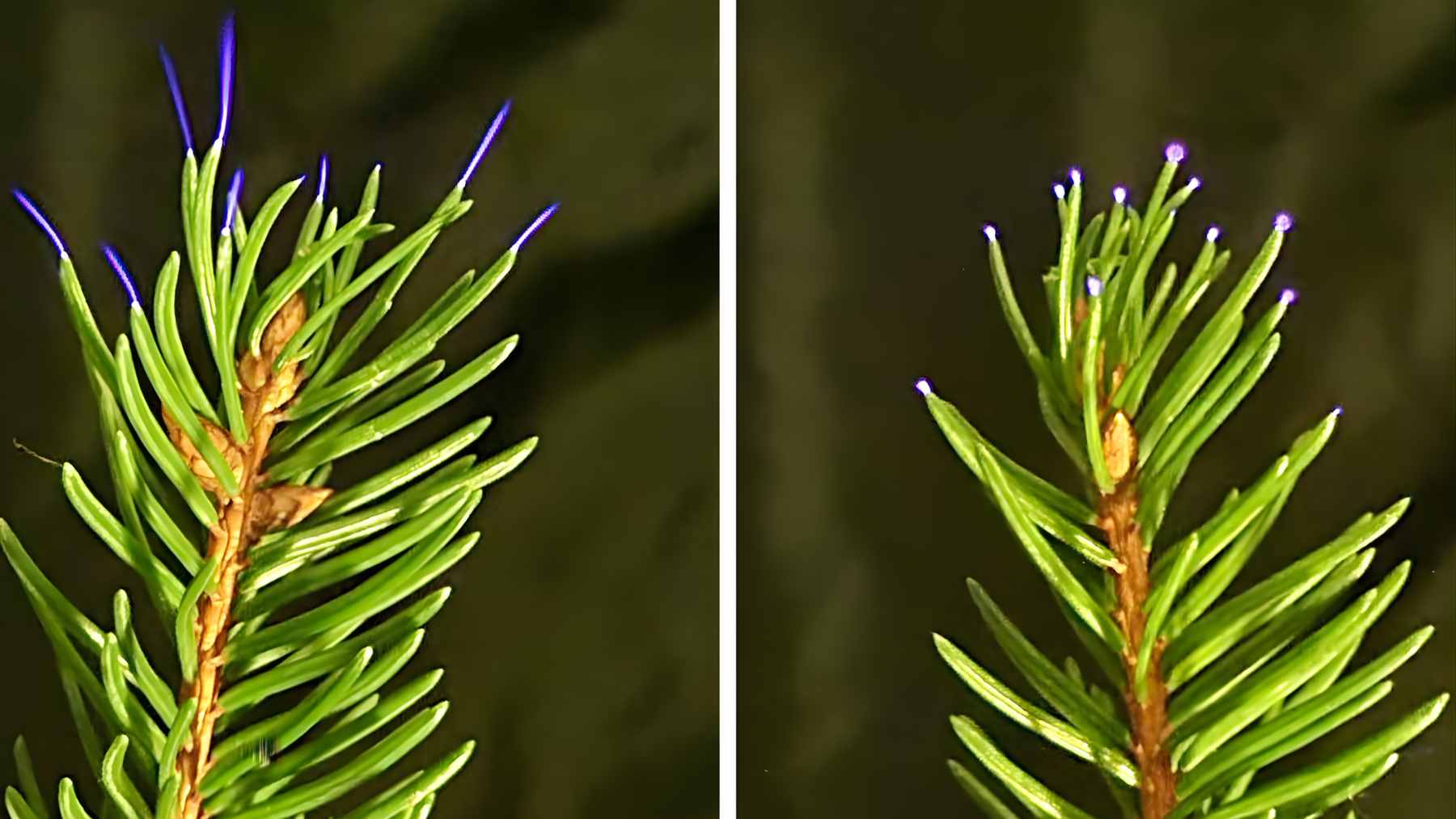
One corona probably does not do much on its own. But repeated storms could subtly burn leaf tips and wear down the waxy outer layer that helps leaves hold moisture and protect themselves from radiation. That kind of damage can be easy to miss, a bit like the slow wear a roof takes after storm season, until it starts to add up.
The researchers say that is the next big question. They want to work with forest ecologists and botanists to find out whether these hidden discharges affect tree health, canopy growth, or even how forests evolved in places where thunderstorms are common.
The new study suggests the light show is real, but the biological cost is still being worked out.
The main study has been published in Geophysical Research Letters.