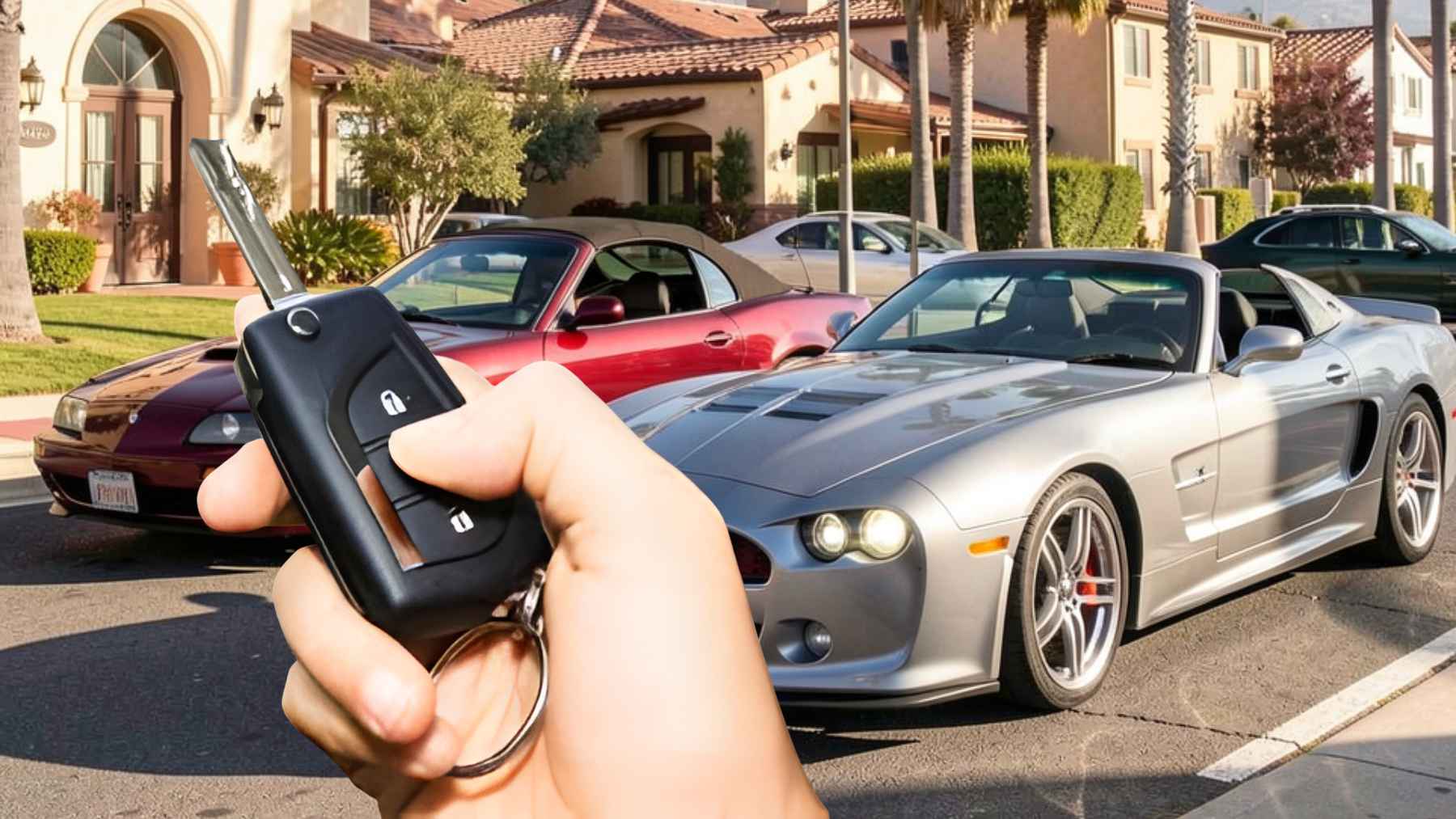
Drivers in California now face jail time and fines if they are caught with certain high-tech devices and intend to use them to steal a vehicle or break into a building.
Under Assembly Bill 486, key programming devices, key duplicating devices, and signal extenders are now legally treated as burglary tools when linked to criminal intent, with penalties of up to six months in county jail, fines up to $1,000, or both.
At first glance this sounds like a narrow crime story. Yet it sits right in the middle of the fight over cleaner transport, urban air quality, and how safe people feel owning electric and hybrid cars.
According to the California Highway Patrol, the state recorded more than 202,000 vehicle thefts in 2023, a slight rise on the previous year. Nationwide, the National Insurance Crime Bureau reports that over one million vehicles were stolen in 2023, with California at the top of the list. That crime wave is increasingly digital.
So what does that have to do with climate and clean mobility?
High-tech theft targets the newest and cleanest cars
AB 486 zeroes in on devices that can talk to a car’s electronics. The law defines key programming and key duplicating tools as equipment that can access a vehicle computer to add new keys, erase old ones, or remotely start the engine.
Signal extenders are devices that boost the radio signal from a key fob so the car “thinks” the key is right next to it when it is actually still inside the owner’s home.
These tools are particularly effective against modern keyless entry systems, which are common on newer models, including many electric vehicles. State data show that electric vehicles made up roughly 22% of new car sales in California in 2024, and recent figures suggest the market share climbed above 29% in the third quarter of 2025.
In other words, the same cars that help cut exhaust fumes on congested freeways are also prime targets for quiet, contact-free theft from driveways and apartment parking lots.
When you have just stretched your budget for an electric car and then hear it can be driven away in seconds while you sleep, that does not exactly help confidence in the green transition.
Stolen vehicles leave an environmental footprint
Most people experience car theft as a shock to their wallet and their sense of safety. There is also a quieter environmental cost.
A typical passenger vehicle on fossil fuel emits about 4.6 metric tons of carbon dioxide per year while in use, according to the United States Environmental Protection Agency. European auditors estimate that passenger cars account for more than half of road transport emissions in the European Union.
When a relatively new vehicle is stolen and written off, the emissions linked to building its replacement are added on top. Life cycle studies show that manufacturing a car, whether electric or combustion, is a carbon intensive process that consumes metals, plastics, glass, and a long chain of energy intensive inputs.
The end of the road can be dirty too. Illegally scrapped cars are often stripped in unregulated “chop shops,” where oils, coolants, batteries, and fuel residues may be dumped or burned rather than handled safely.
Environmental agencies warn that these practices can contaminate soil and water and harm nearby wildlife and communities. Not every stolen car ends up in a crime-linked scrapyard, but enough do that some states now list chop shops as examples of potential environmental crime.
What AB 486 actually changes
AB 486, authored by Assembly Member Tom Lackey, amends Section 466 of the state Penal Code so that these high-tech devices join the traditional list of burglary tools such as crowbars and lock picks. The key point is intent. Owning a diagnostic tool for legitimate work remains legal. Possessing it while planning to break into a car or building is what triggers the crime.
Legal summaries and a recent bulletin from the state highway patrol explain that the offense is a misdemeanor, punishable by up to six months in county jail, a fine of up to $1,000, or both.
In supporting documents, the bill’s author writes that “criminals are using advanced key programming devices to steal vehicles in seconds,” and argues that the law gives police a way to act before a theft is completed.
For environmental policy, this is not a flagship climate law. Yet it is part of the legal scaffolding that has to hold up as more of the vehicle fleet becomes connected, electric, and software driven. A clean car that does not feel secure will always be a tough sell.
What drivers can do right now
Police in San Diego have been blunt about the shared responsibility. “As technology adapts, we have to adapt,” officer Anthony Carrasco explained in a recent interview, while urging people to make their cars harder to steal.
Simple steps many experts suggest include
- Keeping key fobs well away from doors and windows at home
- Storing keys in a signal blocking pouch, often called a Faraday bag, so thieves cannot easily relay the wireless signal
- Using old fashioned steering wheel locks as a visible deterrent
- Parking in a locked garage or well lit area whenever possible
For electric vehicle owners, these habits sit alongside checking charging tariffs or planning long trips around public chargers. Security becomes another small piece of sustainable living, right next to the recycling bin and the effort to cut back on short solo drives.
Taken together, AB 486 and basic prevention measures will not end car theft. To a large extent though, they can reduce the risk that the newest, cleanest vehicles disappear into the gray zone of organized crime and dirty dismantling yards.
Protecting green cars helps protect the air around schools, homes, and the places we move through every day.
The official statement was published on the California Legislature website.