If you have red hair or freckles in the family, you have probably heard that your skin needs extra care in the sun. That warning is still true. Yet a new study on tiny songbirds adds a surprising twist. The same orange pigment long blamed for raising melanoma risk also helps cells quietly defuse a different kind of danger inside the body.
The double life of an orange pigment
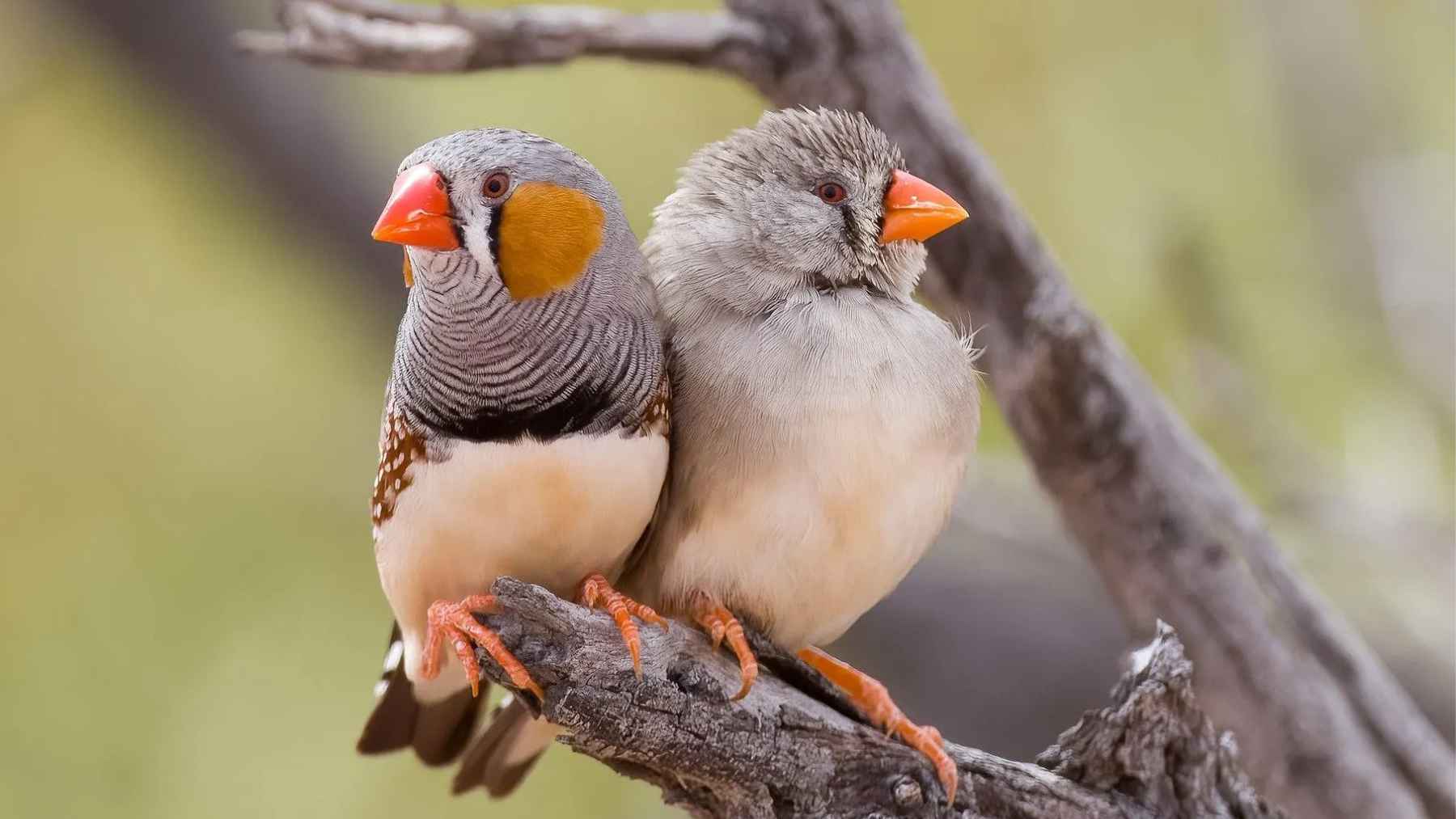
The pigment in the spotlight is pheomelanin. It gives human red hair and fair skin their warm tones and also colors the orange patches on many birds, including male zebra finches. Pheomelanin is made in pigment cells called melanocytes using the amino acid cysteine.
For years, lab work has shown that this pigment is not very good at shielding DNA from ultraviolet light compared with dark eumelanin. In fact, pheomelanin can generate reactive molecules that damage DNA and has been linked to higher melanoma risk even when UV exposure is kept low.
That raised an obvious question. If this pigment is so risky, why did evolution keep it around at all
A hunch about cysteine and a clever experiment
One idea was that pheomelanin might act as a kind of safety valve for cysteine. In high amounts, this sulfur-rich amino acid can become toxic inside cells. Turning some of that surplus into a stable pigment and parking it in hair or feathers could help keep internal chemistry in balance. Until now, that idea was mostly theoretical.
To test it, a team led by Ismael Galván at the National Museum of Natural Sciences and the Spanish National Research Council (CSIC) used zebra finches as a living model. Male finches have bright orange flank feathers colored by pheomelanin, while females lack that orange pigment.
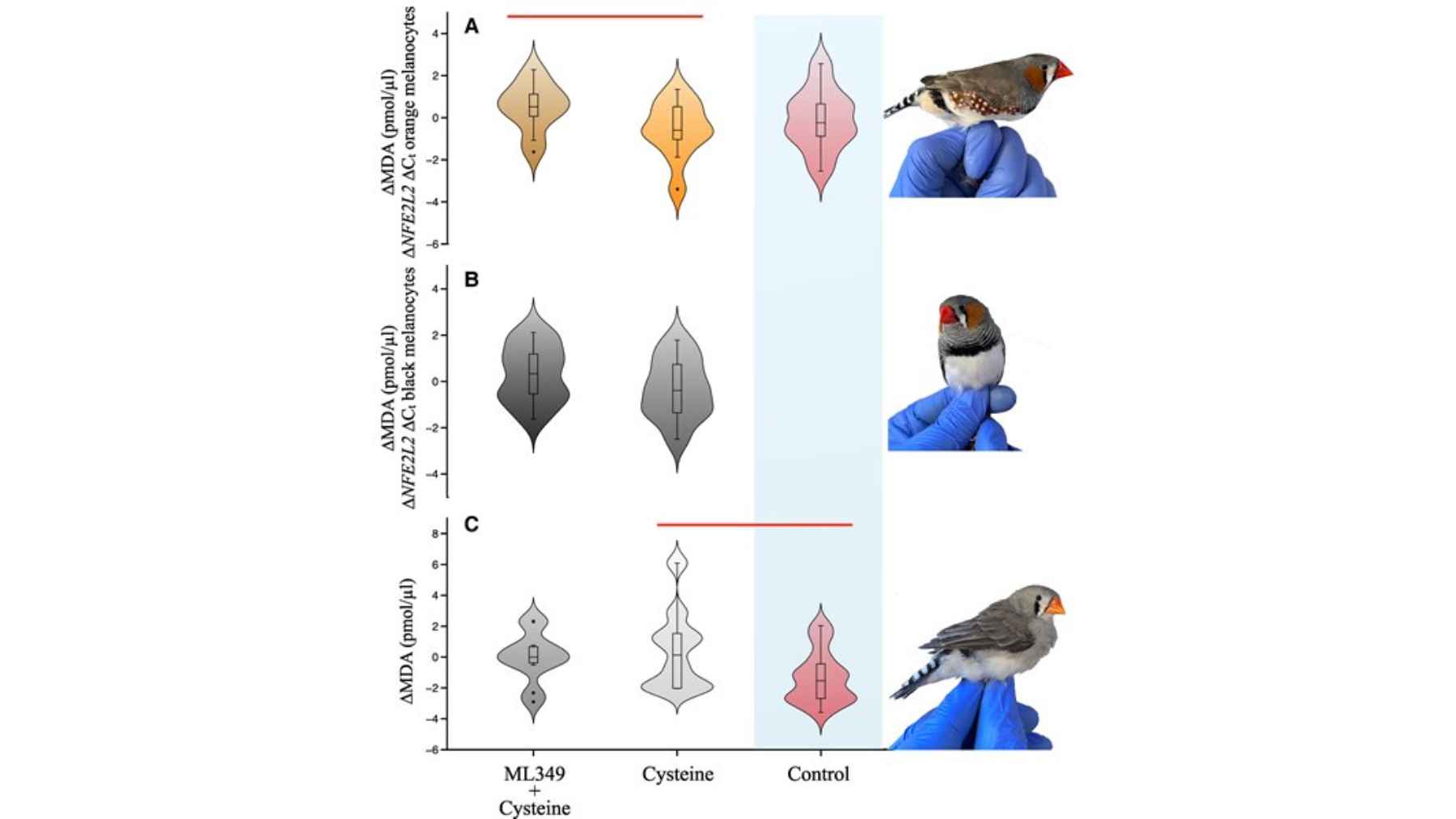
The researchers worked with sixty five adult birds. Some received extra cysteine in their drinking water. A subset of those birds also received ML349, a drug that interferes with a cellular enzyme and effectively blocks pheomelanin production in melanocytes.
When pigment is blocked, damage piles up
In males that received both cysteine and ML349, the team saw a clear signal of trouble. These birds showed higher levels of malondialdehyde in their blood, a compound formed when reactive molecules attack cell membranes and a common marker of oxidative damage.
Males that received cysteine without the drug did not show this same jump in damage once the researchers accounted for how strongly their pigment cells were turning on antioxidant defenses.
Female zebra finches told a related story. Because they do not naturally produce pheomelanin in their plumage, the blocking drug had no real target. ML349 did not change their physiology in a meaningful way. Extra cysteine on its own, however, tended to increase oxidative damage in females compared with untreated controls.
Taken together, the results suggest that pheomelanin synthesis lets male birds tuck excess cysteine safely away into inert feather pigment. When that route is cut off, the same amino acid that helps build proteins becomes a source of stress for cells.
A molecular sponge for a risky nutrient
In practical terms, pheomelanin acts a bit like a sponge. Melanocytes pull in cysteine from the bloodstream, use it to build pigment granules, and then ship that pigment into growing feathers. Once locked into keratin, the cysteine is out of circulation and cannot easily feed damaging reactions inside sensitive tissues.
The authors argue that this is the first direct experimental proof of a physiological job for this orange pigment rather than a side effect of other processes.
The work also hints that the pigment’s protective effect is specific. Dark eumelanin, made in different body regions of the same birds, did not show the same tight link with improved redox balance in this experiment. The key seems to be how pheomelanin production intersects with cysteine handling, not a general boost in antioxidant capacity.
What this might mean for human redheads
So where does this leave people who carry red hair variants of the MC1R gene. The study does not rewrite the well-established connection between pheomelanin-rich skin and melanoma risk.
Sun protection and regular skin checks remain essential, especially for those with fair complexions. What it does suggest is that the story is more nuanced. The pigment that increases vulnerability to certain cancers may, under some conditions, help prevent another kind of cellular damage by mopping up excess cysteine.
At the end of the day, that means melanoma risk in redhaired or very fair skinned people may depend not only on genes and ultraviolet exposure, but also on environmental factors that influence cysteine availability and oxidative stress, such as diet and overall health.
The authors point to this interaction as an important area for future research rather than a reason to change medical advice today.
Color, evolution, and everyday life
For wildlife, the findings also help explain why bright orange and rusty red colors are so widespread even though they can carry costs. Pheomelanin-rich plumage may signal health or social status, but it may also help birds manage internal chemistry when food is rich in sulfur containing amino acids or when other antioxidant systems are under pressure.
Next time you notice a redheaded friend putting on sunscreen or a finch with glowing orange feathers in a park aviary, it is worth remembering that the same pigment doing such visible work on the outside is also part of a quiet balancing act deep inside cells.
The study was published in PNAS Nexus.