By the time you pull on a coat and your garden looks empty, the buzzing of summer feels far away. The bees that worked your flowers and the wasps that crashed your cookouts seem to vanish overnight. So where do they go when frost hits, and do they all just die off?
A recent feature by garden writer Arricca Elin SanSone in Southern Living pulled this mystery into the spotlight, drawing on interviews with entomologists Chris Hayes at North Carolina State University and Eric Benson at Clemson University, who study how these insects ride out the cold. Their answer is surprisingly hopeful: most bees and wasps do not simply disappear. They switch to winter mode with a set of strategies that are as clever as any snow-day plan we make.
Social and solitary insects follow different winter plans
To understand winter survival, you first need to know that bees and wasps fall into two big groups. Social species live in large colonies with a single queen and many workers, while solitary species live mostly alone and raise their young without helpers.
Social insects include honey bees, bumble bees, yellowjackets, paper wasps, and bald‑faced hornets. Solitary bees and wasps include carpenter bees, mason bees, cicada killers, and mud daubers. Each group faces winter in a different way, and that choice decides who lives to see spring.
Honey bee colonies act like a living space heater
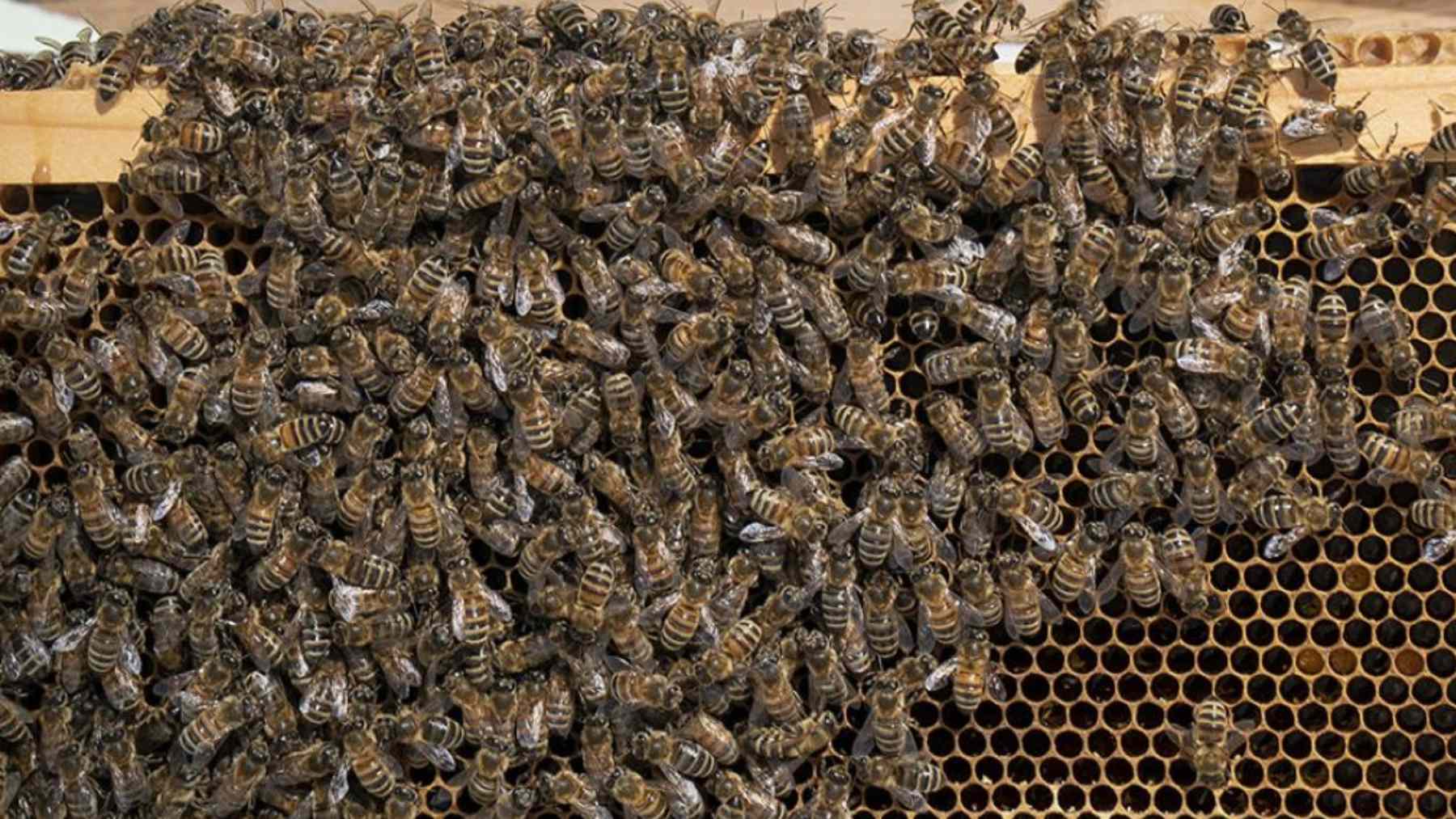
Honey bees do not hibernate like bears. When cold weather arrives, the workers gather into a tight ball, or “cluster,” around their queen inside the hive. They shiver their flight muscles to create warmth, keeping the center of the cluster at roughly room temperature even when the air outside drops well below freezing.
The bees on the outside of the cluster slowly rotate inward so no one stays in the cold edge for too long. They burn stored honey as fuel, a bit like running a tiny space heater on an endless supply of sugar. For the most part, that is why a healthy honey bee colony with enough food can survive winter storms that would kill many other insects.
Bumble bees and solitary bees hide in quiet corners
Bumble bee colonies usually last only one season. By late fall, the workers and old queen die, and only newly mated young queens remain. Those queens dig into loose soil, slip under layers of fallen leaves, or tuck into cracks in the ground and stay there until spring warms the surface again.
Many solitary bees take a different route. Some species, like carpenter bees, spend winter as adults sealed inside tunnels in wood, while others, such as leafcutter bees, stay in their nests as larvae or pupae waiting to finish growing. Guides for pollinator gardeners stress that hollow plant stems, bare patches of soil, and undisturbed leaf piles are not “mess” so much as tiny winter cabins for these insects.
Most wasp nests die back, but their queens live on
Yellowjackets, paper wasps, and hornets also follow a one‑year pattern. In spring, a single queen starts a small nest and raises the first batch of workers. By late summer, the colony may hold hundreds or even thousands of wasps, all fueled by the same sugary picnic drinks and caterpillars that homeowners notice in their yards.
When hard freezes arrive, most of those workers die. The next generation of mated queens crawls into sheltered places such as under tree bark, inside logs, or in gaps in sheds and attics. Fact sheets from Clemson University explain that these overwintering queens are the ones that will start brand‑new nests the following spring.
Rare “super nests” can grow huge in warmer winters
In very mild winters, mostly in the Southeast, something unusual can happen. A few yellowjacket nests do not die back. Instead, they keep growing into what scientists call perennial colonies that survive more than one year.
Researchers studying southern yellowjackets have documented nests with many queens and hundreds of thousands of workers packed into one massive paper structure. These super nests can be dangerous to people and pets because there are so many wasps defending one spot. At the end of the day, experts recommend that any suspected giant nest be handled by a professional pest control company, not tackled with a can of spray from the hardware store.
Why you sometimes see bees and wasps on mild winter days
For most of the cold season, bees and wasps stay tucked away. But on a sunny afternoon in January, you might spot a slow, confused wasp in the hallway or a few bees flying from a hive. Honey bees use warm breaks to make short “cleansing flights” outside the hive before heading back in, and a few wasp queens may wake up if an attic or wall space gets cozy.
Seeing a handful of insects does not mean a full summer swarm is hiding nearby. Still, if you keep finding wasps indoors in the middle of winter, it can be worth checking for a nest entry point in the roofline or calling a pest professional for advice. Think of it like tracking down a draft in your house: a small clue can point to a bigger hidden problem.
Simple ways to help bees and wasps through winter
Even if you do not keep bees, what you do with your yard in fall and early spring matters. Organizations that work on pollinator conservation encourage people to leave at least part of the yard a little wild, with leaf litter, brush piles, and standing stems that provide shelter and insulation for overwintering insects.
In practical terms, that means resisting the urge to rake every leaf or cut back every plant as soon as the weather cools, and waiting until temperatures have warmed up for a while before doing a full spring clean. A small corner of “messy” garden can support queens, larvae, and pupae that will pollinate your flowers and help control pests once the sticky summer heat returns. If you want more specific timing, local cooperative extension offices can usually tell you when common species in your area finish their winter rest.
The main article on this topic has been published in Southern Living.