If you have driven on a busy California freeway, you have probably watched the speedometer creep up as the cars around you fly past. It can feel like you are the only one actually respecting the black-and-white number on the sign. On stretches such as Highway 50 or Highway 99 near Sacramento, whole lanes often seem to roll a few miles per hour above the posted limit. In that situation, it is tempting to press the gas just enough to blend in.
Many drivers assume that matching the flow of traffic must be safer, or at least less likely to attract a ticket. The California Highway Patrol (CHP) and a Sacramento driving instructor say the law does not see it that way, and the cost of guessing wrong can quickly reach hundreds of dollars.
How does California law define speeding on the highway?
Under California law, drivers are not allowed to operate a vehicle on a highway at a speed greater than is reasonable or prudent, especially when that speed puts people or property at risk. The California Driver’s Handbook from the Department of Motor Vehicles (DVM) explains that motorists must consider traffic volume, the speed of nearby vehicles, weather, road conditions and whether pedestrians or bicyclists are in the area when choosing how fast to drive.
Even with all those variables, the rule has a hard edge. According to the handbook and the officials interviewed, drivers are expected to stay at or below the posted limit. Once a motorist goes faster than the number on the sign, that speed is treated as a potential violation and can lead to a ticket or something more serious if a crash occurs.
What are the main speed limits on California roads and freeways?
California Highway Patrol Officer Ruben Jones, a public information officer for the agency’s Valley Division, notes that the black-and-white speed signs show the maximum legal speed on that stretch of road. The California Driver’s Handbook says the limit on most highways is 65 miles per hour unless another number is posted.
On two-lane undivided highways, the limit drops to 55 miles per hour, and vehicles towing trailers must also stay at 55 miles per hour. In business and residential districts, the standard limit is 25 miles per hour unless signs say otherwise. Here is a simplified overview of some of those limits as described by state guidance:
| Location or situation | Maximum legal speed (unless posted otherwise) |
| Most California highways | 65 mph |
| Two-lane undivided highways | 55 mph |
| Vehicles towing trailers | 55 mph |
| Business and residential districts | 25 mph |
These numbers are starting points rather than targets. Drivers still have to slow down further when conditions are poor, and in many places they will also see lower posted limits that override the general rules.
Can you really be ticketed for just going with the flow of traffic?
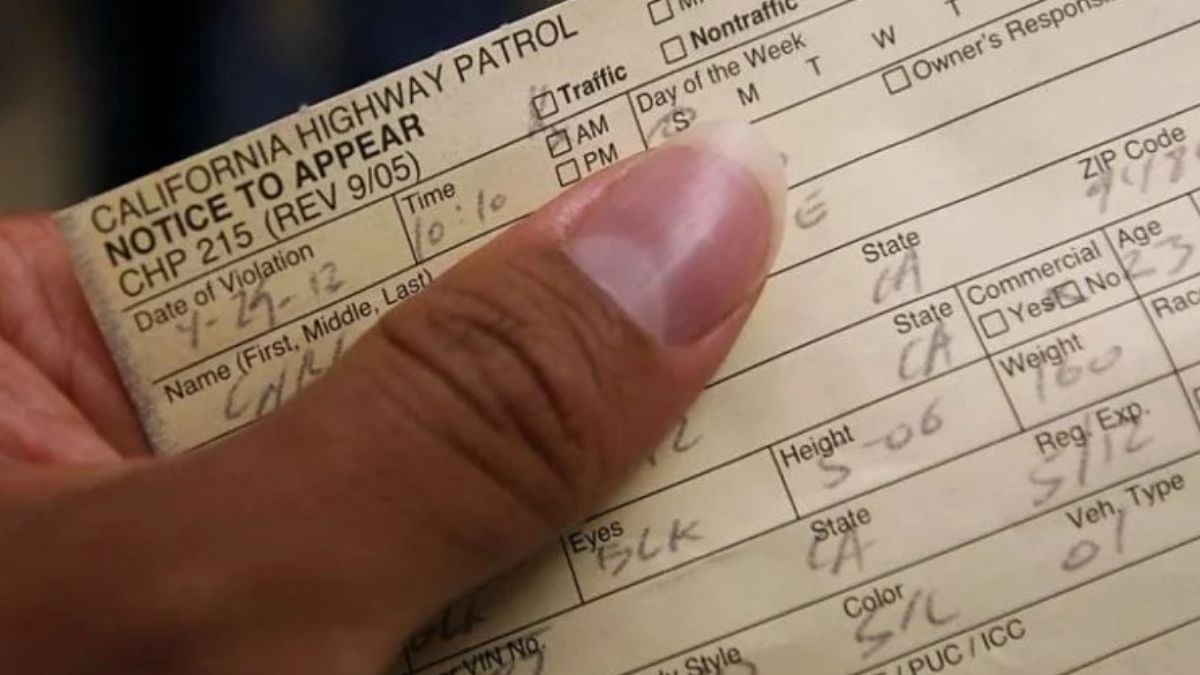
The CHP’s position is clear: an officer can make a stop and write a citation for any amount over the maximum speed limit. Jones told The Sacramento Bee that there is no built-in mileage cushion and that a driver who is even one mile per hour over the posted limit is technically in violation and could be cited.
He also pointed out that the phrase “flow of traffic” does not appear anywhere in the California Vehicle Code.
Explanations such as saying that everyone else was going the same speed or that a driver was simply following the car in front are not considered defenses in court. In practical terms, that means choosing to match a fast-moving pack is a personal risk, not a legal shield.
Is speeding ever safer when you merge or change lanes?
Jones told the Bee there are no situations where Californians should go above the posted speed limit while driving. He stressed that the faster a car is moving, the more severe and deadly a crash can become, and that speed limits are designed to reduce injuries and deaths by capping that impact.
Driving instructor Henning Mortensen, owner of Bond Driving School in Sacramento, offered a narrow real-world nuance. He said that when a driver is entering a highway or changing lanes, they may need to accelerate briefly to match surrounding traffic so they do not block faster vehicles and create a hazard.
Moving too slowly in that moment can count as impeding traffic, which is also a violation. However, he emphasized that once the driver has secured a spot in the lane, they must return to the speed limit. Even in these situations, a radar reading over the limit can still draw an officer’s attention.
What should you do if traffic is faster or someone is tailgating you?
If you are already traveling at the maximum speed limit and another driver is following closely, Mortensen recommends moving into the right lane, which is intended for slower-moving traffic. That gives faster vehicles a clear path to pass on the left without pressuring you to speed.
If the tailgater continues to crowd your bumper even after you move over, Jones advises exiting the highway or pulling over in a safe place so the aggressive driver can go by.
The guidance from both experts is simple: let impatient drivers leave rather than trying to keep up with them. Planning extra time for trips and watching speed signs closely makes it easier to stick to that habit.
How much does a California speeding ticket cost in 2025 and how can you avoid paying it?
The Judicial Council of California’s 2025 Uniform Bail and Penalty Schedule sets base fines that increase with speed over the limit.
According to figures cited by The Sacramento Bee, the base fine is $35 for driving 1 to 15 miles per hour over the limit, at least $70 for 16 to 25 miles per hour over, and at least $100 for speeds 26 miles per hour or more above the posted limit. After penalty assessments and court fees are added, the total bill climbs much higher. Typical totals reported for a first citation look like this:
- About $208 for driving 1 to 15 mph over the speed limit.
- Around $367 for driving 16 to 25 mph over the limit.
- About $490 for going 26 mph or more over the limit.
For a few minutes saved on the road, that kind of hit to a household budget is hard to justify. The practical takeaway is clear: obey the posted limits, adjust downward when conditions are bad, move right and let faster traffic pass, and, if needed, pull off to avoid aggressive drivers instead of joining them.