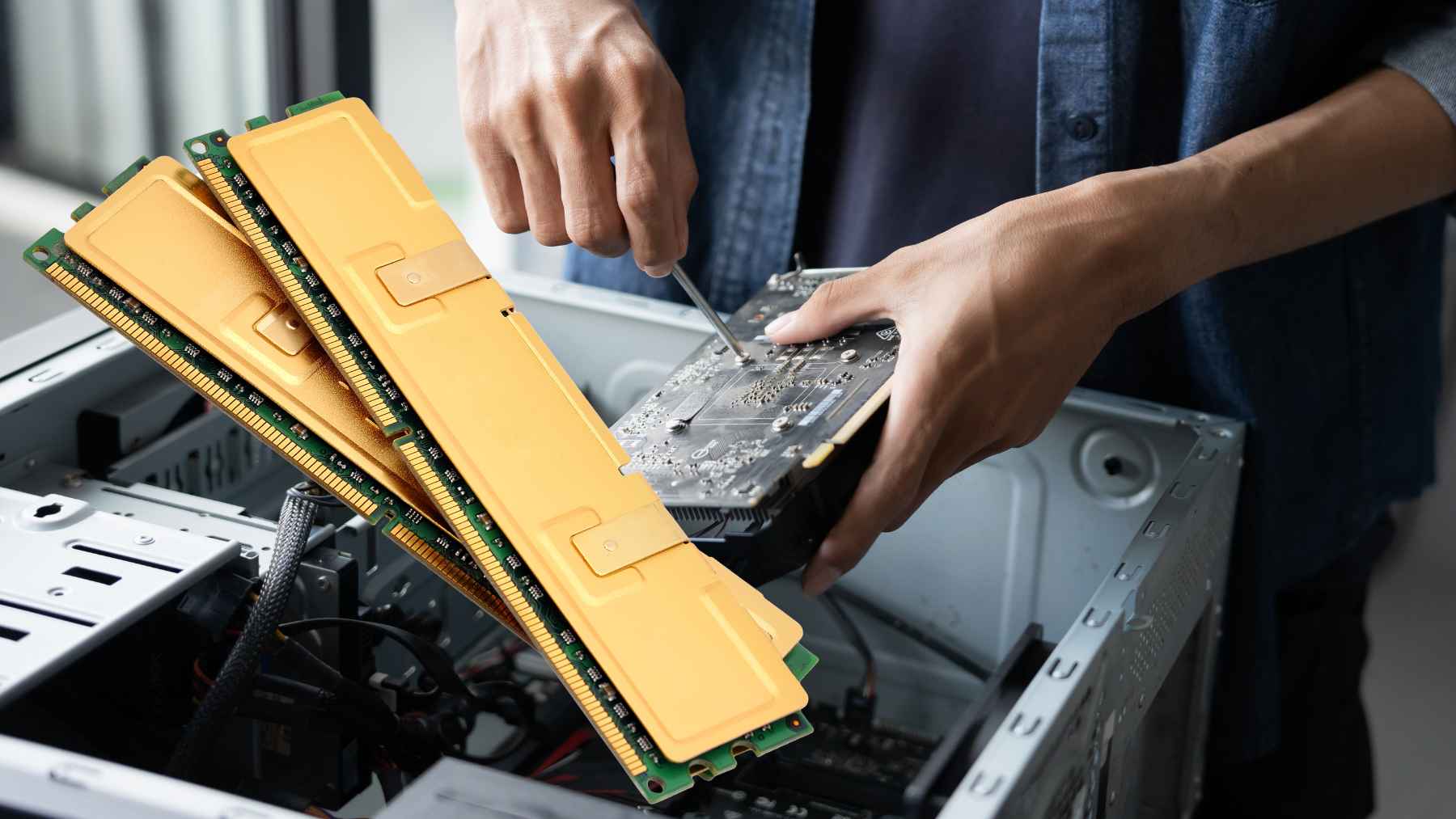
When a thief broke into a design office at a factory in South Korea, they left monitors, keyboards and drawers untouched. They smashed the tempered glass on two desktop PCs and took only four high-capacity Micron DDR5 memory sticks, worth around $1,600 on the late 2025 market.
It sounds like a scene from a tech thriller, but it says a lot about how valuable modern memory has become in the AI era and how much environmental weight sits inside those tiny green boards.
According to reporting that drew on PCPartPicker price data, 32 gigabyte DDR5 5600 kits that sold for roughly $200 in September 2025 were averaging close to $800 only a few months later, with faster 6000 speed kits pushing toward $900.
Read More: {{post_title link:post}}
Contract prices for 16 gigabit DDR5 chips also climbed sharply, from about $6.84 in September to around $27.20 in December, a jump of nearly 300% as shortages took hold. By early 2026, an insight from Counterpoint Research described memory prices surging as much as 90% compared with late 2025.
From missing RAM sticks to a global AI memory rush
Trend watchers at TrendForce link that price shock to the new hunger for AI servers. Cloud providers are racing to install high performance computing platforms that can train and run massive models, and each of those machines carries far more DDR5 than a typical office PC.
In October 2025, TrendForce revised its forecast for conventional DRAM prices in the last quarter of the year from single digit growth to a range between 18% and 23%, with the note that increases could turn out even higher as orders came in. In other words, the thief in that Korean office was not chasing a rare gadget. They were pulling cash straight out of the motherboard.
The hidden footprint of a memory stick
To a large extent, a DDR5 module looks harmless. It is light, silent and small enough to balance between two fingers. Yet studies of semiconductor manufacturing show that most of the environmental impact happens long before a module lands in a PC case, in energy-intensive fabs that consume large volumes of electricity, chemicals and ultra-pure water.
A life cycle assessment of DRAM plants in Taiwan, for example, identified global warming potential and non-renewable energy use as dominant impact categories, along with air pollution that contributes to summer smog and respiratory problems. Every additional wave of high-end memory production adds to that industrial footprint.
Read More: {{post_title link:post}}
Once those chips are soldered into servers, the story continues. The International Energy Agency estimates that data centers already used about 415 terawatt hours of electricity in 2024, roughly 1.5% of global power demand, and projects that their electricity use could more than double by 2030 to around 945 terawatt hours, with AI-optimized facilities as the main driver.
A typical AI-focused data center can draw as much electricity as 100,000 homes, and the very largest projects under construction are expected to use far more. As the agency itself notes, there is “no AI without energy” and that energy has to come from somewhere, whether it is a wind farm or the fossil fuel plant behind your monthly electric bill.
Security problem, sustainability test
For businesses, the Korean case reads first as a security lesson. Transparent side panels that show off colorful lighting also advertise which machines hold several hundred dollars of RAM in plain view. Specialists now advise locking technical rooms, logging who opens cases and, where possible, choosing less showy enclosures for workstations filled with high-value components.
In environmental terms, the same incident should prompt a different question. If memory is valuable enough for thieves to pry it out of running machines, are companies doing everything they can to reuse and recover it before equipment is scrapped.
Extending the life of servers, upgrading memory instead of replacing whole systems and sending retired hardware to certified recyclers all reduce the need for fresh chips and the emissions tied to making them.
Read More: {{post_title link:post}}
On the user side, organizations can also push cloud providers and colocation centers to disclose the energy mix behind their AI services and to prioritize renewables. That kind of pressure may feel small next to global market forces, but it nudges the industry toward lower-carbon power at the same time as it invests in ever larger memory pools.
In the end, a handful of missing RAM sticks in an office on the other side of the world is a reminder of a much bigger story. The digital tools that make work smoother and entertainment richer rest on physical hardware with a real footprint in water, energy and emissions.
The official analysis was published by the International Energy Agency.