In recent years, China has shown the world that the energy transition is not a distant concept, but a rapidly emerging reality. From massive investment in solar and wind power to the first large-scale green hydrogen projects, the country has advanced at an impressive rate. So much so that Ningxia province is now emerging as the stage for an initiative that promises to become a global milestone: the expansion of a project capable of producing hundreds of millions of cubic meters of a superpowerful source per year.
Ningxia stands at a crossroads
Ningxia carries within itself a contrast that’s hard to ignore. On one side, the Ningxia Yinxing Power Plant, a 1,320 MW coal-fired plant, inaugurated in February 2017 and still active, operated by the Ningxia Power Generation Group. On the other, Baofeng Energy Group has secured approval for a mega-green hydrogen project expected to produce no less than 640 million cubic meters of hydrogen per year.
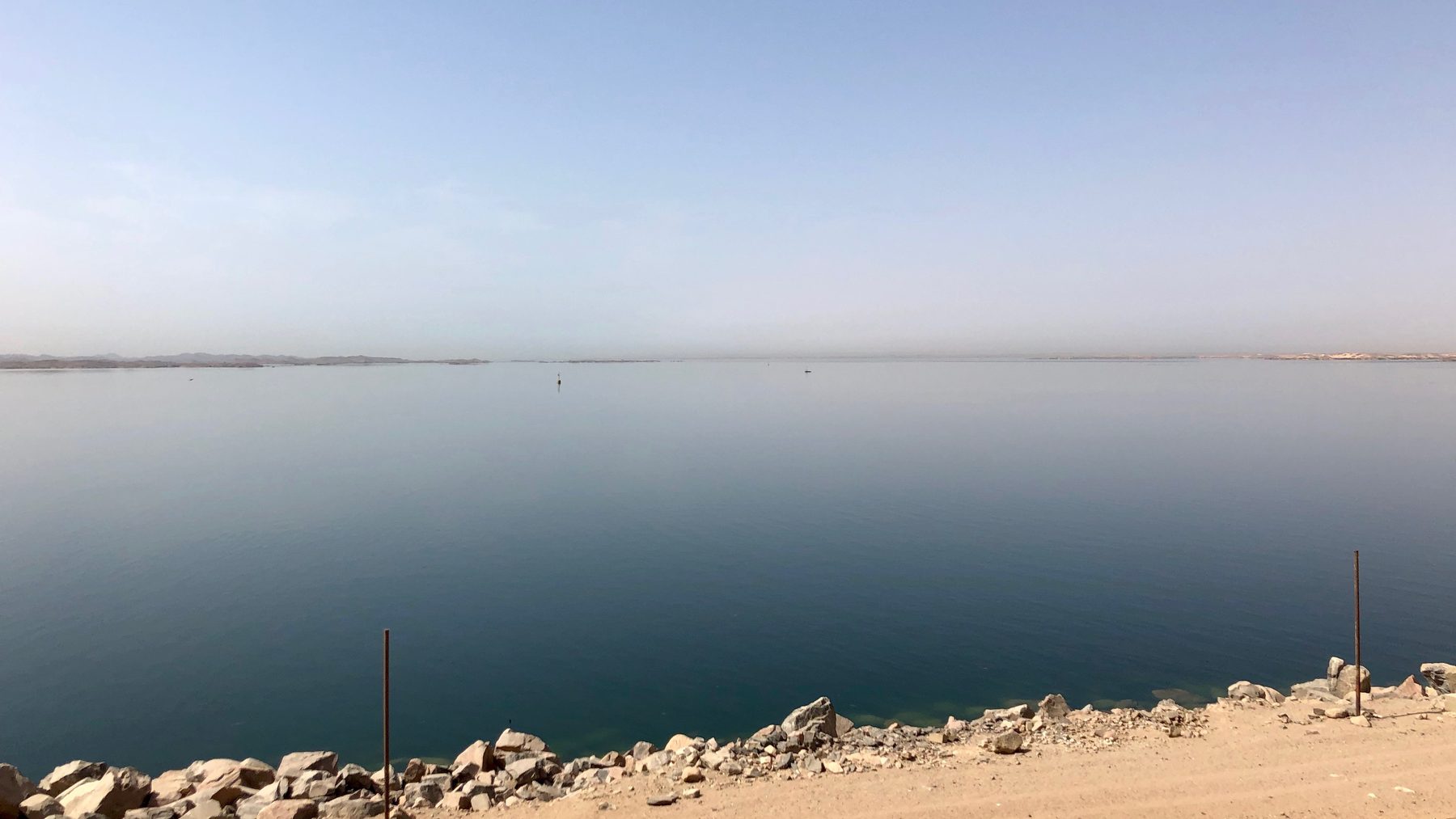
And here’s the kicker: all of this is happening in the desert of this super-powerful source: the sun. In one of the country’s most arid regions, the abundance of solar radiation turns into a strategic advantage, converting a desert into an energy hub. We’re talking about a new energy balance. Today, the use of hydrogen in industrial processes still relies largely on coal. In the case of methanol production in Ningxia, for example:
- 136,669 m³/h comes from coal gasification.
- 10,000 m³/h already comes from the first phase of solar-powered electrolysis.
- With the expansion, an additional 80,000 m³/h will be directly supplied by the new project.
- Each increase in electrolysis means less coal in the equation and fewer emissions.
Deserts hold a choice: endless energy or wasted sands
According to information published on the Ningxia Government Service Network, the project includes not only the electrolyzers but also a 110 kV substation, distribution stations, and environmental support facilities. All energy will be supplied by a 2 GWp photovoltaic park already built by the company. The scale is truly impressive. In addition to hydrogen, the plant will also have the capacity to generate 320 million m³ of oxygen per year as a byproduct, which can be reused in industrial processes.
In an official statement, the government described the project as an “expansion project of the demonstration of solar electrolysis hydrogen production, energy storage, and application of Ningxia Baofeng Energy Group Co., Ltd.” This language reinforces a central point: it’s not just about energy production, but also about creating a demonstration ecosystem capable of proving that large-scale electrolysis can be viable in desert regions. After all, if we can find infinite energy even in rocks, exploring the desert shouldn’t be left behind.
China’s energy crossroads: coal’s shadow or a green horizon?
But there’s an irony to this process. The same province that’s building one of the world’s largest green hydrogen plants is also home to a modern coal-fired power plant, which began operating less than ten years ago. In other words, this shows that the transition isn’t an immediate replacement, but rather an overlap between the old and the new.
Ningxia Power Generation Group illustrates this duality. The company operates in coal-fired thermal generation, wind power, solar power, and even photovoltaic materials manufacturing. In other words, it’s a company straddling two eras, and perhaps this is the best metaphor for China’s transition. Not stopping there, as experts point out, this type of initiative “accelerates the transition while preserving stability.” The coexistence of coal and green hydrogen may seem contradictory, but it’s the strategy that ensures China doesn’t suffer energy shocks while investing in new technologies. That’s why the country has also found a new ally to beat America in the energy sector.