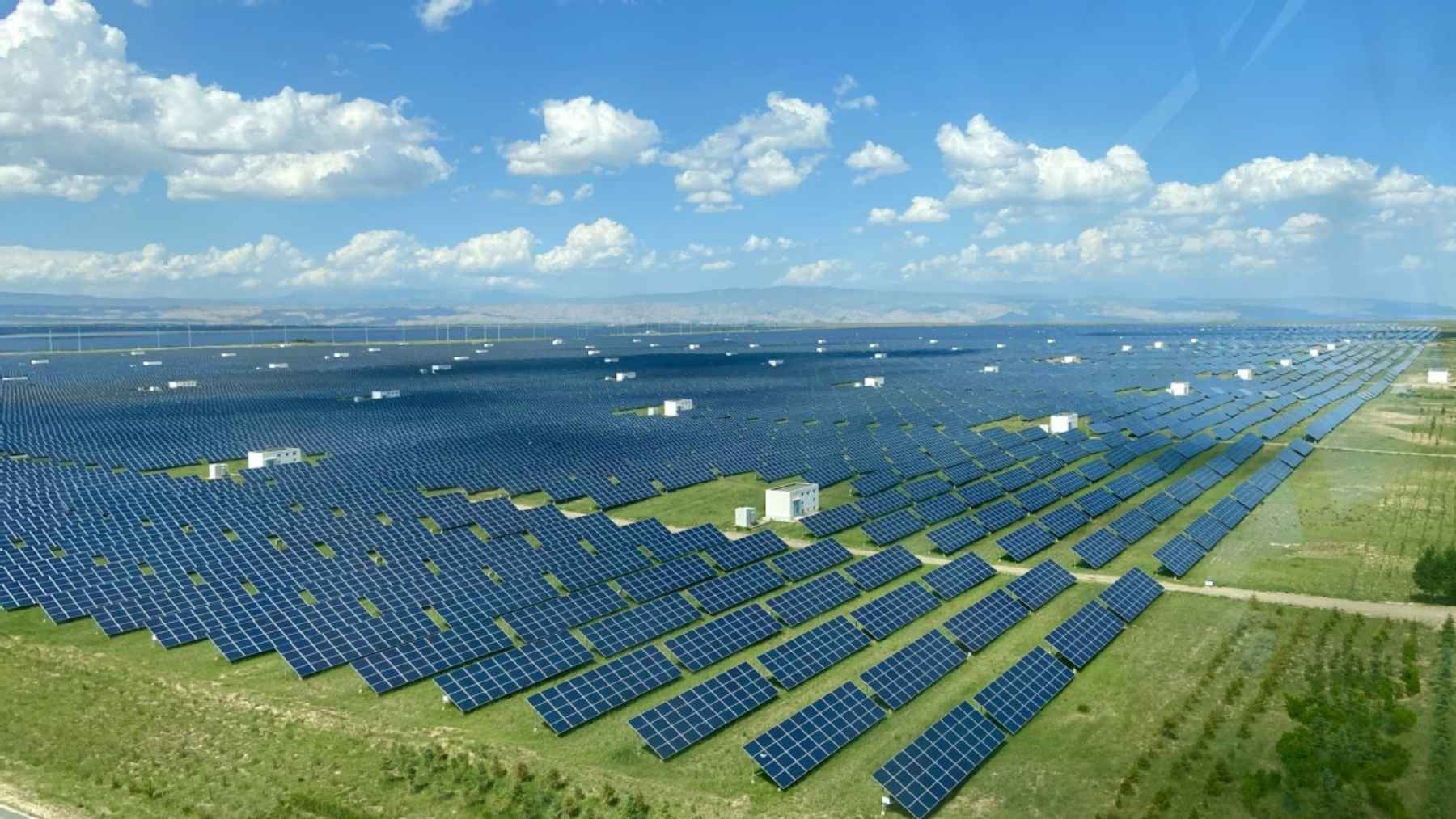
High on China’s Tibetan Plateau, rows of dark blue solar panels now cover what used to be a bleak stretch of desert. The solar cluster in Qinghai Province can generate nearly 17,000 megawatts of electricity, more than any solar farm in the United States. Researchers say its most surprising impact is what it is doing to the land itself.
New scientific studies suggest that these giant arrays do not only cut greenhouse gas emissions, they also cool the soil, trap more moisture, and help plants and microbes return to once barren ground inside the Gonghe Photovoltaic Park. At the same time, households are coping with rising electricity bills while everyday devices keep quietly drawing power long after the lights and screens go dark.
A solar mega project in the middle of the desert
China’s largest solar cluster sits in the Talatan Desert in Qinghai, on the northeastern edge of the Tibetan Plateau, where thin air and bright sunshine make solar panels especially efficient. At its core is the Gonghe Photovoltaic Park, a one gigawatt plant linked to nearby projects that together reach close to 17,000 megawatts of capacity.
Chinese reports describe a photovoltaic base that stretches across more than 160 square miles at high altitude, turning a once wind-scoured landscape into what journalists call a sea of glassy panels with green grass between them. In 2024, new energy projects around Talatan created jobs for more than three thousand people, many of them farmers and herders who now maintain equipment or graze so-called photovoltaic sheep inside the park.
Panels that cool the ground and boost biodiversity
In a paper in Scientific Reports, Wei Wu and colleagues from Xi’an University of Technology and Qinghai University used a framework known as DPSIR to measure how the solar park changed its surroundings.
They tracked dozens of signs of ecosystem health, from soil moisture and air temperature to vegetation cover and microbial life, and found that the area under the panels scored clearly better than nearby desert, summing up that “Overall, the large scale development of desert photovoltaics in Gonghe County has had a positive impact on the ecological environment”.
Put simply, the stations created a cooler and slightly wetter microclimate where soil held more water and nutrients than the sand outside, which helped plants and microscopic life recover. A 2025 study in Frontiers in Environmental Science led by soil scientist Shengjuan Yue found that soil under fixed panels in Qinghai held about three quarters more water than nearby ground and supported richer plant and microbial communities.
Powering China’s electric car boom
China has strong reasons to build out solar farms at this scale. The International Energy Agency estimates that more than 17 million electric cars were sold worldwide in 2024 and over 11 million of those sales happened in China, where electric models now account for a large share of new passenger cars.
Those vehicles draw their power from the same grid that runs factories, trains, and homes, which means every extra clean kilowatt from the desert helps. Officials describe Gonghe and neighboring projects as part of a photovoltaic plus model that combines power production with grass growing between the panels and livestock grazing below, so the same land can cut emissions and raise incomes in nearby villages.
The quiet energy leaks inside your home
While deserts in distant parts of the world are being turned into clean energy bases, many households are still losing money to what experts call phantom loads or vampire energy at home. In 2024, theaverage United States residential electricity price was about 13 cents per kilowatt hour, and much higher in states such as California, so even small wasted loads can quietly add up on a monthly bill.
Modern televisions and streaming boxes keep drawing a few watts in standby, Wi Fi routers typically use between 5 and 20 watts all day, and phone or laptop chargers also leak power when they sit idle. Unplugging chargers and televisions, switching the router off at night or during vacations, and using simple switched power strips for clusters of electronics can trim these phantom loads and save noticeable money over a year, especially in places where electricity is expensive.
The main study has been published in Scientific Reports.
Image credit: chinadaily.com.cn