From California’s coast to the banks of the Yangtze, engineers are trying something that sounds almost backwards. Instead of only pulling oil, gas, and water out of the ground, they are pushing water back in to slow the sinking of entire cities. In places like Long Beach and Shanghai, carefully-managed fluid injection has helped cut land subsidence from double digits to just a few centimeters per year, buying precious time as seas keep rising.
When the ground beneath a city starts to sag
Most people first notice subsidence in small annoyances. A door that no longer closes properly. A crack creeping across the wall of a favorite café. A flooded street that seems a little deeper every rainy season.
In Mexico City, those little signs hide a much bigger story. Parts of the metropolis have sunk more than 7.5 meters over the last century, and some neighborhoods still drop by up to 40 to 50 centimeters a year because of intense groundwater pumping from deep clay and sand layers. Studies suggest that much of this compaction is irreversible, which means the lost elevation is gone for good.
That is the nightmare scenario for any low-lying city facing stronger storms and higher tides. Once the ground has compacted too far, there is very little left to save.
The underground “sponge” that holds everything up
Geologists often compare the subsurface to a very stiff sponge. Fluids such as groundwater or oil do not sit in big empty caves. Instead, they occupy microscopic pores between grains of sand, silt, and clay.
As long as those pores are filled and pressurized, part of the weight of buildings, roads, and soil is carried by the fluid. When we pump the fluid out faster than nature can refill it, pore pressure drops, more of the load shifts to the grain skeleton, and the sponge compresses. The surface settles.
Modern geomechanics links this process directly to human activity. Researchers have shown that changes in fluid pressure control how much the ground sinks, rises, or even cracks, whether the fluid is water in an aquifer or hydrocarbons in an oil reservoir.
If losing pressure makes cities sink, the next question is obvious. What happens if we slowly put pressure back?
Water injection as an invisible scaffold
In the Wilmington oil field beneath Long Beach, California, that question was answered the hard way. Mid-20th-century oil extraction caused the harbor area to subside by as much as nine meters in places, damaging wharves, pipelines, and buildings. Faced with the risk of losing its waterfront, the city launched a massive water injection program in the late 1950s and early 1960s.
Engineers began injecting treated seawater and produced formation water into the depleted oil zones through hundreds of wells. As injection volumes increased, the area of significant subsidence shrank from about 58 square kilometers to just 8, and parts of the surface rebounded by roughly 30 centimeters while overall sinking slowed to a crawl.
No miracle. Just pumps, pressure gauges, and a lot of conservative math.
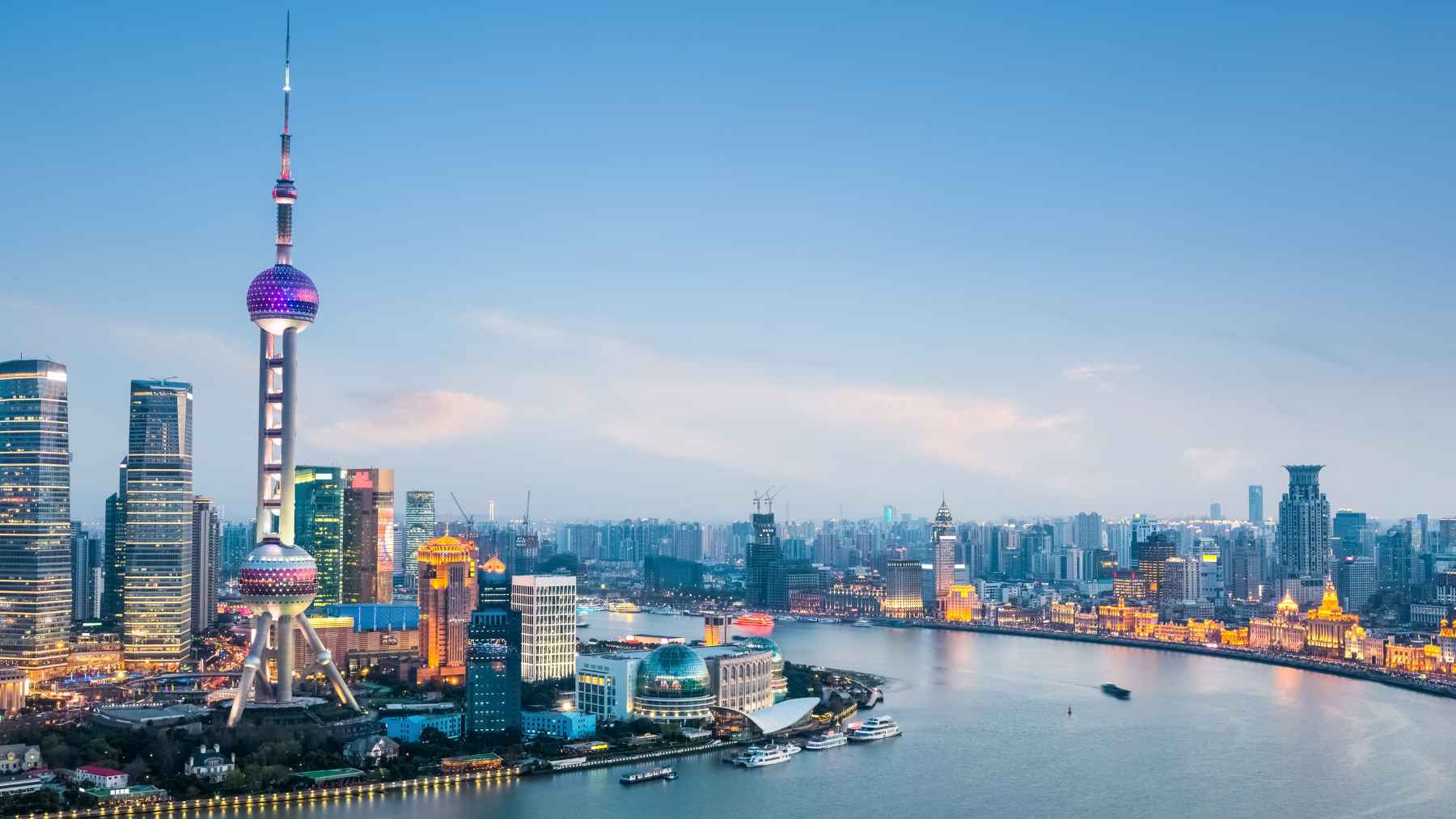
Shanghai followed a different but related path. Decades of aggressive groundwater pumping had driven subsidence rates there up to about 17 centimeters per year in the late 1950s and early 1960s. Beginning in the 1960s, city authorities gradually cut back pumping, shifted withdrawals to deeper aquifers, and installed recharge wells that inject treated river water into the subsurface. Thanks to this combination of reduced extraction and artificial recharge, average subsidence has dropped to roughly one centimeter per year in recent decades.
In practical terms, that means streets, subway tunnels, and riverside flood defenses are still moving, but much more slowly than before.
A powerful tool with real limits
Fluid injection can even cause measurable uplift in some projects, yet experts are careful not to oversell it. The underlying sediments often compact in a largely permanent way. A global analysis of Mexico City’s sinking, for example, finds almost no elastic rebound even when groundwater levels fluctuate, which implies that raising the city back to its former elevation is effectively off the table.
That is why many scientists describe injection as a braking system rather than a cure. It can reduce the rate of sinking and sometimes nudge the ground upward, but it cannot completely reset a century of over pumping.
There are risks too. If pressure is raised too quickly or in the wrong layer, injected water can reactivate faults, trigger small earthquakes, or push fluids toward sensitive zones. That is why modern programs rely on dense monitoring networks, including GPS, satellite radar, and borehole instruments, to track tiny changes in ground level and pore pressure in near real time.
At the end of the day, any injection scheme also competes with other demands on water and energy. Treating and pumping millions of cubic meters of water is not cheap, and every kilowatt spent underground still shows up on someone’s electric bill.
Borrowed height in a warming world
For coastal megacities, a few centimeters of elevation can shape everyday life. It is the difference between a storm surge that stays on the promenade and one that pours into subway entrances. As new research on land subsidence across China has underlined, managing the way we withdraw and inject fluids underground is becoming just as important as counting tons of CO₂ when planners assess flood risk.
Turning depleted aquifers and oil fields into hydraulic props does not make cities immortal. What it can do, to a large extent, is buy time. Time to raise levees, redesign drainage, move critical infrastructure out of harm’s way, and rethink where people live before the sea finishes the job that subsidence started.
The detailed review of how water injection can slow or even reverse subsidence in places like Long Beach, Shanghai, and Venice was presented in a comprehensive study on artificial land uplift and groundwater management.
The study was published in Land Subsidence and its Mitigation.