In the middle of debates about energy bills and heatwaves, Spain has quietly launched its largest naval renewal in decades. The government has cleared the way for 37 warships and four new S‑80 submarines as part of a wider industrial and defense plan that stretches well into the 2030s.
Security officials describe the program as essential for sea control and deterrence. Environmental researchers see something else as well, a long-term carbon and coastal footprint that will sit in the water long after today’s headlines fade.
A fleet renewal on a historic scale
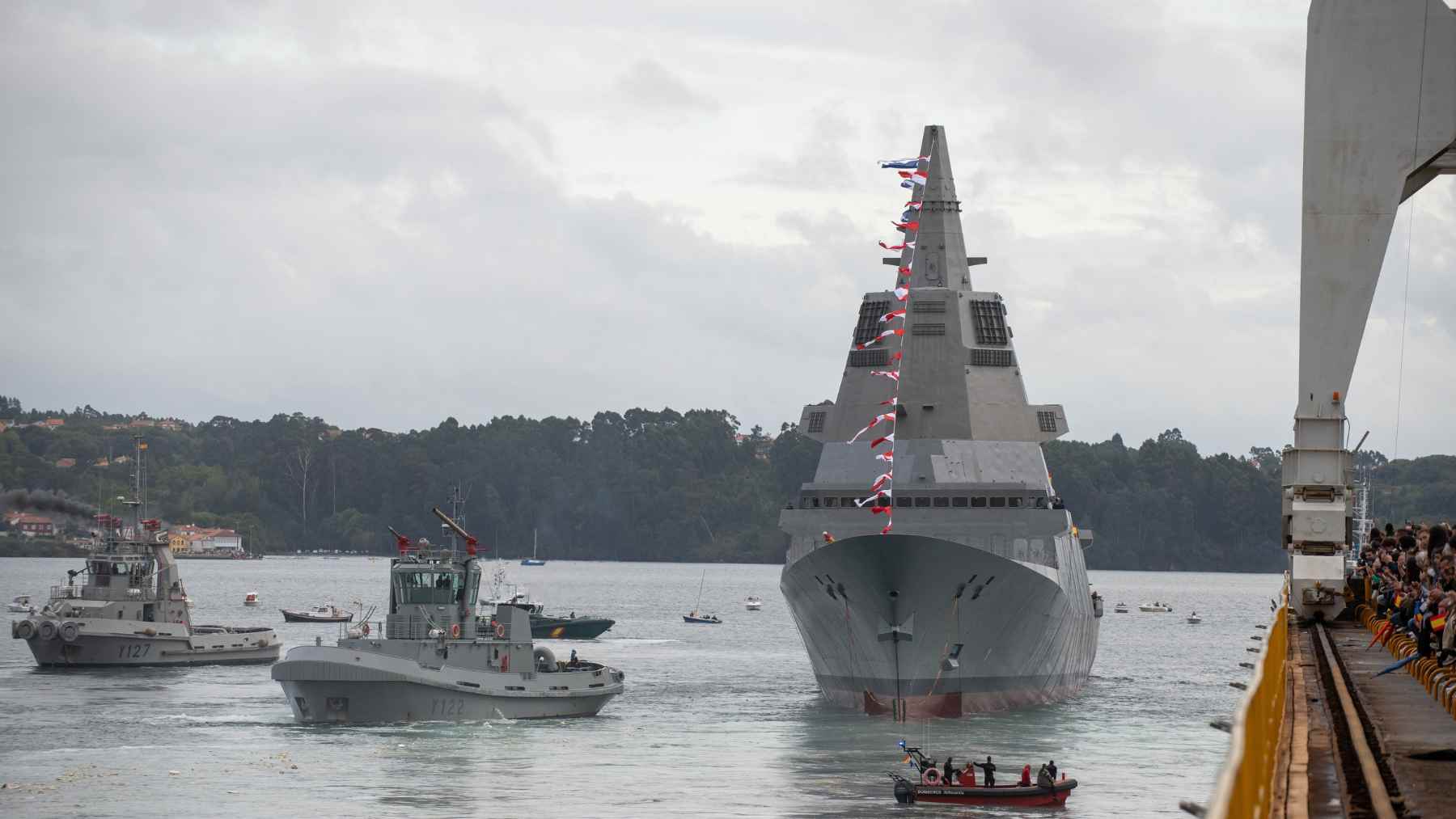
According to specialized defense outlets, the package combines 23 newly-built ships with the modernization of 14 existing vessels. At its core are four S‑80 submarines for the Spanish Navy plus five new F‑110 frigates and upgrades for the current F‑100 Álvaro de Bazán class, which are meant to stay in service until the late 2040s.
Press estimates put the bill for the 37 ships and four submarines somewhere between ten and twelve billion euros, since official unit prices have not yet been published. The naval push sits inside a much broader Industrial and Technological Plan for Security and Defense that mobilizes about 10.47 billion euros in 2025 alone and is designed to lift military spending to 2% of national income.
Roughly one fifth of that annual envelope goes to new hardware such as frigates and a replacement combat support ship.
On paper, this is about jobs, sovereignty, and alliance commitments. In practical terms, it also locks in a generation of heavy fuel users at a time when every sector is under pressure to decarbonize.
The invisible climate tab
Global research on military emissions paints a clear picture. A joint study by Scientists for Global Responsibility and the Conflict and Environment Observatory estimates that when fuel use, bases, and supply chains are counted together, the world’s armed forces account for roughly 5% of global greenhouse gas emissions. That would place the military sector alongside the largest-emitting countries on Earth.
Shipping adds another significant slice. International and domestic maritime transport is responsible for around 3% of global climate pollution, and emissions from the sector have risen over the last decade as trade has expanded. Warships occupy the same oceans as container vessels and tankers, drawing on similar fossil fuels, even if their missions differ.
So when a medium-sized navy orders dozens of new hulls, the question almost asks itself. How will these programs square with European climate targets and the promise to keep global warming as close as possible to 1.5 degrees?
Shipyards caught between jobs and pollution
The main winner of the Spanish plan is state-owned shipbuilder Navantia, whose yards in Ferrol, Cartagena and the Bay of Cadiz will handle much of the work. The government has already approved interest-free loans worth 2.292 billion euros to support five key naval programs, including a new combat support ship, modernization of F‑100 frigates and a signals intelligence vessel.
For coastal communities, this means thousands of jobs and a busy horizon of cranes, hull sections and sea trials. For the local environment, the picture is more complex.
A recent open-access study of the inner Ría of Ferrol, a semi-enclosed estuary long-linked to shipbuilding, concludes that overall ecological status is generally good but that sediments show worrying levels of zinc and microplastics in the most industrialized inner sector. The authors warn that future dredging could make those contaminants more available to marine life.
That kind of finding is a reminder that heavy industry does not only emit through smokestacks. It also reshapes seabeds, changes currents, and leaves chemical fingerprints that persist long after a contract is signed.
Can a warship be climate friendly?
Faced with growing scrutiny, Navantia has begun to frame itself as part of the solution. The company says it has cut its direct greenhouse gas emissions by about half since 2018 and has set a target of net-zero emissions from its own operations by 2040, with an intermediate goal of a 55% cut by 2030. Its sustainability plan talks about eco design, zero-waste certificates for shipyards and smarter onboard power systems that reduce fuel burn.
Through its green energy division Navantia Seanergies the group also builds foundations and electrical substations for offshore wind farms and works on green hydrogen projects. In theory, that experience with alternative energy and digital twins could spill back into naval programs, making new frigates and support ships more efficient over their lifetime.
Still, expert assessments of global shipping warn that efficiency alone will not be enough. Without a shift away from fossil fuels, maritime emissions could grow significantly by mid century as traffic increases.
For navies, which rely on high power and high readiness, the technological path is even less clear. Biofuels, hybrid systems and future synthetic fuels may soften the blow, but they are not yet standard in combat fleets.
What citizens should watch
For people far from shipyards, defense procurement can feel abstract, something that happens in budget lines and naval bases rather than in daily life. Yet the same public that counts every kilowatt hour on the electric bill will ultimately carry both the financial and environmental cost of these new vessels.
In the coming years, key signals to watch include whether the Spanish authorities begin to report military emissions transparently, whether new ships incorporate low-carbon fuels or only incremental efficiency tweaks, and how strictly environmental rules are applied around busy naval ports. Civil society groups have already called, at the international level, for military emissions to be fully counted in national climate plans.
At the end of the day, a modern navy is unlikely to disappear from any coastal country’s plans. The real test is whether maritime security can evolve in step with climate science, so that protecting national waters does not come at the expense of a stable ocean.
The official statement was published on La Moncloa.