The future of mobility, as we have discussed on previous occasions, may be linked to hydrogen. But is it the only fuel we should explore? One brand has just gone in the opposite direction with an engine so futuristic that it has the world (and experts) in suspense: it has 780 hp and turbocharger, plus a detail that no one is unaware that it seems like science fiction.
New futuristic, non-hydrogen engine has experts on edge: find out why
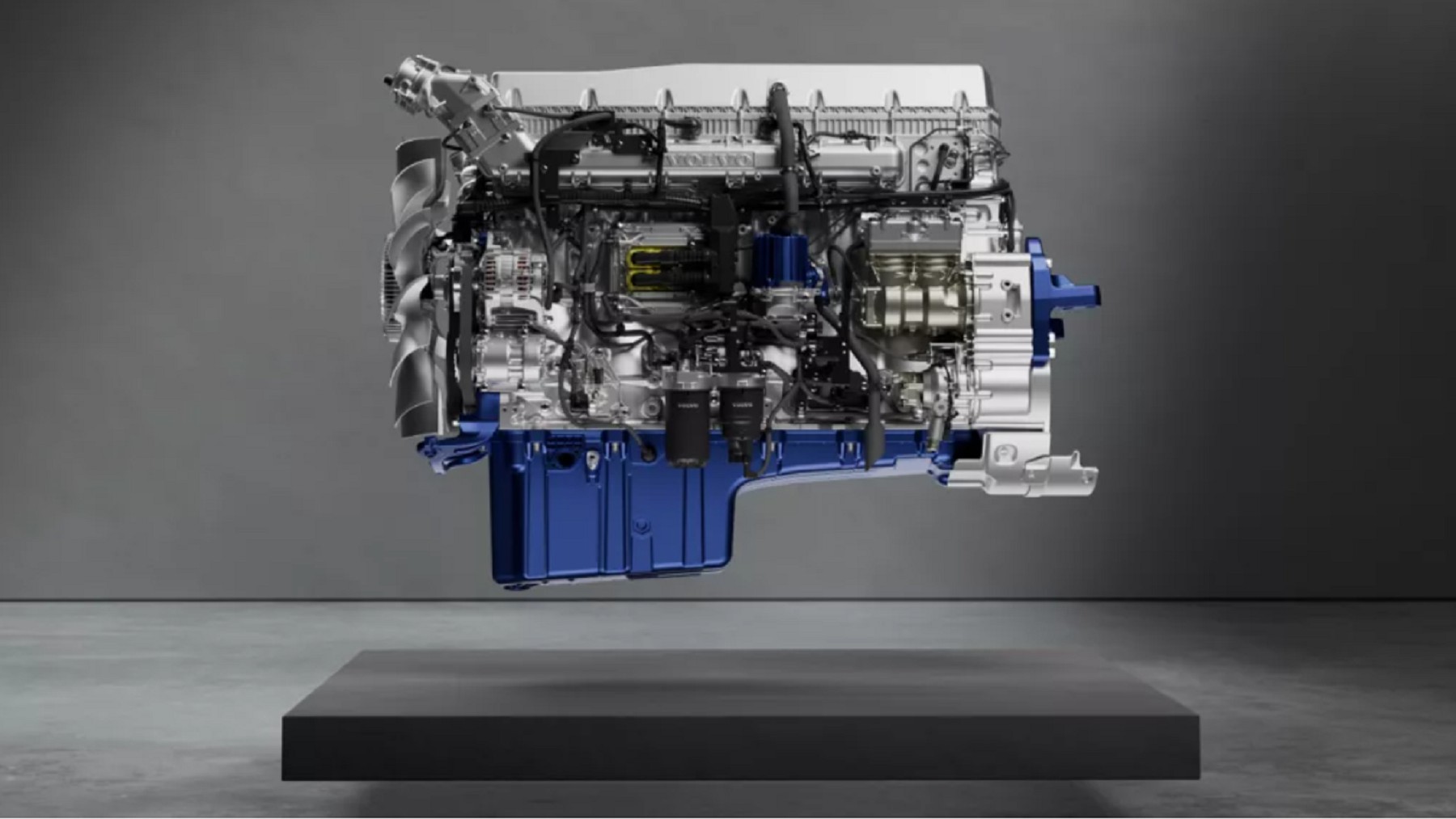
We have the latest transport news featuring Volvo Trucks new release, the D17 heavy duty engine with bio-future fuels and a Record 780 Horse Power. This powerful engine is a great step forward in efficient construction of environmentally friendly trucks and can take its place as a leading technological advancement.
The D17 is another engine specifically designed for the newer generation of renewable diesel fuels, enabling it to bring exceptional results. As a result of turbocharging technologies, another model from the same company, the D17, churns out 780 hp and 2,500 Nm of torque, though this is considered a traditional diesel engine.
Nonetheless, the D17 engine generates considerable horsepower and still, it designed in a way that minimizes its effects on the natural surroundings as much as possible. Thus, by integrating the potential of biofuels into its operation, Volvo has developed an engine that is indicative of the industry´s environmental transition.
15-liter and 2,500 of torque: why this engine is so different from others
The new turbocharged engine will be ideal for each heavy duty requirement of the trucks in terms of power and torque. In particular, this engine delivers an impressive output of 780 hp and from 2,600 to 3,075 lb-ft of torque. This makes it to be a powerful machine used to pull most massive loads.
With a huge single turbocharger, the engine is able to force more air into the cylinders making power delivery out of it enormously large. An advantage of the turbocharger is the availability of upto 43 psi of boost pressure. It has a 17-liter compression ratio combined with the higher displacement.
The manufacturer has stated that this part has been properly tested to enable its efficient and reliable operation under different loads. A new piston cooling jets, cylinder heads are strengthened, as well as increased lubrication helps this engine run smoothly in conditions that generate more than 2,500 seconds of torque.
Could this biofuels engine be better than hydrogen? Experts are skeptics
The secret of this engine is that is capable of running on biofuels such as HVO and FAME that have lower levels of fossil fuel and emissions than typical diesel. Through utilizing user choices to adjust and improve the engine for biofuels, Volvo Trucks constructs a more sustainable form of transport.
HVO as it can be blended with mineral diesel and the engine can run even on 50% HVO content to get a better solution. More specifically, it results from the processing of vegetable oils and animal fats, even though it presents physical characteristics close to those of fossil diesel.
Eliminates the need for a new tool for changing the vehicle’s engines which require fuel changeover expenses. There are other benefits that are derived from the use of HVO as compared to normal diesel, and this involves reduced soot emission.
The Scania group released data stating that they are able to save as much as 5% of fuel while running the D17 engine on HVO than on regular diesel. This is due to HVO having a higher cetane rating and better ignition properties than Super Plus diesel.
At this point, it is clear that this biofuels engine will demonstrate how it is possible to make the leap towards more sustainable mobility in the very short term. What’s more, it’s a fuel you can use in your car right now (if it’s not an EV or FCEV, of course) to save money and pollutant emissions into the atmosphere. The other options we have seen in the past are, of course, for the medium term.