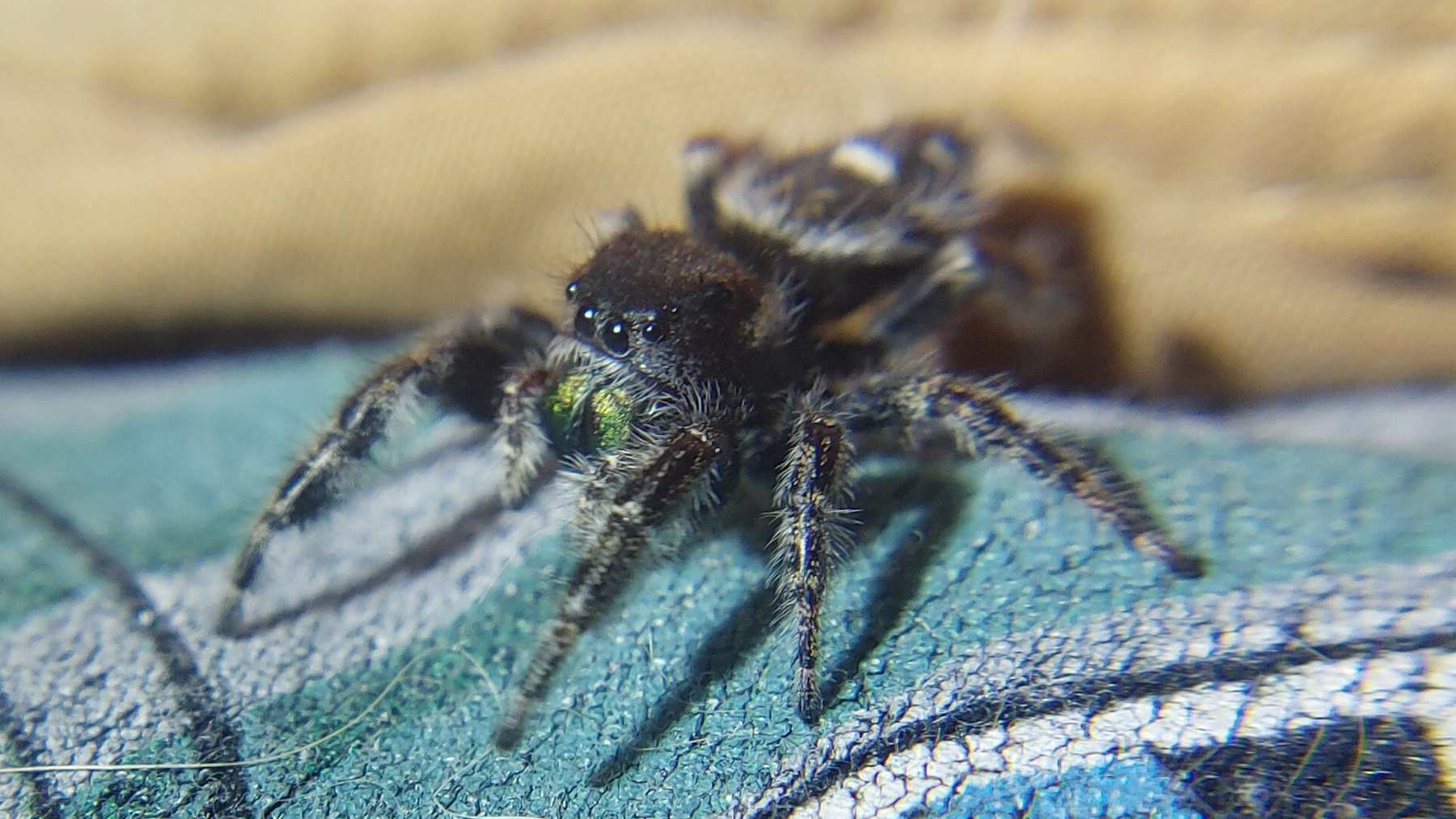
Close to 2,100 species living in homes, offices and other indoor spaces across the United States and Canada have been logged in the largest survey of its kind. Most of the records are of insects and spiders that people walk past every day without a second look.
North Carolina State University announced the results on November 20. The team built a database of 23,782 records, gathered from photos that about 3,000 people took of wild creatures indoors.
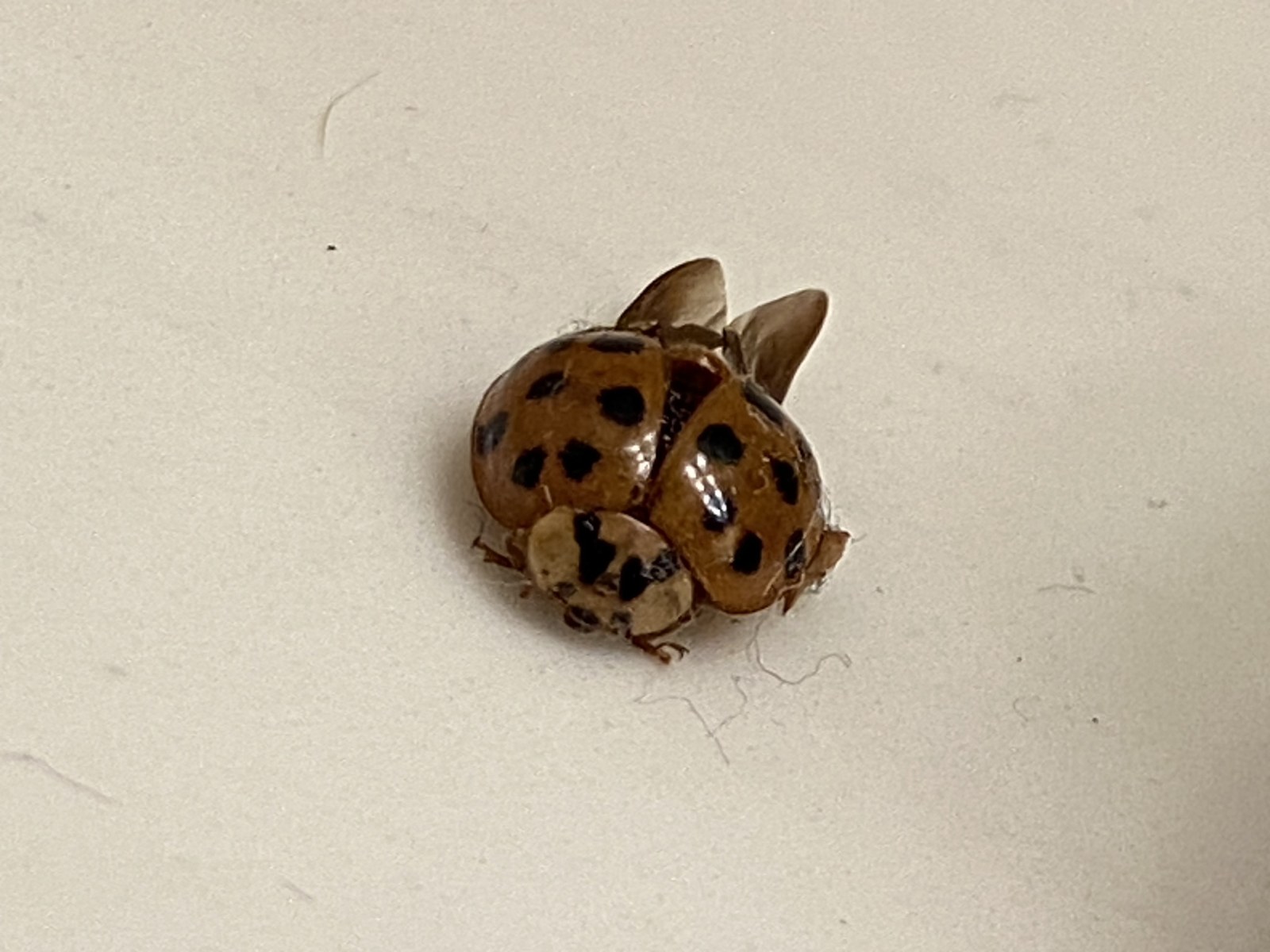
The most common species was the Asian lady beetle. The organisms ranged from that beetle to an alligator that unexpectedly turned up in one person’s garage, said Bradley Allf, the paper’s corresponding author.
Turning the indoors into an ecosystem
Ecologists have studied rainforest canopies and the deep sea, but much less is known about the spaces where people actually live. Allf said the goal was to treat the indoors, at the scale of a continent, as an ecosystem worth exploring.
Allf got involved in the project as a graduate student at NC State and is now a postdoctoral researcher at Colorado State University. The senior author is Rob Dunn, a professor of entomology and plant pathology at NC State.
Dunn said these are animals people are around all the time but overlook. Closer to the university, an earlier survey of 50 homes around Raleigh found spiders in every single house, in a 2017 study.
Photos from living rooms
The data came from a citizen science project called Never Home Alone, hosted on the iNaturalist platform. Users were asked to photograph wild organisms in their homes, offices and other indoor spaces.
Pets and potted plants did not count. Each record carries the place and date of the photo, plus the identity of the organism.
Dozens of entomologists, arachnologists and other experts checked the identifications. The final set spans every US state and Canadian province, with observations made between May 1996 and April 2024.
The most common indoor species
About 95% of the records were arthropods. Insects made up 60% of all observations and spiders 30%, while chordates, mostly reptiles and mammals, made up 4%.
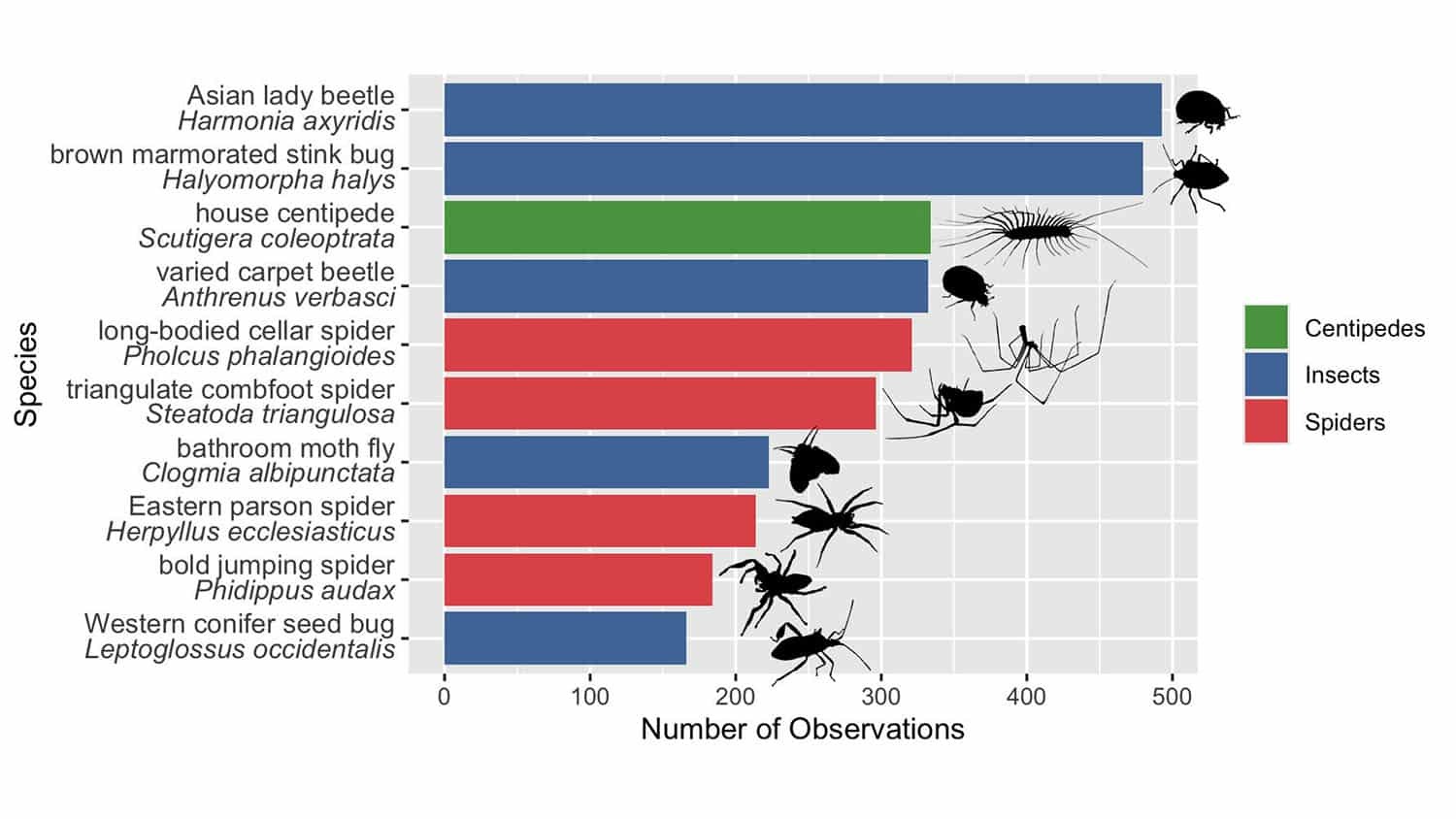
Eight species had more than 200 records each. After the Asian lady beetle came the brown marmorated stink bug, the house centipede, the varied carpet beetle, the long-bodied cellar spider, the triangulate combfoot spider, the bathroom moth fly and the Eastern parson spider.
Most people would not recognize many of those names, Dunn said. The dataset holds more than a thousand observations of comb-footed spiders alone.
The university’s chart of the 10 most common species also includes the bold jumping spider and the Western conifer seed bug. In that chart, the lady beetle and the stink bug each have roughly 500 observations.
Spiders and other predators
One striking pattern was how common predators were, Allf said, including hundreds of different spider species. Some of the species found indoors control household pests.
One participant described jumping spiders as working animals, according to Allf. The spiders help cut down the flies and other pests that the participant did not want at home.
Insects nesting in buildings turn up in Europe as well. In one recent case, oriental hornets in Spain have been found nesting in shutter boxes and false ceilings.
Questions still to answer
House centipedes were the third most common animal in the dataset, yet Dunn is not aware of anyone studying them. Dunn also pointed to camel crickets, which carry a microbe that can break down paper products.
The survey has limits, as the authors note. Collection was not controlled for effort, so large animals are likely overrepresented, and some creatures were simply trapped inside rather than living there.
About 44% of the observations could not be identified down to species, so the true count is likely higher. Around 52% of the species were seen indoors only once.
Allf said the team wants to learn how outdoor climate shapes what people see indoors. Other open questions are how many of these species end up inside by accident and which ones are actually adapted to thrive in buildings.
An open dataset that keeps growing
The paper, published November 19 in the journal Ecology, describes the records as the first survey of indoor species at the scale of a continent. The researchers have made the full dataset freely available under a CC BY 4.0 license.
Citizen-science records can show where a species turns up and how that changes over time. For example, researchers in Catalonia used 150 records to map the giant resin bee in a separate study.
The project is still open, and people can keep submitting what they find indoors. “The more data the project collects, the more insight we’ll have,” Allf said.
Photo: bobagrub / iNaturalist, CC0