More and more large companies are seeking to join the extensive ranks of sustainable mobility due to the imminent threat posed by the high carbon dioxide emissions emitted by engines powered by large pollutants such as fossil fuels. Ferrari innovated in the automotive sector by introducing this promising engine, which seeks to pave the way for cleaner technologies, potentially inspiring other manufacturers to follow in their footsteps.
Ferrari unveils new hydrogen engine, aiming to revolutionize sustainability in the automotive world
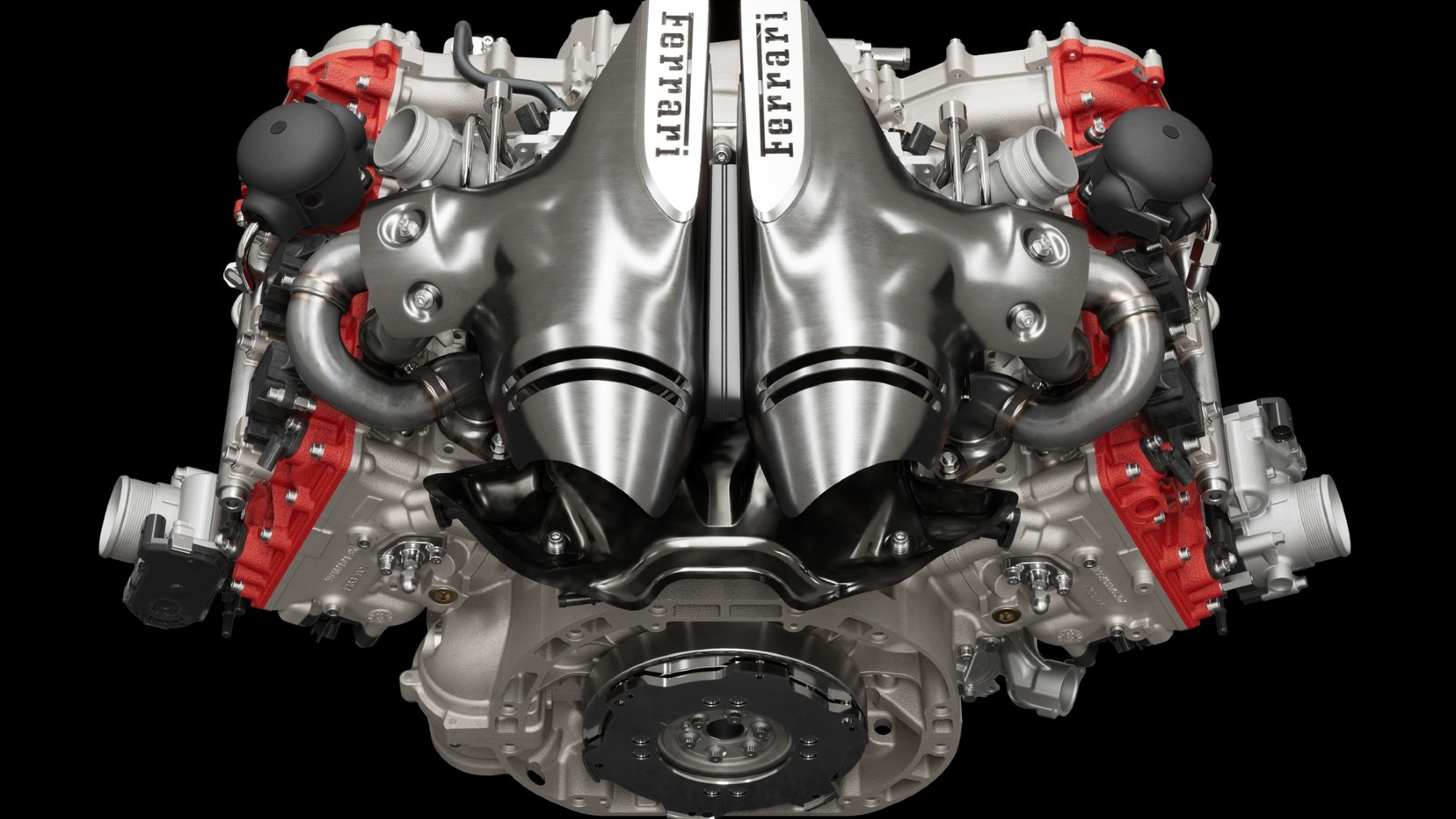
For a long time, we have witnessed all kinds of innovations coming from the automotive sector, where we have seen beneficial engines powered by electricity, and others that bet more on the implementation of zero-emission internal combustion engines. One of the most prestigious globally recognized brands, Ferrari, has recently shown one of its major innovations oriented to sustainability and zero emissions. In particular, we are talking about an engine that runs on hydrogen.
The prestigious automotive brand, Ferrari, has presented for the first time an engine that runs on hydrogen as fuel. The most viable option to have a car of this level with zero emissions, in addition to the well-known electric cars, is to look for alternatives that avoid harmful emissions such as NOx and CO2 that emanate polluting and harmful particles for the environment. The use of zero-emission fuels would lead to the neutralization of the use of gasoline, which pollutes day after day and considerably harms the environment, impacting in unimaginable ways around the world. This is the main reason why companies are looking for these alternative fuels, as they aim to curb environmental damage while advancing toward a future of sustainable energy sources.
Key features of Ferrari’s hydrogen engine promise a new era of sustainable driving
This new engine promises to considerably reduce carbon dioxide emissions and has a particular feature that is relatively important for speed enthusiasts. Specifically, we are talking about the sound of a gasoline engine; this new engine, designed by the famous Italian brand, would retain these benefits and also save a lot of weight by not having a battery. Additionally, it offers advanced performance capabilities that enthusiasts of high-speed vehicles will greatly appreciate.
This thermal design fails to capture the attention of other automotive companies. However, it should be noted that this design has the advantage of the positioning of hydrogen tanks, as it is taken as a particularly radical and revolutionary model, with its operating system being upside down. A clear example is the cylinder head, its cams and valve at the bottom, and the crankshaft in the lower position.
Beyond the extensive number of benefits that this engine brought by Ferrari can provide, these characteristics can also represent a significant challenge. In other words, this engine can easily draw the attention of the automotive industry to the possibility of generating problems due to the lack of lubrication and general oil recovery. Manufacturers will likely have to invest time and resources in refining this design for widespread use.
How Ferrari’s engine placement could resolve common lubrication issues in innovative ways
As mentioned above, this new engine has a lubrication circuit based on the use of a dry sump, in addition to being pressurized. In this way, three oil pumps are used so that the oil is not trapped in the combustion chamber. In a traditionally used engine, the oil falls into the crankcase, regardless of whether it is dry or wet.
If we delve a little deeper into the operation, we can come to the conclusion that, thanks to these centrifugal compressors that are driven by electricity, the engine supercharging would be achieved. This energy can be provided mainly by the electric motor of the front axle or by a divorced turbo-compressor.
Innovations of this type are extremely important in the global energy transition, which seeks new and better alternatives for zero-emission engines that contribute to reducing polluting emissions.