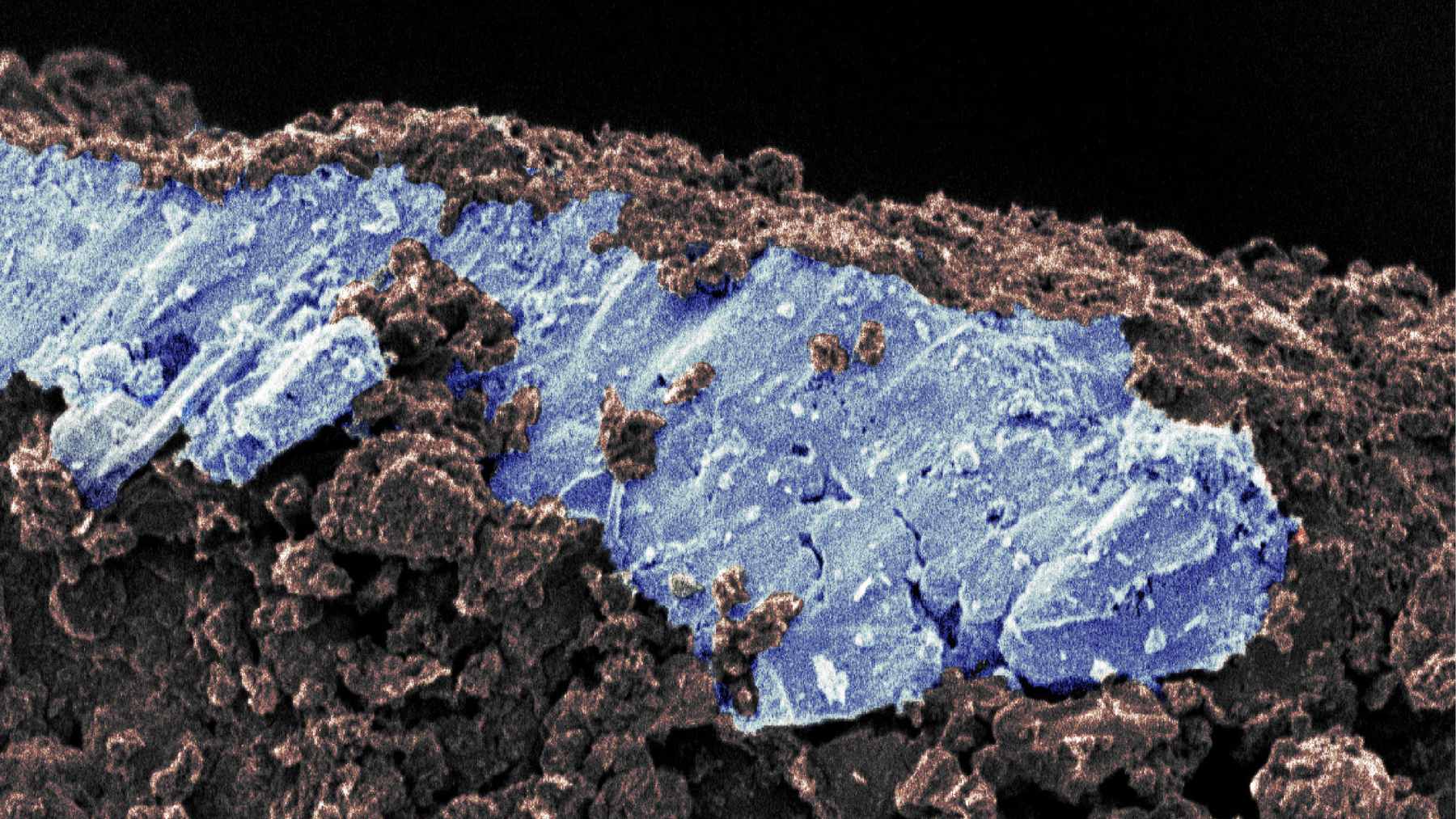
Scientists analyzing sealed, contamination-free samples from the near-Earth asteroid Ryugu have found all five “canonical” nucleobases that make up DNA and RNA (adenine, guanine, cytosine, thymine, and uracil).
The results, published March 16, 2026, strengthen a long-building case that some of life’s essential ingredients can form in space and later arrive on young planets like Earth.
But there is a twist that matters for anyone following climate, oceans, and biodiversity here at home. If the raw chemistry of life is relatively common, then Earth’s living ecosystems still look even more precious, because turning a pantry of molecules into a planet full of forests, plankton, and people is a much harder step.
So what exactly did Ryugu’s dust reveal, and what should we not assume from it?
The “genetic alphabet” shows up far from Earth
The new study reports all five canonical nucleobases in two separate Ryugu samples, covering both the purines (adenine and guanine) and the pyrimidines (cytosine, thymine, and uracil). These are the chemical “letters” that living cells use to store and copy genetic information in DNA and RNA.
What stood out was balance. Ryugu’s samples contained nearly equal amounts of purines and pyrimidines, while the famous Murchison meteorite is more purine-heavy and materials from asteroid Bennu and the Orgueil meteorite lean more toward pyrimidines.
That pattern is one reason researchers are excited, because it looks like chemistry with fingerprints, not random noise.
The team also reports that the purine-to-pyrimidine ratios in Ryugu, Bennu, and Orgueil negatively correlate with ammonia, hinting that similar “recipes” may have played out under different conditions in their parent bodies.
Why “pristine” samples change the conversation
Meteorites can carry organics, but there is always a nagging question once they hit the ground. Rain, soil microbes, and even handling can blur the line between “space chemistry” and Earth contamination, which is the last thing you want when you are talking about life’s building blocks.
Ryugu’s grains avoided that problem because they were collected in space and returned in a sealed capsule, with curation designed to protect the samples from Earth’s atmosphere. In other words, the scientific team is working with a cleaner starting point than any rock picked up in a field.
JAXA says Hayabusa2 delivered about 5.4 grams of material back to Earth in December 2020 (about 0.19 ounces), far more than the mission’s minimum target. The agency also notes that early analysis found organic material such as amino acids and water-related components in the returned sample.
Hayabusa2’s careful sampling on a small, ancient world
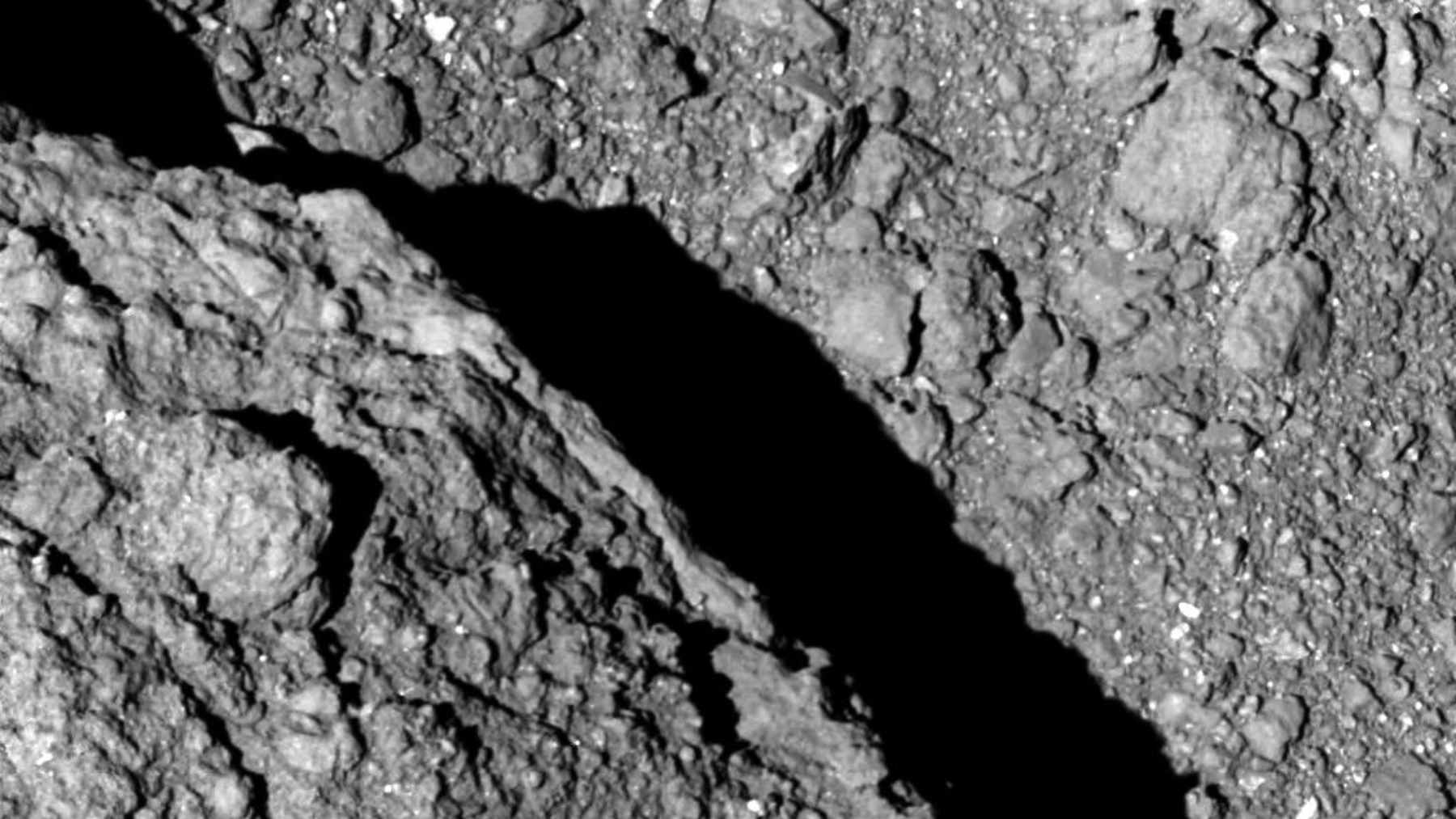
Ryugu is a carbon-rich, “primitive” asteroid that is currently about 900 meters in diameter (about 0.56 miles, or roughly 2,950 feet). It is thought to be a fragment of a much larger parent body that existed early in the solar system, back when water-driven chemistry could reshape rocks from the inside out.
Hayabusa2 didn’t just swoop by for photos. JAXA describes two successful touchdowns in 2019, plus an impact experiment that created an artificial crater so the spacecraft could pick up material from below the surface, not only dust that had been “weathered” by radiation in space.
That matters because the subsurface can act like a time capsule. If you have ever opened a bag of flour and found the top layer stale, you get the idea, because surfaces change faster than what is buried.
Ryugu, Bennu, and the meteorites that help fill in the map
The Ryugu discovery does not stand alone, and that is part of its power. Earlier work reported uracil in Ryugu samples, along with other nitrogen-containing organics including nicotinic acid (a form of vitamin B3), but the full set of five canonical nucleobases was not confirmed in Ryugu until now.
Meanwhile, studies of NASA’s OSIRIS-REx samples from asteroid Bennu have reported even richer inventories of related compounds.
A Tohoku University press release on Bennu sample analysis said the concentration of “N-heterocycles” was about 5 nanomoles per gram (roughly 140 nanomoles per ounce), around five to ten times higher than what had been reported from Ryugu, and included xanthine, hypoxanthine, and nicotinic acid in addition to the five nucleobases.
Put together with the meteorites Murchison and Orgueil, the message is not “every space rock is the same.” It is closer to “space rocks keep repeating the theme, but the details change,” which is exactly what you expect from chemistry shaped by different starting materials and different conditions.
Ammonia may be steering the chemistry
Ammonia sounds ordinary, like a cleaning product under your kitchen sink, but in planetary chemistry it can be a powerful reactant and a clue about where and how materials formed.
In the Nature Astronomy paper, samples from Ryugu, Bennu, and Orgueil show a negative correlation between ammonia and the purine-to-pyrimidine ratio, which the authors suggest could reflect a shared formation pathway that depends on the parent body’s physicochemical environment.
In practical terms, that means ammonia-rich settings might favor a different “mix” of nucleobases than ammonia-poor settings. It is a reminder that the early solar system was not one uniform soup, but more like a patchwork kitchen with different temperatures, fluids, and ingredients.
Still, correlation is not a final answer. The next step is testing mechanisms with lab simulations and expanding measurements across more samples, because a chemistry story only becomes solid when it can be repeated under controlled conditions.
Not “alien DNA,” but a clearer baseline for life detection
It is tempting to hear “DNA bases found in space” and jump to life itself. The study does not claim that, and it is worth saying plainly because social media headlines can get carried away.
What the results support is a “precursor” scenario. Carbonaceous asteroids appear capable of producing and preserving important prebiotic molecules, which could have helped stock early Earth with chemical building blocks long before biology took over.
There is also a cautionary takeaway for future missions searching for life on Mars or ocean worlds. If nucleobases can form without biology, then detecting them might signal promising chemistry, but it is not enough on its own to declare a “biosignature”. That is why researchers keep emphasizing multiple lines of evidence, not a single molecule.
A tiny grain of dust can carry a big lesson. The chemistry of life may be widespread, but life itself is still rare enough that we should be careful with our claims.
The study was published in Nature Astronomy.