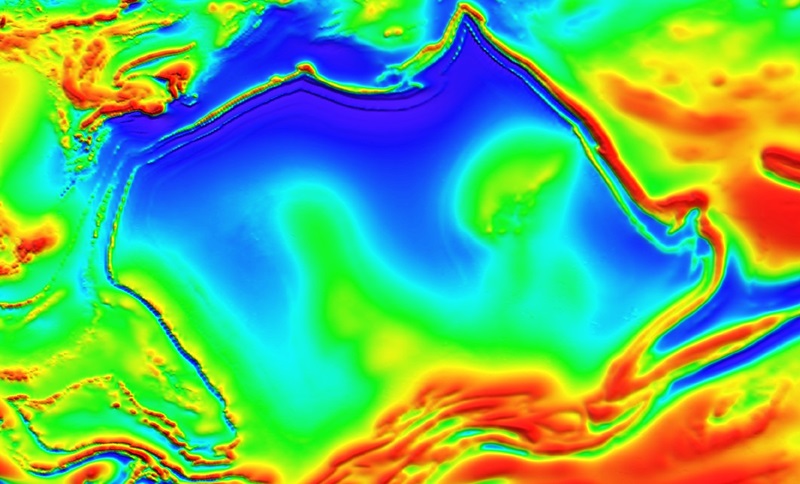
Deep under the red soils of central Australia, scientists have uncovered a giant magnetic anomaly that mirrors the outline of the continent almost like a shadow on the underside of the crust. The newly mapped feature, called the Australia Magnetic Anomaly, sits beneath the Northern Territory and appears to store a record of geological events that stretch back up to two and a half billion years.
It sounds abstract at first. A strange pattern in Earth’s magnetic field, invisible to anyone standing on the surface. Yet this discovery could reshape how geologists understand the deep architecture of Australia and where critical mineral resources might be hiding, which in turn affects how and where new mining projects disturb land and ecosystems.
What a magnetic anomaly really means
So what exactly did researchers find under the desert plains that tourists cross on long, empty highways? The anomaly is a broad region where Earth’s magnetic field is stronger or weaker than expected because buried rocks contain large amounts of magnetic minerals. Those minerals carry a kind of “magnetic memory” from the moment they cooled and locked in the direction of the planet’s field at that time.
Over billions of years, the field has flipped and the continent itself has shifted, so decoding that memory is not straightforward. According to CSIRO geoscientist Clive Foss, careful processing of magnetic data lets researchers “see through the ground” and piece together rock bodies and faults that never reach the surface.
How scientists reprocessed old data to see deeper
To do that, the team went back to an older dataset. The anomaly was imaged using aeromagnetic measurements from the Northern Territory Government’s Bonney Well Survey, where aircraft flew in tight, parallel lines only a few hundred meters apart while magnetometers measured tiny changes in the field. A new gridding algorithm developed by researcher Aaron Davis cleaned up artefacts in those measurements and produced much sharper images of the subsurface.
With that clearer view, scientists could finally trace the anomaly’s western edge up to real rock at the surface in the Hatches Creek Formation. These outcrops contain sandstones and volcanic rocks laid down in shallow seas and river deltas between about 2.5 and 1.6 billion years ago, then crumpled and refolded by later tectonic events.
Why this matters for minerals and environmental decisions
In practical terms, this ancient magnetic footprint gives geologists a kind of X-ray of the deeper crust. It helps them understand how the region evolved, where long-vanished volcanoes once erupted, and how fluids that carry metals may have moved through the rocks.
That knowledge is valuable for locating new deposits of minerals used in wind turbines, solar panels and electric vehicles, while also making it easier for regulators and communities to judge the real costs and risks of new mining in fragile landscapes.
At the end of the day, this is one more reminder that the ground beneath our feet is anything but simple. Every time geoscientists refine these maps, they recover another chapter of Earth’s deep history and give planners better tools to balance resource demand with environmental protection.
The press release was published on CSIRO.